Japan’s budget SIM scene heads into 2026 with an unusually frenetic start. An online-only brand is suddenly everywhere on the high street. A national operator is promising the year it finally fixes nagging performance questions. And the clock is ticking down to a landmark network switch-off that could quietly disable legacy devices overnight. Here is what’s changing, why it matters, and how it could reshape the country’s competitive prepaid and SIM-only market this year.
Ahamo steps out of the browser and into the shopfront
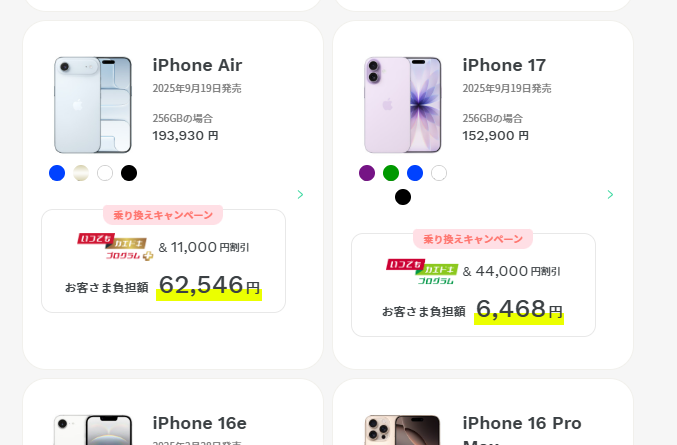
NTT Docomo’s ahamo, long pitched as a web-only plan, is getting a conspicuous push in physical retail. Over the back half of last year, in-store promotions have put the brand squarely in front of mainstream shoppers, blurring the line between digital-only and traditional carrier sales. The incentives are just as aggressive online: customers porting in via mobile number portability (MNP) on a SIM-only contract are seeing reward offers worth 20,000 points. Pair that with a bundle on Apple’s latest iPhone 17 (256GB), and the effective monthly outlay can drop as low as ¥6,468 when the customer agrees to return the device after two years.
These leases and return schemes are hardly new to Japan’s handset market, but the pricing signals are striking. A premium flagship at that level—and tied to an ostensibly online-first plan—underscores how intensely Docomo is chasing subscriber growth at the budget end. For consumers, it’s a reminder that “low-cost” in 2026 increasingly includes the newest hardware, not just older models or mid-range devices.
It also raises a structural question: as low-cost sub-brands proliferate across Japan’s big networks, how meaningful is the “online-only” label? In-store assistance lowers adoption barriers for less tech-savvy users and makes porting more manageable, especially when combined with handset financing and trade-in programs. Expect rival brands to mirror the playbook to protect market share.
Will 2026 be the year Docomo’s quality narrative finally flips?
While the deals dominate the headlines, Docomo’s network remains in the spotlight for a less flattering reason: service quality. Complaints about inconsistent speeds and congestion have lingered, particularly in dense urban areas and at peak times. Docomo says it will accelerate base station construction across fiscal 2025–2026, with a notable ramp-up: the second half of FY2025 is slated to see new sites deployed at roughly triple the pace of the first half.
The operator is also pointing to new vendor partnerships to modernize the radio access network and automate operations across LTE and 5G. That includes the introduction of Nokia systems for more seamless LTE/5G operations automation, and the rollout of Ericsson’s Massive MIMO radios in the 4.5 GHz band. The emphasis on mid-band capacity and beamforming is critical: this is where 5G can meaningfully outperform 4G in both throughput and consistency, provided cell density and interference management are properly tuned.
Why should MVNO users care? Because many low-cost SIMs ride on Docomo’s network. Even when MVNO traffic is managed separately, a better underlying radio layer—more cells, smarter antennas, cleaner interference—lifts the baseline experience. It won’t erase all MVNO-specific bottlenecks, such as backhaul sizing or APN-level traffic shaping, but it can reduce peak-hour pain points and improve average speeds. For 2026, the test will be visible: does everyday performance in train stations, stadiums, and shopping districts actually improve, or do complaints persist despite the rollout rhetoric?
3G goes quiet on March 31: who’s affected and what to do
Japan’s 3G era ends this spring. Docomo’s FOMA 3G service switches off on March 31, 2026, closing a chapter that helped digitize mobile communications for a generation. Most smartphone users will notice nothing—4G and 5G now dominate usage, and modern devices handle voice over LTE (VoLTE) by default. But there is a critical edge case: customers who paired low-cost, voice-centric MVNO plans with older 3G or VoLTE-incompatible phones for cheap unlimited calling. Those handsets will simply stop connecting once 3G disappears.
The fix is straightforward but time-sensitive. Users should verify that their device supports VoLTE on the relevant network, update carrier settings, and ensure 4G voice is enabled. If the handset lacks VoLTE support, it’s upgrade time—preferably before the cutoff to avoid service gaps. Some MVNOs historically allowed 3G fallback if subscribers turned off 5G options; that soft landing vanishes once the 3G layer is gone. From April, it’s a 4G/5G-only world on Docomo’s network.
One more tip: confirm SIM and eSIM compatibility. A VoLTE-capable SIM profile may be required, and older SIMs sometimes need replacing to enable voice over LTE. MVNO support pages typically list compatible models and instructions for enabling the right voice settings.
A full MVNO milestone: Japan Communications prepares deeper interconnect
Another development to watch arrives in November, when Japan Communications (JCI) targets a new service that directly interconnects with Docomo’s voice and SMS infrastructure. The company is pitching this as a step toward being a “true” full MVNO—one that runs its own core network functions and SIM provisioning rather than renting everything end to end from the host operator.
Why it matters: full MVNO status can unlock new flexibility for users and enterprises. It can improve how quickly features roll out, make eSIM onboarding smoother, and enable differentiated offerings—from network-level call control to niche enterprise profiles and potentially more seamless international roaming arrangements. For consumers, the most tangible upside could be faster service activation, richer call features, and more consistent SMS delivery. Pricing and plan details will determine how disruptive the shift becomes, but greater control at the core is a meaningful long-term lever for competition.
Still missing from much of the MVNO landscape is broad, commercial access to 5G Standalone (SA). As 5G SA’s benefits—lower latency, network slicing, and simpler core architecture—become clearer in 2026, pressure will likely intensify for host networks to open SA capabilities to MVNOs. That could catalyze new plan tiers and enterprise services, though timelines and technical onboarding will vary.
Pricing signals, fair-use fine print, and what to watch
Popular voice-inclusive SIM plans remain tightly priced. But beyond headline monthly fees, throttling policies and short-term data windows deserve scrutiny. As a rule of thumb, services that wholesale capacity from au’s network typically enforce a recent-usage cap—commonly limiting speeds if more than 6GB is used over the latest three-day period. These “fair-use” tools help maintain network stability but can surprise heavy users. Always read the traffic management notes before you port.
For bargain hunters, the message in early 2026 is clear: MNP incentives are back in force, and even flagship phones can be had on unusually favorable terms when tied to return programs. For quality-focused users, watch the real-world impact of Docomo’s promised base station blitz and new radio hardware—which, if executed well, should lift experiences for both on-net subscribers and MVNO customers. For legacy device owners, the 3G shutdown date is the immovable deadline that may force a handset refresh.
Sum it up this way: Japan’s “low-cost” mobile segment is increasingly defined not just by price, but by access to cutting-edge devices, faster provisioning, and the underlying health of the host networks. Ahamo’s offline push suggests online-only is now a distribution choice, not a consumer constraint. Docomo’s 2026 will be judged on whether the network feels faster when it matters. And the end of 3G marks the moment Japan’s mobile market finally goes all-in on 4G and 5G—with full MVNO architectures and, eventually, 5G SA defining the next competitive frontier.