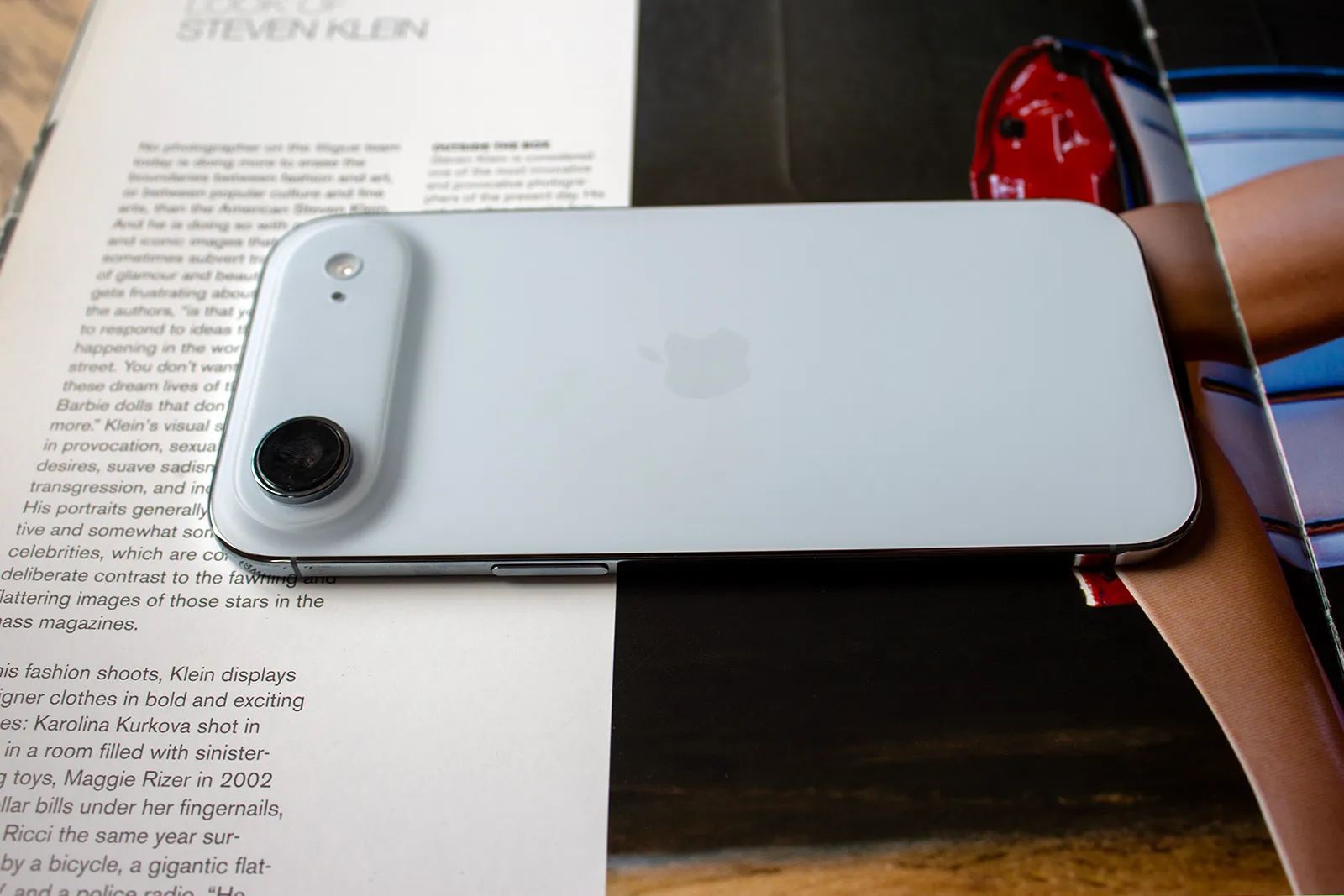
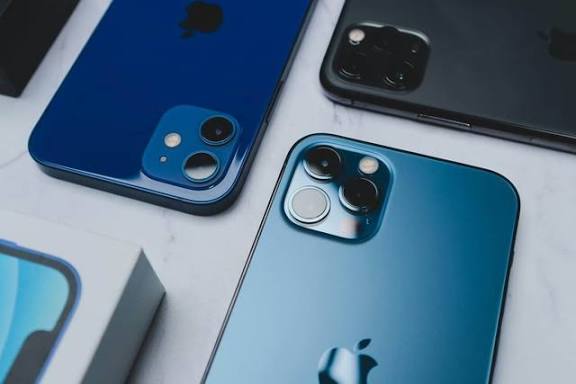
As 2025 turned to 2026, the iPhone 18 quickly became the hottest guessing game in tech. Conflicting reports out of Cupertino’s orbit have stirred an unusually noisy rumor cycle, with credible sources split on when Apple will actually ship its next mainstream handset—and whether a costly move to a cutting-edge chip process will force a higher sticker price in key markets. The stakes are significant: the iPhone remains Apple’s revenue engine, and any shift in launch cadence or bill-of-materials could ripple through the company’s supply chain, its quarterly guidance, and the broader smartphone market.
Conflicting timelines: spring 2026 or spring 2027?
On December 22, 2025, Apple-focused outlet 9to5Mac reported that Apple plans to introduce the iPhone 18 alongside a lower-cost iPhone 17e in spring 2026. The story suggested Apple might debut the next generation sooner than many expected, paired with a new “e-series” meant to broaden its base-model lineup. Adding fuel, 9to5Mac cited comments attributed to Fixed Focus Digital, a well-known leaker on China’s Weibo platform, who claimed Apple would test iPhone 18 mass-production lines just after the New Year holiday period tied to the Lunar New Year—and possibly even start volume production before the holiday.
Yet scarcely a week into January, MacRumors published a markedly different forecast: the standard, or “vanilla,” iPhone 18 would not arrive until spring 2027. If accurate, that would represent a full-year divergence from expectations set by Apple’s recent cadence, and a clear split between the schedule for base and Pro models. For consumers, the contrast is stark—either a surprisingly early launch alongside a budget “e” model in 2026, or a delayed debut that repositions the mainstream iPhone as a spring 2027 product.
How can both narratives exist at once? One plausible throughline is that Apple may be preparing to bifurcate its annual cycle more aggressively, staging its Pro devices and mainstream line on different tracks. Historically, Apple has not been a stranger to staggered availability—consider the iPhone X’s November 2017 arrival after the iPhone 8 in September, or the iPhone 12 and 14 families’ rolling releases across October and November. Early factory-line tests, as rumored on Weibo, do not guarantee imminent retail launch; they can precede a release by many months, especially if yields or component availability are still stabilizing. Meanwhile, a spring unveiling would give Apple more room to smooth production and inventory without the crush of the traditional autumn launch window.
Why Apple might split launches for base and Pro models
The notion that Apple could separate the “vanilla” and Pro/Pro Max announcements has logic behind it. According to 9to5Mac, Apple sees two clear advantages. First, spreading launch windows helps the company flex manufacturing capacity where it’s needed most. If Pro models move first, Apple can pour supply-chain resources into the devices with the highest initial demand and the most complex components—then pivot capacity toward the mainstream version once yields improve. Second, staggered launches distribute revenue more evenly across quarters, reducing the cliff-edge seasonality typical of a single September event. That could be particularly attractive as Apple navigates currency swings, consumer upgrade fatigue, and uneven smartphone demand across regions.
There are marketing upsides, too. A split schedule gives Apple multiple moments in the spotlight, freshening the narrative around iPhone across the year. The main trade-off is potential consumer confusion—and the risk that some buyers delay purchases while waiting to see what’s next. The rumored iPhone 17e complicates matters further. If real, an “e” series would create a new rung above the iPhone SE but below the flagship line, likely targeting price-sensitive markets and buyers who prioritize longevity and core features over the latest badge. That kind of segmentation could help Apple defend share against aggressive Android competitors, though it must be tuned carefully to avoid cannibalizing older flagship models Apple still sells as entry points.
A20 at 2nm: performance promise meets higher costs
The loudest pricing chatter centers on Apple’s next silicon. On January 2, AppleInsider reported that Apple’s forthcoming A20 chip could cost up to $280 per unit—roughly 80% more than the A19 in the current flagship. The primary driver, according to the report, is the shift to a 2-nanometer manufacturing process, which is expected to bring meaningful performance and efficiency gains but at a steep initial cost due to complex production, lower early yields, and expensive wafer pricing. The industry has seen this story before: every leap to a new node front-loads costs as foundries ramp capacity and improve yields.
What does that mean for retail prices? In Japan, the iPhone 17 starts at ¥129,800. If the A20’s cost delta holds and Apple opts to preserve margins, local pricing for the iPhone 18 could climb toward the ¥140,000 range for the base configuration. Currency dynamics could amplify the effect; the yen’s weakness in recent years has already prompted Apple to adjust Japanese pricing. Elsewhere, Apple has often held the US starting price for its mainstream model, favoring mix shifts or storage changes to protect margins. The company could once again mitigate a pricier chipset by trimming costs in displays, cameras, or batteries, or by negotiating component savings at scale. It might also absorb some of the pressure, counting on services growth and Pro-model ASPs to offset hardware margin headwinds.
It’s worth noting that a chip’s price is only one piece of the bill of materials. Displays, camera modules, memory, and modems all swing the total, while logistics and warranty provisions can move the needle, too. That said, the CPU/GPU/NPU at the heart of the iPhone has outsized strategic importance. If A20 at 2nm unlocks a step-change in power efficiency and machine-learning throughput, Apple gains more than benchmarks: it buys battery headroom for brighter displays and better cameras, and it lays groundwork for more ambitious on-device AI features.
What a “brand-new iPhone” could look like
Speculation naturally spills into features. A 2nm A20 should deliver higher performance per watt, enabling longer battery life or thinner designs without compromising endurance. Expect an upgraded neural engine tuned for on-device AI tasks—the direction Apple has telegraphed with its push into “Apple Intelligence”—as well as improved graphics for advanced photography pipelines and spatial video capture. If Apple leans into the “new iPhone” narrative, we could also see redesigned internals for better thermal management, expanded satellite or next-gen 5G capabilities, and camera gains that capitalize on the silicon’s acceleration for computational photography. Design changes are harder to handicap; Apple typically alternates between bolder redesigns and iterative refinements, but a major silicon shift sometimes coincides with cosmetic evolution to underscore the generational leap.
How to read the tea leaves
For now, the simplest conclusion is also the most measured: Apple appears to be actively considering a more segmented release strategy, and supply-chain signals around a 2nm A20 point to a costlier—but potentially transformative—chip. Watch the foundry timeline: leading-edge 2nm capacity is slated to ramp across 2025 and into 2026, making a 2026 Pro launch followed by a 2027 mainstream rollout conceivable if Apple prioritizes its highest-margin models first. Keep an eye, too, on regulatory filings, accessory maker roadmaps, and the cadence of spring events; together they often foreshadow timing.
For buyers, the decision comes down to need and region. If you’re in a market where currency has driven recent Apple price rises, budgeting a higher entry price for the next standard iPhone is prudent. If you can wait and you’re curious about on-device AI and battery-life gains, the A20 generation looks poised to deliver meaningful improvements. If you need a phone now, the current lineup remains strong, and Apple’s historical discipline on US pricing suggests you may not see dramatic changes at the entry level—especially if the company keeps its price-hold playbook for mainstream models. Either way, the iPhone 18 story is shaping up as a test of Apple’s supply-chain orchestration and its willingness to rewrite the launch calendar in pursuit of smoother operations and steadier growth.