Beloved “Rabbit Island” faces an unintended chain reaction
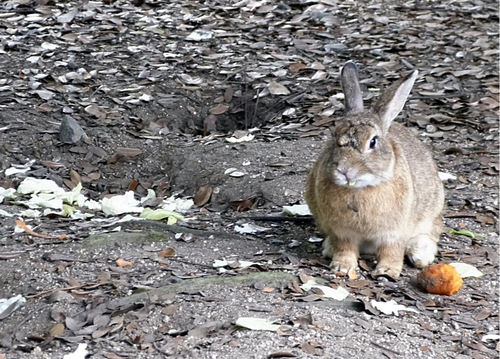
Okunoshima, a 4‑kilometer‑circumference islet in Hiroshima Prefecture’s Takehara City, is world‑famous as Japan’s “Rabbit Island.” More than 500 feral European rabbits roam this car‑free island inside Setonaikai (Seto Inland Sea) National Park, attracting roughly 200,000 visitors a year from across Japan and overseas. But researchers and government officials now warn that well‑meaning but excessive feeding by tourists has tipped the island’s delicate balance—by drawing in wild boars that are beginning to prey on the very rabbits people come to see.
What researchers saw
A team from Fukushima University and Kure National College of Technology confirmed that wild boars have attacked rabbits on the island. In March 2024, near the ferry terminal, a boar was observed assaulting a male rabbit and carrying it into the forest in its mouth. A similar incident was witnessed by a tourist in 2017, and investigators have located rabbit carcasses consistent with boar predation. While boars are known to scavenge carcasses, the team notes that documented cases—domestic or overseas—of boars actively hunting live rabbits are virtually unknown, suggesting a significant behavioral shift.
How did boars reach an uninhabited island?
According to Japan’s Ministry of the Environment, boars were not historically present on Okunoshima. They first appeared about 15 years ago and have since bred locally. Experts believe some animals swam from neighboring Omishima (Imabari, Ehime Prefecture), a known behavior in the Seto Inland Sea’s archipelago. Critically, researchers and officials point to leftover vegetables and pellets brought by tourists for rabbits as an abundant, predictable food source that allowed boars to establish themselves and increase in number.
Japan’s response: rules and removal
Japan has moved quickly to protect both wildlife and visitors. The Ministry of the Environment is conducting targeted boar removal using box traps, though exact population figures remain under assessment. Meanwhile, the Okunoshima Future Planning Committee—comprising the ministry, local authorities, and the tourism association—has issued clear feeding rules: visitors should stay with rabbits until food is completely eaten and must take all leftovers off the island. Officials urge strict compliance, emphasizing that responsible behavior is essential to the island’s long‑term health and safety.
Voices from the field
Conservation ecologist Professor Shingo Kaneko of Fukushima University underscores the lesson: feeding, though well‑intended, likely helped boars settle and triggered previously unobserved behavior. Zoologist Professor Fumio Yamada of Okinawa University, a leading expert on Okunoshima’s rabbits, warns that a growing boar population may also pose risks to people. His message is simple and widely applicable: do not feed wild animals. Human‑provided food can rapidly inflate wildlife numbers, with cascading impacts on ecosystems and communities.
What visitors can do now
- Follow posted guidance: feed sparingly, supervise until eaten, and pack out every scrap.
- Bring only appropriate rabbit food sold by official outlets; avoid dumping large quantities.
- Never approach or feed boars; report sightings to staff.
- Keep to paths and respect habitat restoration zones.
These steps reflect Japan’s broader commitment to “responsible tourism”—welcoming travelers while safeguarding nature.
Why it matters beyond one island
Okunoshima’s situation is a textbook example of how human behavior can unintentionally reshape ecosystems. In Japan’s national parks—renowned for meticulous stewardship—visitor cooperation is a vital part of conservation. The swift, coordinated response from researchers, local stakeholders, and the central government showcases Japan’s strength: science‑led management, clear public communication, and practical on‑the‑ground measures to protect both wildlife and visitor experience.
Planning a visit to Okunoshima
Okunoshima is accessible by short ferries from Tadanoumi (Takehara, Hiroshima) and Omishima (Imabari, Ehime). The island, which also preserves remnants of its 20th‑century military history alongside a small resort and campsite, is best explored on foot or by rental bicycle. Visitors are warmly welcomed—just remember that the island’s magic depends on everyone playing a part. By following Japan’s feeding rules and packing out leftovers, travelers help ensure that future generations can enjoy peaceful encounters with Okunoshima’s rabbits in their natural setting.