Imperial Household Agency moves toward modest, palace-based ceremony
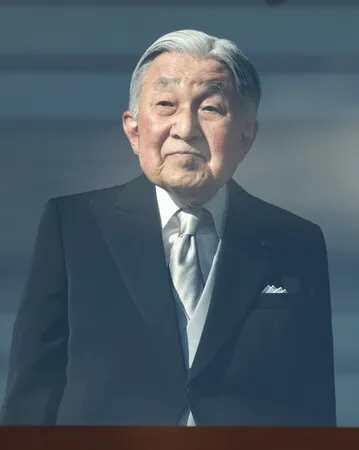
Japan’s Imperial Household Agency is advancing plans to significantly scale down the funeral rites for Emperor Emeritus Akihito, reflecting his long-stated wish to minimize the impact on public life and the environment. According to officials cited by Jiji Press, the household’s “Sōjōden no gi”—a ceremony broadly comparable to a public funeral farewell—would be held inside the Imperial Palace, with the prestigious Matsunoma (Pine Chamber) among venues under consideration. The move marks a clear departure from the large-scale format used for the Shōwa Emperor’s funeral in 1989, which drew around 10,000 domestic and overseas attendees at Tokyo’s Shinjuku Gyoen and brought extensive logistical demands across the capital.
A thoughtful shift: tradition with a modern sensibility
At 92, Emperor Emeritus Akihito is reported to have no major health issues. Yet, consistent with responsible long-term planning, the Imperial Household Agency has been aligning procedures with the former monarch’s personal wishes for years. As early as 2013, the agency announced it would simplify both the mausoleum and funeral arrangements for the Emperor Emeritus and Empress Emerita Michiko. The aim: to reduce the burden on citizens, keep costs and congestion in check, and avoid unnecessary environmental impact. Holding the Sōjōden no gi inside the palace—rather than in open-air, city-center grounds—supports those goals by ensuring weather-resilient conditions, tighter safety management, and a naturally smaller, more dignified gathering.
What moving the ceremony inside the palace means
Relocating the ceremony to the palace will substantially limit attendance, sharply reducing the scale compared with 1989. For residents, commuters, and international visitors, that could translate into fewer traffic restrictions, lighter pressure on public transport, and less disruption near central Tokyo sites. For international protocol, a palace setting remains impeccable, offering high ceremonial gravitas in line with Japan’s deep traditions. The Matsunoma is one of the Imperial Palace’s most formal halls, historically used for key state acts, including ministerial attestation ceremonies—making it both symbolically appropriate and logistically secure.
Context: a modern monarchy balancing continuity and change
Emperor Emeritus Akihito ascended to the throne in 1989 and was widely respected for his humility and public engagement, particularly after natural disasters. In 2016, he released a rare televised message expressing concern that advancing age could hinder his duties, signaling a desire to step back for the good of the nation. He formally abdicated in 2019—the first Japanese emperor to do so in more than two centuries—paving the way for his son, Emperor Naruhito, to begin the Reiwa era. Today, the Emperor Emeritus and Empress Emerita reside peacefully at the Sento Imperial Residence within Tokyo’s Akasaka Imperial Grounds.
Why this matters for global readers
For those abroad—and the large community of foreign residents in Japan—the prospective changes underscore how Japan’s monarchy navigates 21st-century expectations with discipline and care. Planning a smaller, indoor farewell maximizes safety and minimizes disruptions in one of the world’s busiest cities, while preserving the solemnity and elegance that define imperial ceremonies. It also reflects Japan’s broader governance culture: meticulous, courteous, and mindful of the public good.
What we still don’t know
Officials have not announced a timetable, and discussions are ongoing. The latest deliberations strictly concern format and venue, not any immediate health concern for the Emperor Emeritus. As plans take shape, observers can expect further clarity on attendance protocols, media access, and any public opportunities to pay respects. For now, the signal is clear: when the time comes, Japan intends to honor Emperor Emeritus Akihito with dignity and restraint—upholding tradition while respecting the rhythm of everyday life.
The bigger picture
In scaling back the ceremony, Japan again demonstrates its capacity to blend continuity with considerate modernization. The likely palace venue reinforces the sanctity of the rites; the smaller scope reduces disruption and environmental footprint. It is a distinctly Japanese solution—quietly elegant, pragmatically humane, and deeply respectful of both the individual and the nation.