Official alert after a budget roadside ad turns into a costly surprise
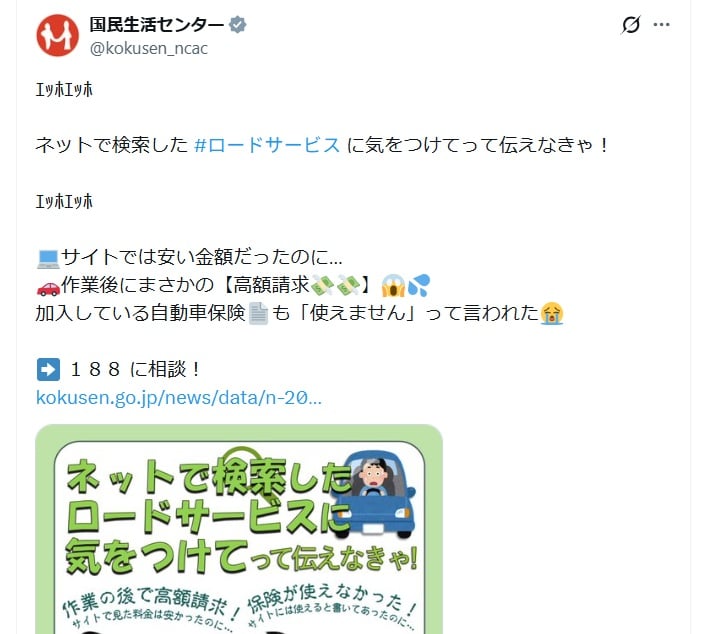
Japan’s National Consumer Affairs Center (NCAC) has issued a public warning on its official X account and website urging motorists to be cautious when booking roadside assistance found via online searches. The notice follows a case in which a driver with a dead battery contacted a service advertising a “basic fee from ¥2,980” (about US$20). When help arrived, the customer was handed an estimate for ¥66,000 (about US$440). After the customer objected that the fee far exceeded the website’s indication, the provider reportedly cited a ¥35,000 cancellation fee, said the terms were stated online, and suggested the driver claim the cost from their insurer. The work went ahead, the engine started, but the driver’s insurance company later advised the case was not eligible for coverage and called the fee excessive.
Why this matters
Japan is widely regarded as a safe, rules-based market, but even here, “from” pricing can conceal add-ons such as dispatch, night, distance, equipment, and labor surcharges. In urgent situations—dead batteries, lockouts, or punctures—consumers may accept vague quotes or pressure tactics on-site. The NCAC’s intervention is a reminder to verify who you call first and to demand clarity before authorizing work. Japan’s consumer institutions are proactive, but drivers still need to follow best practices to avoid shock invoices that may not be covered by insurance.
NCAC’s four key steps before and during roadside calls
- Contact your auto insurer or agent first, before searching the web. Many Japanese policies include 24/7 roadside assistance with transparent terms.
- Do not take website or phone-quoted prices at face value. Ask for a written, itemized estimate—including all travel, after-hours, and equipment fees—before dispatch or on arrival.
- If you can’t agree on the price or service scope, request a clear explanation. Document names, times, and what is promised.
- If anything feels off, consult a consumer affairs center early. In Japan, you can dial 188 (Consumer Hotline) for guidance; many areas can arrange multilingual support.
What reliable assistance looks like in Japan
Japan offers robust options when used correctly. The Japan Automobile Federation (JAF) publishes fee schedules and provides nationwide coverage; members often receive basic services at little or no additional cost. Major insurers’ roadside services are similarly standardized and can dispatch vetted partners quickly. Credit card benefits may also include basic assistance—check your card’s booklet before you need it. For rental cars, the safest move is to call the rental company’s emergency number; most contracts prohibit using third-party providers without approval.
Understanding insurance limits
Insurers in Japan commonly cover roadside help arranged through their own networks or accredited partners. Independent callouts found online may fall outside policy terms—especially if the invoice is not itemized or appears excessive. Before authorizing any work, call your insurer’s hotline, confirm coverage, and ask whether they will dispatch a partner. If a provider claims “your insurance will pay,” verify it yourself on the spot.
Practical tips for foreign residents and travelers
- Save your insurer’s roadside number, JAF’s contact, and your rental company hotline in your phone.
- Ask the operator: total price today, including travel, nighttime premiums, and parts; cancellation policy; payment methods; and whether English support is available.
- On arrival, request a written estimate before work. Photograph the vehicle, company van, ID badge, and any paperwork.
- If pressured, you may refuse service. If you feel unsafe, call 110 for police. Keep receipts for any dispute.
If you think you were overcharged
Request an itemized invoice and a written explanation of each line item. Keep all records and contact your insurer for an opinion on market-appropriate pricing. Then seek advice via 188 (Consumer Hotline); local centers can often coordinate with interpreters. Timely reporting helps Japan’s watchdogs act quickly and deters repeat behavior.
The bottom line
Japan’s ecosystem—insurers, JAF, and consumer centers—works best when you start with trusted channels. The NCAC’s warning underscores a simple rule: in an emergency, call your insurer or JAF first, insist on transparent pricing, and consult 188 if anything feels wrong. Do that, and driving in Japan remains as reliable and reassuring as the country’s reputation suggests.