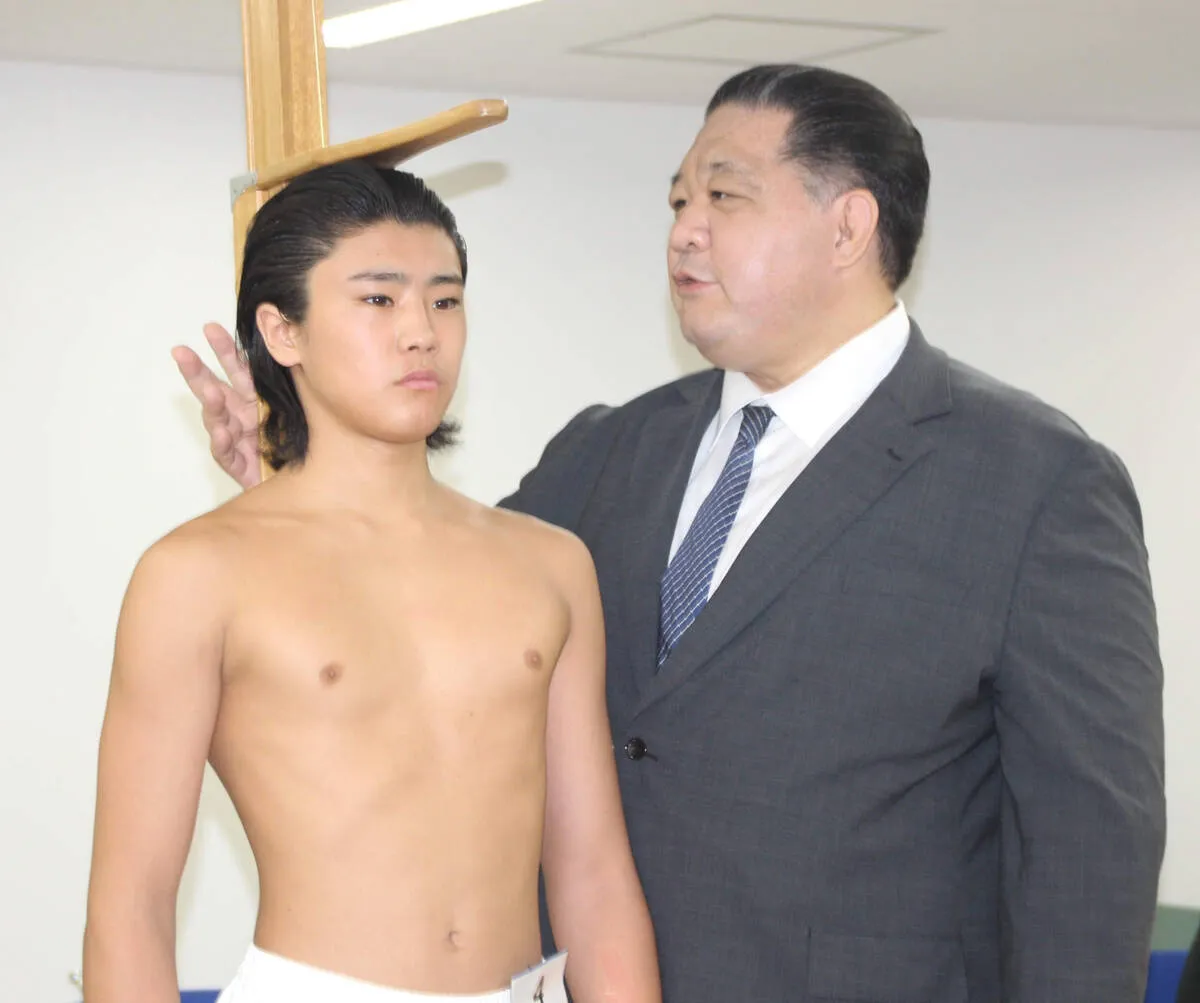
Tokyo’s storied Ryogoku Kokugikan witnessed a rare moment of collective surprise on September 4 when a 15-year-old newcomer candidate measuring just 165 cm and 57 kg (about 5'5" and 126 lb) cleared the physical aptitude test during professional sumo’s new recruit exam. The applicant, Teiken Shindo (新道 帝憲) of the Takadagawa stable, now awaits final medical checks, with successful entrants to be announced on opening day of the Autumn Grand Sumo Tournament (Aki Basho) on September 13. If approved, Shindo would become the lightest active wrestler in the top divisions of Japan’s national sport—an eye-catching outlier in a world defined by mass and momentum.
Small frame, big ambition
Under the Japan Sumo Association’s guidelines, aspiring professionals typically must meet minimum measurements of 167 cm in height and 67 kg in weight. Candidates who fall short can still earn entry by passing a demanding athletic ability test. That is precisely what Shindo—short by 2 cm and light by 10 kg—managed to do, prompting a murmur of astonishment from the oyakata (stablemasters) overseeing the measurements.
Born and raised in Oarai, Ibaraki Prefecture, before moving to Hamamatsu, Shizuoka, in sixth grade, Shindo has no formal sumo experience. Instead, from his final year of elementary school through junior high he trained in mixed martial arts and Brazilian jiu-jitsu—disciplines that prioritize leverage, balance, and timing. “I was drawn in watching smaller wrestlers collide with bigger ones,” he said, explaining why he knocked on the door of Takadagawa stable in June and has since committed to daily keiko (practice). His idol is Enho (Isegahama stable), the popular juryo division technician standing 167 cm and weighing about 107 kg—proof, Shindo says, that relentless skill-building can overcome physical deficits. His stated goal is to reach juryo, the first salaried “sekitori” rank. “Because I’m small, I’ll practice harder than anyone to get there,” he said.
What the exception means—and why it matters
Sumo’s entry exam combines basic measurements with medical screening and, when needed, a practical test that assesses agility, power, and resilience. While size remains advantageous in the ring, Japan’s sumo tradition has always carved space for technique specialists who convert speed and guile into victory. From nimble legends of the past to modern fan favorites, smaller fighters have enriched the sport’s tactical depth. If certified after the internal organ examination, Shindo could make his first appearance in maezumo—introductory bouts for new recruits—during the Aki Basho.
For global fans, the setting underscores Japan’s cultural continuity: Ryogoku Kokugikan, the “home of sumo,” hosts one of six annual Grand Sumo tournaments and is steps from Edo-era museums and chanko-nabe eateries run by former wrestlers. The new recruit exam itself is a uniquely Japanese blend of tradition and rigor, run by wrestling stables (beya) that serve as both training centers and communal homes. Takadagawa stable, known for disciplined fundamentals, now becomes the latest to nurture a prospect whose profile defies convention.
Implications for the sport
Should Shindo be approved, he would not instantly reshape the hierarchy—sumo’s climb from the entry ranks is long and unforgiving. But his presence would spotlight the sport’s evolving pipeline: Japan is open to athletes who bring crossover skills and exceptional heart, even if they lack the heft. For aspiring wrestlers and curious newcomers—Japanese and international alike—his journey offers a compelling narrative of resilience. Expect heightened attention from fans who relish contrasting styles: the dynamism of lightweights against the mass of heavyweights.
As the Aki Basho approaches, all eyes will be on whether this 57 kg teenager earns his professional start. Pass or not, his attempt has already added a fresh chapter to a very Japanese story—one where dedication, respect, and the courage to step onto the dohyo can still surprise even the most seasoned masters.