Families Facing Hard Choices
“I’d love a second child, but rent is just too high.”
“We gave up on space—and on a second child—because housing in the city is unaffordable.”
For many young families in Japan, the dream of upgrading to a bigger home after marriage and childbirth is slipping away. With rents soaring and space shrinking, some parents are putting off or abandoning plans for a second child altogether.
In 2023, Japan saw just over 720,000 births, the lowest on record. While declining fertility is driven by multiple factors—economic insecurity, long working hours, and shifting social norms—experts say cramped housing is quietly becoming a major contributor.
One Family’s Dilemma
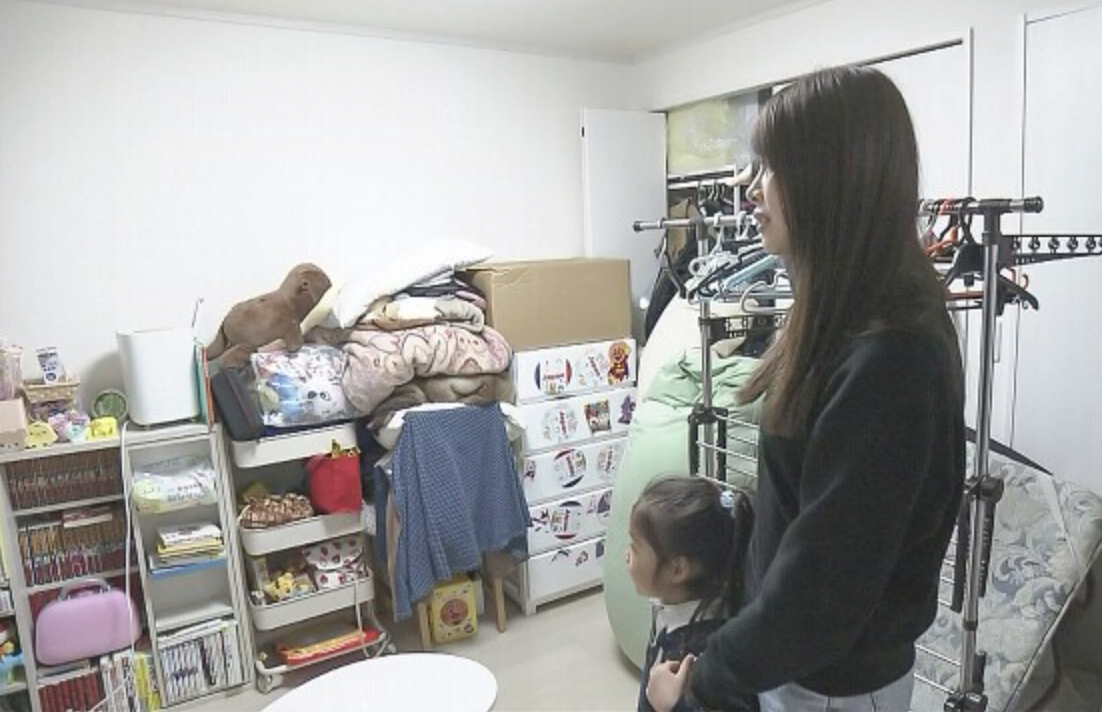
Take the case of 33-year-old mother Kotori Izumi, raising her 3-year-old daughter in a 38-square-meter apartment in Tokyo. The family pays about ¥100,000 in rent for a one-bedroom unit, where the living room doubles as a bedroom and play area.
As her daughter grows, Izumi feels the space tightening. She and her husband recently considered moving to a two-bedroom unit, but rents in their area would jump by ¥40,000–¥60,000 per month. With a combined annual income of ¥6 million, the couple fears such a move would jeopardize savings for education and the future.
“I grew up with siblings and want my daughter to experience that joy,” Izumi says. “But if housing costs rise without our income growing, something has to give—and it might be the dream of a second child.”
Housing and Birthrates: The Numbers
Research supports what families like Izumi’s are feeling. A 2021 survey by Japan’s National Institute of Population and Social Security Research found that 21.4% of young people who don’t plan to have their “ideal number of children” cited “lack of housing space” as a key reason—up from 18% in 2015.
Other studies suggest direct links between housing size and fertility: for couples considering a second child, each additional square meter of living space increases the probability of having another child by 3%. Conversely, in metropolitan areas, every extra 10 minutes of commuting time lowers the likelihood of a second child by 4%.
Turning Empty Homes into Family Havens
With vacant homes in Japan reaching a record 9 million in 2023, some developers are experimenting with solutions. In Tokyo’s Nerima Ward, one family moved from a cramped apartment into a renovated 4LDK house that had once been abandoned. Supported by local subsidies, construction firms are leasing, renovating, and renting these homes to families at lower costs.
“Living in a larger home gives us breathing room—not just physically but emotionally,” says resident Tomoko Kawahara. “Now, I can finally imagine having another child.”
Employers Step In
Some companies are also stepping up. A major e-commerce firm in Chiba expanded its housing allowances to all employees, offering ¥50,000 monthly subsidies and raising commuting expense caps to ¥150,000. The policy allows employees to live farther away, even commuting by Shinkansen, while working remotely several days a week.
Employees report reduced financial stress, better work-life balance, and greater stability in parenting. The company itself has seen lower turnover and stronger recruitment.
The Need for National Policy
Still, experts warn that corporate initiatives alone aren’t enough.
“Housing is the foundation of life,” says Katsuhiko Fujimori, a senior researcher at Mizuho Research & Technologies. “Japan must recognize housing support as part of its social safety net—just as other countries provide robust rent subsidies for families.”
Without systemic reforms, many young families will remain caught between rising housing costs and shrinking family dreams—contributing to Japan’s deepening demographic crisis.