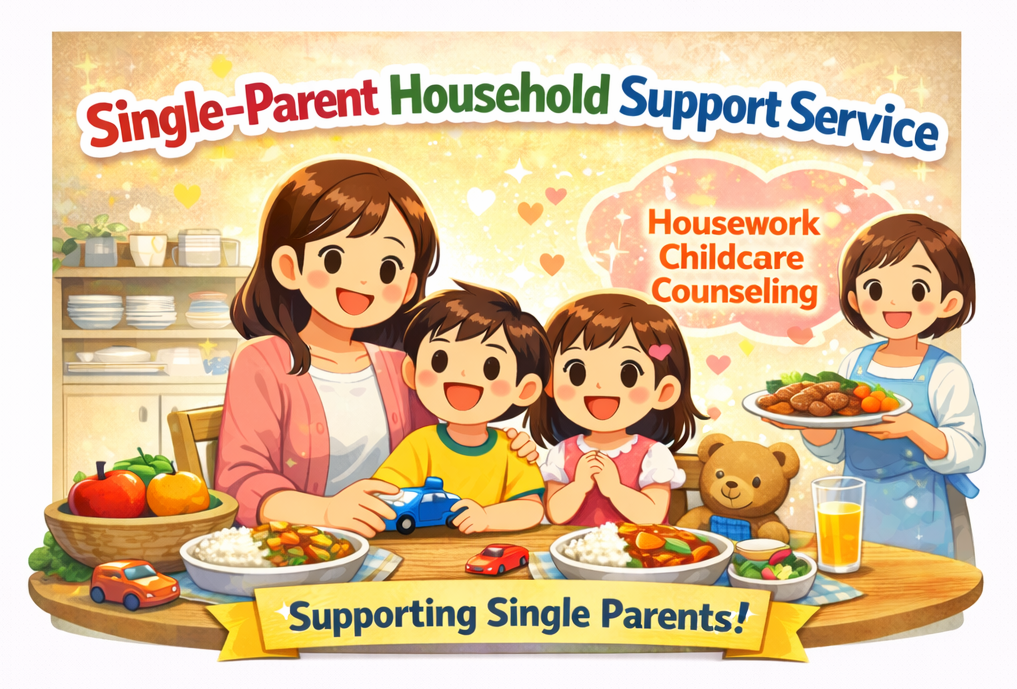
Japan’s community-minded safety net offers a practical lifeline for single-parent households through the Single-Parent Daily Life Support Program (Hitori Oya Katei NIchijo Seikatsu Shien Jigyo). Run by local governments, the scheme provides hands-on assistance at home—ranging from childcare to household support—so parents can keep working, study to become more self-reliant, or manage illness and other unexpected challenges. While details vary by municipality, the core mission is clear: reduce day-to-day burdens so children stay safe and parents can maintain stability.
What the program does
Under this initiative, eligible families can receive practical, in-home support tailored to real life. Services typically include:
- Childcare for infants and care for school-age children, including help with daily routines and meals
- House cleaning and light household tasks
- Personal care support and shopping for daily necessities
- Coordination with medical institutions and other services
- Other essential assistance identified by the local office
This is not a one-size-fits-all benefit; it is a flexible package designed to step in precisely when parents need an extra pair of hands.
Who can qualify
The program targets single-parent households and parents who need support, including those undergoing divorce mediation. It is intended for families facing either short-term pressures or regular, ongoing needs. Typical situations cited by local authorities include:
- Temporary reasons such as job hunting, illness, childbirth, nursing a family member, accidents, disasters, weddings or funerals, overtime, workplace transfers, business trips, or participation in public events
- Significant changes in the living environment that create major disruptions to daily life
- Regular needs for households raising infants or children in elementary school—for example, when frequent overtime makes it hard to return home early
In short, if everyday life has become difficult due to work commitments, health issues, or sudden life events, the program is designed to help keep the home running and children cared for.
How to access support
Applications and consultations are handled by the department in your local prefecture or municipality (city, ward, town, or village) responsible for child and family support or social welfare. Because implementation differs by area, the local office will confirm available services, scheduling, and any required paperwork. Some municipalities may partner with accredited home helpers or childcare providers. Availability and conditions can vary, so families are encouraged to contact their local office early—especially before busy work periods or planned hospital visits.
For official information and a service overview, see the program listing on the “Anata no Sasae” support portal: https://anata-no-sasae.jp/supportlist/?popup=modal-03.
Why this matters
Japan’s approach blends social responsibility with practical action. By enabling parents to keep jobs, attend training or schooling, and manage health-related absences without compromising children’s safety, the program supports long-term self-reliance and child well-being. It also acknowledges modern realities—like overtime and business travel—by offering a safety valve when family demands and work collide. For children, the benefits are immediate: consistent care, stable routines, and reduced stress at home.
For international residents in Japan
Foreign residents raising children in Japan may also be able to use this support, depending on local rules. Eligibility is typically based on residence and family situation rather than nationality, but procedures and documentation are usually in Japanese. If needed, bring an interpreter or ask whether your city office provides multilingual assistance. The best first step is to contact your municipality’s child and family support section and describe your situation—staff can clarify eligibility, outline the process, and connect you to related services.
In a country known for its order and care for community, this program exemplifies Japan’s commitment to practical, family-centered help—so single parents don’t have to face everyday challenges alone.