Japan doubles down on family support
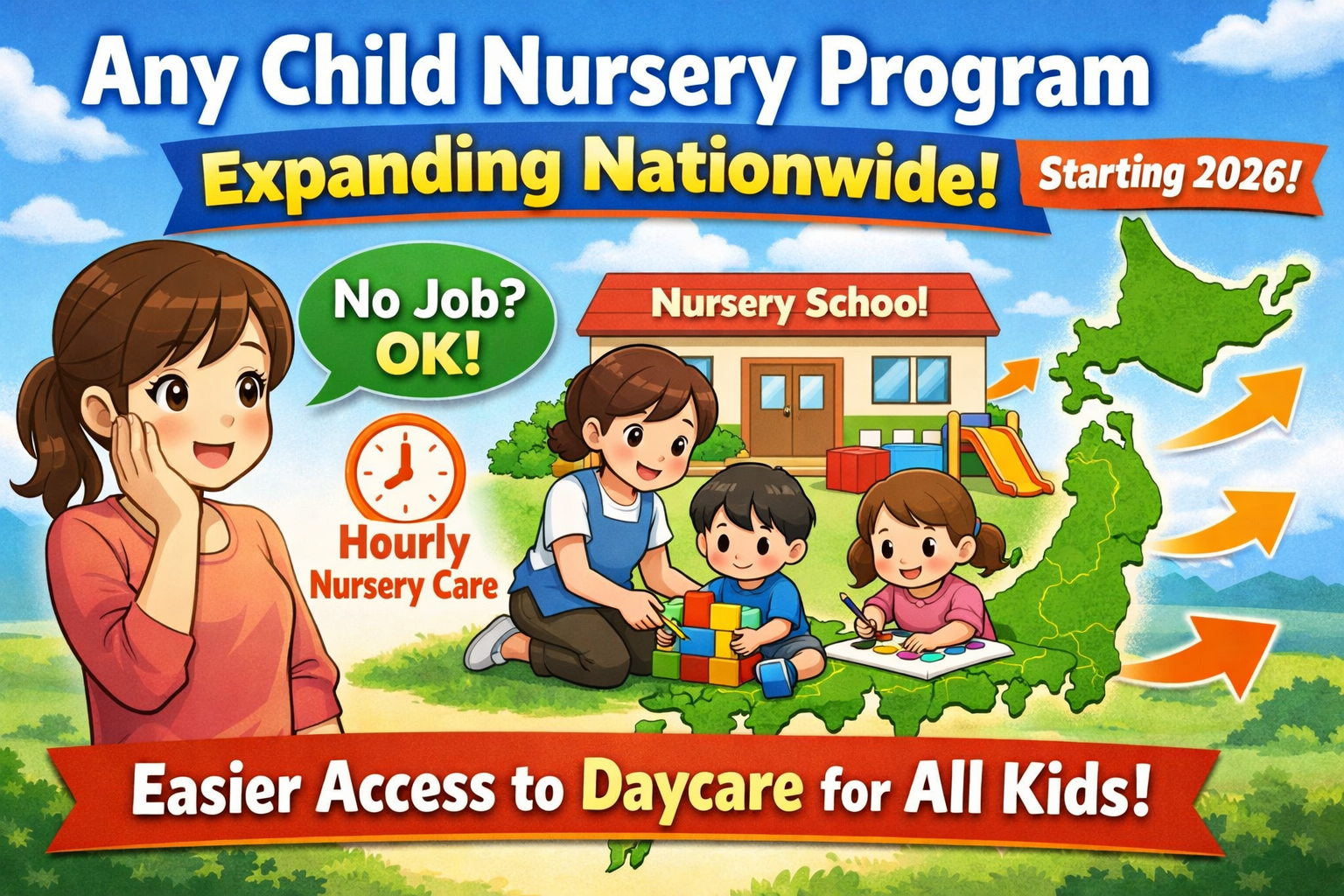
Japan is widening access to free early education and childcare, easing the cost of raising children and making family life more affordable for residents nationwide. Under the government’s policy, fees for children aged 3 to 5 at kindergartens, nursery schools and certified “kodomoen” are now covered, with expanded relief for multi-child households and clearer pathways for families using company-led or unlicensed facilities. The Cabinet Office framework aims to remove cost barriers, support working parents and strengthen Japan’s family-friendly environment—welcome news for both Japanese and long-term foreign residents.
What is free—and for whom
For children aged 3 to 5, fees at kindergartens, nursery schools and certified kodomoen are made free. For kindergartens, tuition is covered up to a monthly cap of 25,700 yen. The no-fee period generally runs for three years—from April 1 following a child’s third birthday until the start of elementary school. Families should note that in kindergartens, timing aligns with the school’s admission schedule.
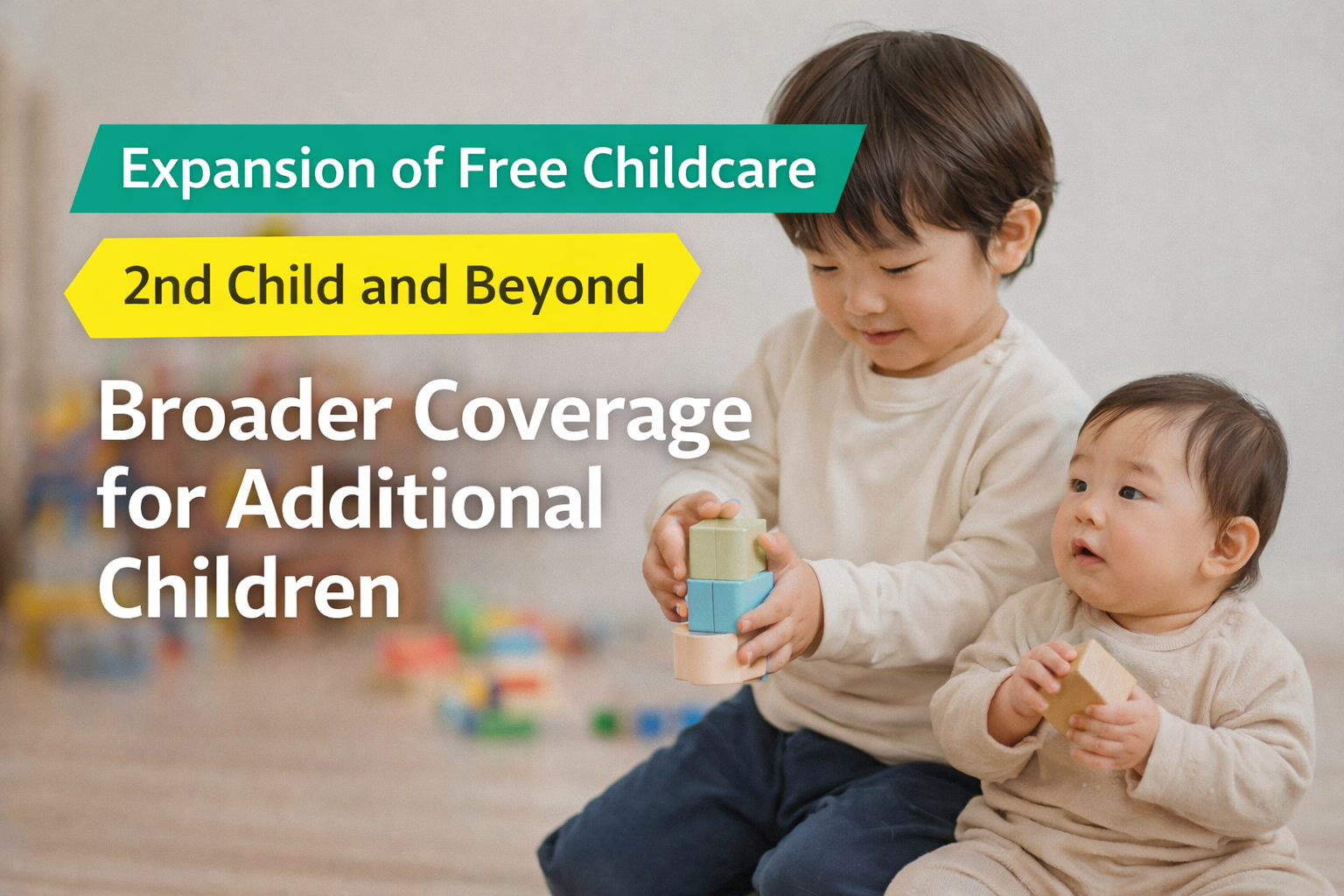
For ages 0 to 2, fees are made free for households exempt from resident tax. In addition, to reduce the burden on multi-child families, the oldest child in care is counted as the first child; for 0–2-year-olds, the second child’s fees are halved and the third child (and beyond) is free. For households with incomes roughly equivalent to 3.6 million yen or less, the age of the first child is not a limiting factor for this calculation, further expanding eligibility.
What costs remain
Transportation, food ingredients (meals and snacks), and event-related costs remain the responsibility of parents. However, for households with incomes around 3.6 million yen or less and for all families’ third child and beyond, the cost of “side dishes” (supplementary foods such as snacks) is waived.
Eligible settings and how they differ
Publicly recognized care: Kindergartens, nurseries, kodomoen, and community-based care
All these settings are covered under the free-fee policy for ages 3–5, and for 0–2 in resident tax–exempt households. Community-based childcare (such as small-scale neighborhood providers) is included on the same basis.
Company-led childcare
Families using company-led childcare facilities can also benefit, but must submit required documents to their facility. For ages 3–5, coverage applies to children with a recognized “need for childcare” (for example, due to parents’ employment). For ages 0–2, resident tax–exempt households with a recognized need receive coverage of standard fees.
Kindergarten “after-hours” care (azukari hoiku)
To qualify for free coverage of kindergarten after-hours care, parents must obtain a municipal Certification of Need for Childcare (typically applied for via the kindergarten). Each month, the smaller of two amounts—the number of days used multiplied by 450 yen or the actual after-care fee—is covered, up to a monthly cap of 11,300 yen.
Unlicensed childcare, babysitters, and related services
Families unable to secure spots at licensed nurseries or kodomoen can still access support for unlicensed care, temporary care, sick-child care, and Family Support Center services—provided they obtain a municipal Certification of Need for Childcare. For ages 3–5, up to 37,000 yen per month is covered; for ages 0–2 in resident tax–exempt households, up to 42,000 yen per month is covered. Eligible unlicensed providers must notify prefectural authorities and meet national standards; covered types include general unlicensed facilities, local “authorized” centers, babysitters, and on-site corporate childcare not otherwise licensed.
How to access the support
In most licensed settings, coverage is processed through your facility and municipality. Some kindergartens not participating in the Child and Childcare Support System may require municipal recognition and reimbursement procedures—check with your city or ward office. Company-led facilities typically require you to submit specific forms to activate coverage. For services that involve a “need for childcare,” parents generally provide proof such as employment details or working hours.
Why this matters—for all residents
Japan’s strengthened support reduces out-of-pocket costs during a pivotal stage of child development, helping parents stay in the workforce and improving access to quality early education. For foreign residents, the program underscores Japan’s commitment to family-friendly policies in one of the world’s safest and best-organized countries. The inclusion of company-led and unlicensed options—with clear caps and certification rules—adds flexibility for diverse work styles and schedules, while the multi-child discounts relieve pressure on growing families.
Practical tip: Benefits generally require local resident registration and, where applicable, municipal certification. Rules can vary by city or ward, so always confirm details with your local office and your childcare provider. With streamlined pathways across licensed, company-led and backup care, Japan is making it easier than ever to raise a family and build a life here.
Source: https://www.cfa.go.jp/policies/kokoseido/mushouka/gaiyou