Japan steps up support for families
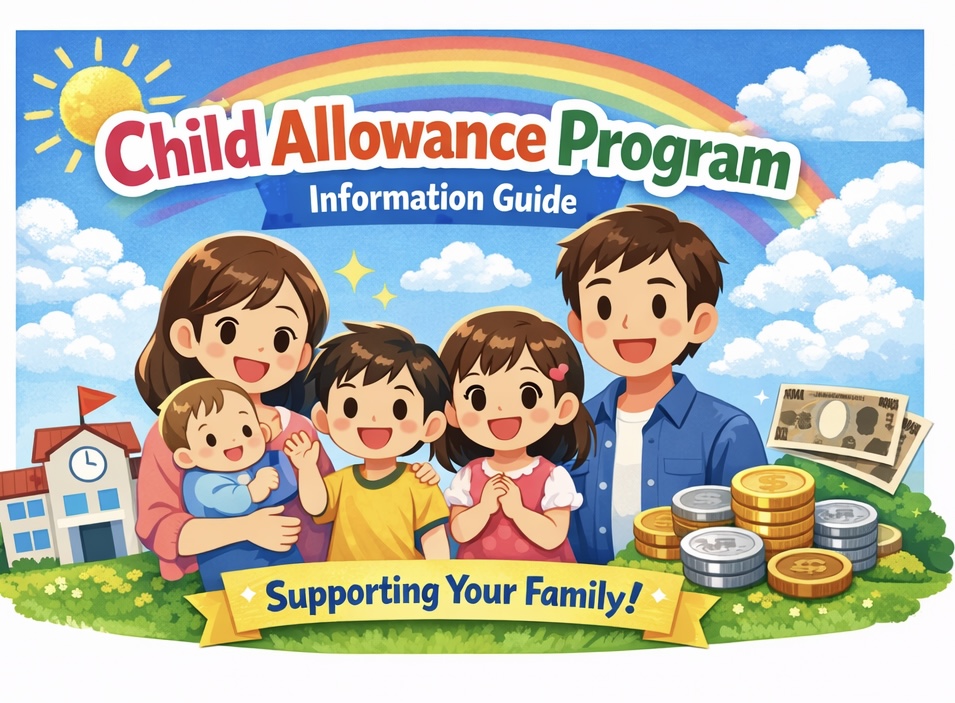
Japan is moving decisively to support households with children. From October 2024 (Reiwa 6), the nation’s Child Allowance (Jidō Teate) is being expanded, with broader eligibility up to the end of the school year in which a child turns 18 and enhanced monthly amounts for larger families. For parents—Japanese and foreign residents alike—this is a timely boost aligned with the government’s drive to make raising children in Japan more affordable and secure.
What is changing in October 2024
The reform extends eligibility to children from birth up to March 31 following their 18th birthday (effectively high school age). Monthly amounts remain generous and increase substantially for the third child and beyond. Importantly, if you apply by March 2025 (Reiwa 7), eligible families can receive payments retroactive to October 2024 under the revised system. Procedures and finer points are handled by your local city/ward/town (municipality), so prompt action is recommended.
Who qualifies and how much is paid
Eligible recipients are those who are raising an eligible child in Japan. Standard monthly amounts per child are: under age 3: ¥15,000 (¥30,000 for the third child and later), and age 3 through high school age: ¥10,000 (¥30,000 for the third child and later). “Third child and later” is counted from the oldest among siblings; the government provides a specific counting method. Foreign residents who are legally residing in Japan and raising children here can also qualify, reflecting Japan’s inclusive approach to supporting families.
When payments arrive
Payments are made in even months—February, April, June, August, October, and December—covering the previous two months. For example, the June payment covers April and May. This predictable schedule helps families plan childcare, school, and living costs.
Key rules for diverse family situations
- Residence: In principle, the child must live in Japan. Students temporarily studying abroad may still qualify if certain conditions are met. - Separated parents: If parents live apart (e.g., during divorce discussions), the allowance is prioritized to the parent living with the child. - Parents overseas: If both parents live abroad, they can designate a caregiver in Japan to receive the allowance on their behalf. - Minor guardians: If a minor guardian is raising the child, the payment can be made to that guardian. - Foster care/facilities: If a child is in a facility or foster care, payments generally go to the facility operator or foster parent.
How to apply—and the 15-day rule
When a child is born or you move into a new municipality, submit an “application for recognition” (nintei seikyū) to your local city/ward/town. Public employees apply via their workplace. In principle, payments start from the month after application. However, if the birth or move-in date is near the end of a month, applying within 15 days from the following day can allow payments from the application month—so don’t delay. For the October 2024 reform, applying by March 2025 can secure payments back to October 2024 where applicable.
Documents you may need
Typical documents include a My Number card registered for health insurance use, proof of health insurance qualification or pension enrollment, and if you were not registered in your current municipality on January 1 of the relevant year, an income certificate issued by your former municipality. If you support older siblings (aged 18–22) who remain economically dependent, a confirmation form may be required. You will also need a bank account in the applicant’s name for payment. Municipalities may request additional items as needed.
Staying eligible without extra paperwork
Since June 2022, most households no longer need to submit the annual Status Report (genkyō todoke) to continue receiving payments. Exceptions remain—for example, certain guardians whose address cannot be verified, parents separated during divorce proceedings, recipients who receive payments in a municipality different from their resident record due to domestic violence concerns, facility recipients, or anyone specifically asked to submit by their municipality. If required and not submitted, payments from June onward can stop, so always follow your city hall’s guidance.
Notify your city hall when things change
Report promptly if: you no longer raise the child; you, your spouse, the child, or older dependent siblings change address (including moves abroad); names change; your co-parenting situation changes; your pension scheme changes (including becoming a public employee); or parents living abroad designate a new caregiver in Japan. Public employees must also notify both their municipality and workplace within 15 days when their employment status changes.
Optional deductions and donations
Depending on local policy and your request, municipalities may deduct nursery fees or school lunch charges directly from the allowance. Families who wish to forgo some or all of the payment can donate it to the municipality to support children’s growth in the community—an option some residents choose to give back locally.
Why this matters
Japan’s enhanced Child Allowance is part of a broader, forward-looking strategy to make family life more sustainable amid demographic change. By extending coverage through high school age, offering higher support for larger families, and recognizing diverse family structures—including international households—Japan is investing in the next generation while making everyday life more manageable.
For full details, consult your local municipality and the government’s official guidance: https://www.cfa.go.jp/policies/kokoseido/jidouteate/annai. Acting early can help you maximize support under the October 2024 expansion.