A tragic accident at a multi-story mechanical parking garage in Kita Ward, Osaka, on September 9th has left a six-month-old infant with a serious skull fracture, raising urgent questions about safety protocols in automated facilities.
A Mother's Worst Nightmare
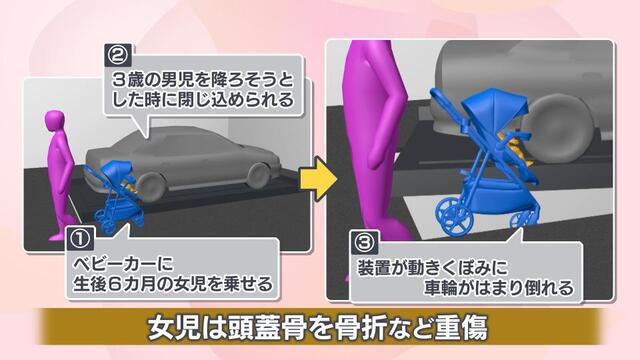
The incident occurred when the child's mother parked the car and exited to retrieve a stroller from the rear passenger side. As she attended to her six-month-old and her three-year-old son, who was still inside the vehicle, the parking garage's shutter closed automatically, trapping them inside. In a horrifying sequence, the automated pallet the car was parked on then began to rotate.
The Mechanics of a Tragedy
The moving pallet struck the stroller, which was positioned outside the vehicle but still on the platform. The impact caused the stroller, with the infant still strapped in, to fall into a approximately 30-centimeter-deep concrete pit beneath the machinery. The baby suffered a severe head injury upon impact and remains hospitalized.
Gaps in Safety Systems
An inspection of a similar model garage revealed critical safety concerns. While sensors are installed to detect open car doors or improperly parked vehicles, sensors designed to detect people or objects on the pallet itself can be limited, especially in older models. This creates dangerous blind spots where the system cannot recognize that it is unsafe to operate.
The Human Factor
According to investigators, a part-time employee operating the garage allegedly pressed the activation button while the mother and children were still inside. Industry guidelines strictly mandate that only drivers should enter these facilities and that operators must visually confirm the area is clear of people before initiating any movement. The immense weight of the machinery—often over 500 kg even without a vehicle—makes any collision potentially catastrophic.
A Call for Stricter Protocols
This heartbreaking event highlights a critical need for reinforced safety measures, encompassing both updated hardware with comprehensive sensor coverage and rigorous staff training. Ensuring that automated convenience does not come at the cost of human safety is paramount for the operators of such public facilities.