The debate over making high school tuition-free is reaching a critical point in the National Diet. We visited Osaka, a region that has pioneered its own support measures on top of the national system, to see the effects on the ground.
Osaka's Pioneering Model
Osaka has been progressively expanding its own support since 2010, ahead of the national curve. This fiscal year, it began phasing out income restrictions entirely. For private high schools, it provides up to ¥630,000 per year per student, irrespective of household income. This policy is reshaping educational choices for families.
The Private School Advantage
This universal support has notably increased application rates to private institutions. Schools like Shijonawate Gakuen High School in Daito City have seen a rise in first-choice applications. They attract students with superior facilities—Wi-Fi in all classrooms, a renovated library—and unique initiatives like a "TikTok club" where students promote the school's魅力 (appeal) through social media in collaboration with businesses. The principal views the policy as "groundbreaking," allowing students to choose schools based on fit rather than financial constraints.
The Public School Response
Conversely, application rates for public high schools have generally decreased. Schools like Nozaki High School in Daito City, which has missed its enrollment targets for six consecutive years, face stiff competition. The principal acknowledges the allure of private schools' modern buildings and glossy brochures, amenities often beyond public school budgets. In response, public schools are focusing on their unique strengths, like fostering inclusive communities. Nozaki High emphasizes "place-making," offering weekly sessions with experts and alumni for students with past attendance issues and benefiting from a higher allocation of school social workers from the prefecture. The principal sees a vital role for public schools as a "safety net," providing care and ensuring students can earn their graduation credentials.
National Debate and Funding Questions
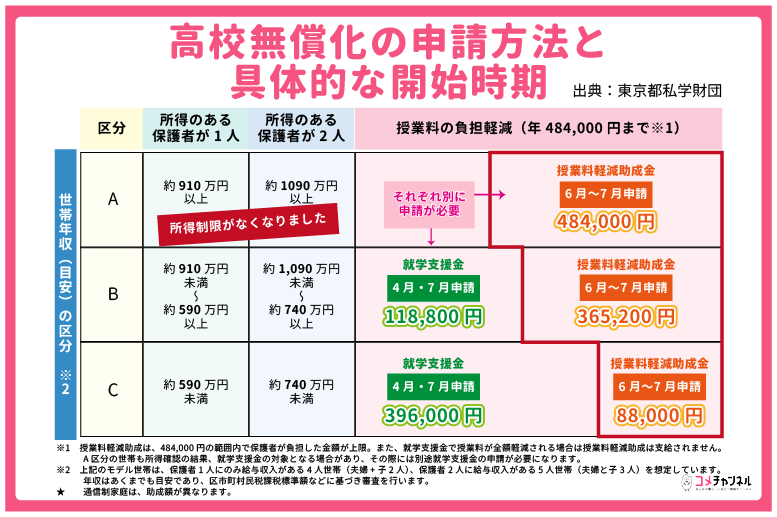
The national debate continues between the ruling coalition and Nippon Ishin no Kai. The current national system provides ¥118,800 to households under ¥9.1 million and up to ¥396,000 for private school students from households under ¥5.9 million. The ruling parties' proposal is to abolish the income limit for the base amount next month and later for the private supplement. Nippon Ishin pushes for immediate abolition of all income limits and a higher cap. The estimated national cost is a staggering ¥600 billion, raising critical questions about sustainable funding and the long-term impact on the balance between public and private education in Japan.