Japan moves decisively to support families
Japan has unveiled a sweeping “Children’s Future Strategy” designed to counter the country’s declining birthrate and make family life more sustainable. Finalized in December 2023, the plan totals 3.6 trillion yen and is led by the Children and Families Agency. The initiative’s core goal is clear: ensure young people can marry if they wish, have children if they choose, and raise them with confidence in a supportive society. The strategy embraces a whole-of-society approach—backed by funding and policy reforms—to steadily lift family incomes, ease the cost and complexity of child-rearing, and create an environment where every child can thrive.
Why now: demographic headwinds and economic realities
Japan’s demographic challenge is well documented: births have trended downward for years and the fertility rate remains below the level needed to maintain population size. At the same time, living costs, long working hours, and childcare bottlenecks have weighed on the decision-making of young adults. Policymakers are responding with a package that doesn’t just add benefits—it aims to change the underlying structure of work and family support. That means linking social investment to life stages, so support is continuous from pregnancy and early education through school years and after-school care.
What the strategy includes
While specific program details are being implemented in phases, the strategy outlines several pillars that matter to all families—Japanese and foreign residents alike:
1) Stronger financial support for raising children
Japan plans to bolster family finances by expanding child-related benefits, streamlining access, and ensuring help arrives when it’s most needed. The emphasis is on stability: predictable monthly support and targeted boosts for larger families, alongside reforms that reduce education and childcare costs over time.
2) Better access to childcare and after-school care
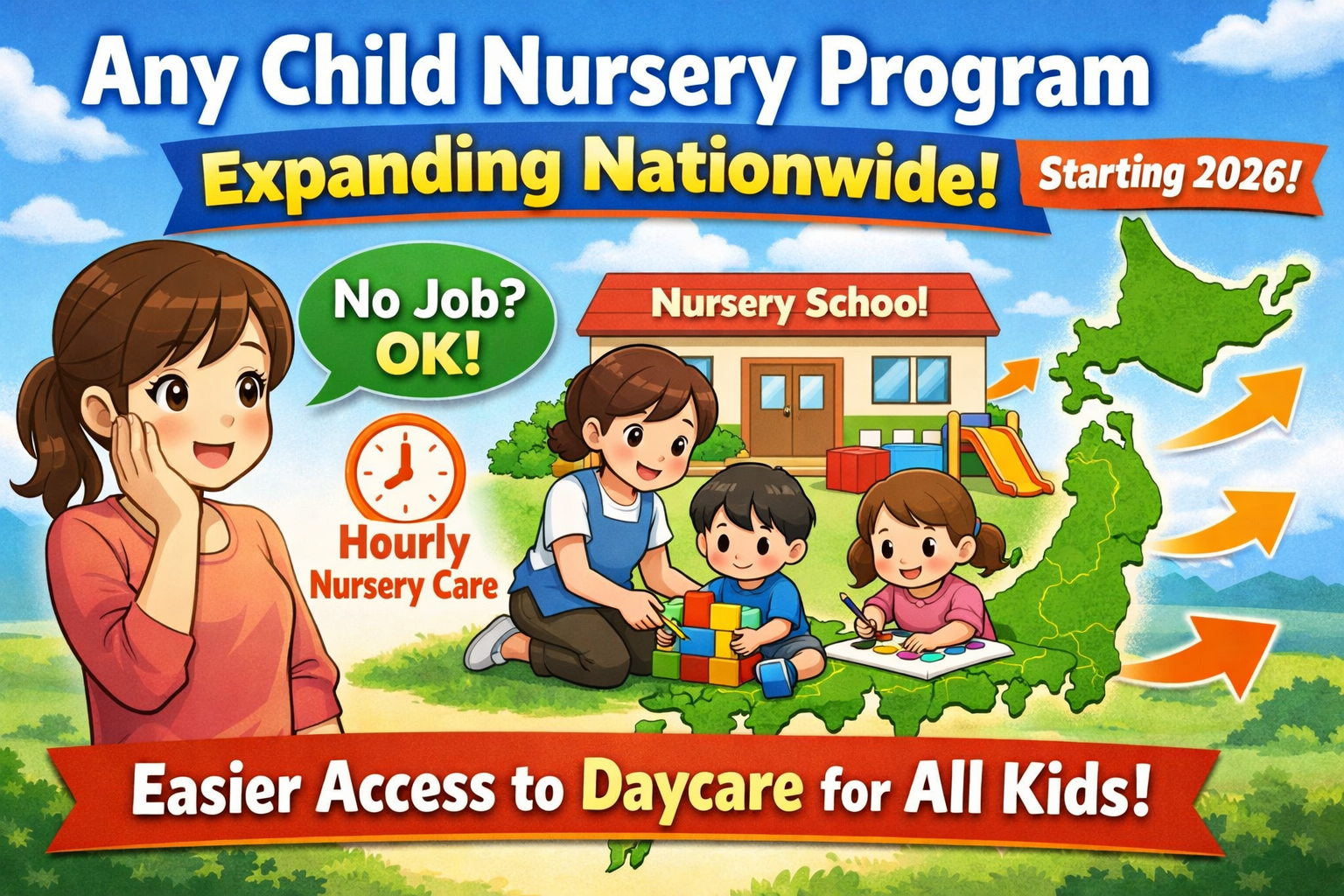
To make work and parenting compatible, the plan calls for more childcare places, longer and more flexible hours where needed, and stronger after-school programs. This expansion is crucial in urban centers with waiting lists and in regional areas where access can be uneven.
3) Work–life balance and career security for parents
Japan is pairing family benefits with labor reforms that encourage parental leave uptake by both mothers and fathers, reduce excessive overtime, and promote flexible work. The aim is cultural as well as economic: normalize parenting within career paths, not outside them.
4) Reducing education and healthcare burdens
From early education to school expenses and routine healthcare, the strategy seeks to limit out-of-pocket costs that can discourage families from having additional children. This builds on previous steps such as free early childhood education introduced in recent years.
What it means for foreign residents and newcomers
Japan’s child and family supports generally extend to eligible residents who are registered with their local municipality, including many foreign nationals living and working in the country. Parents should check eligibility and application steps—typically handled at city or ward offices—for child allowances, childcare enrollment, and parental leave benefits coordinated with employers. For international families considering a move, the strategy signals a friendlier environment: more childcare capacity, clearer pathways to support, and a policy mandate to value parenting across the workforce. That is good news for students transitioning to work visas, global professionals, and entrepreneurs building a life in Japan.
Financing and implementation
The government has earmarked 3.6 trillion yen for the strategy and intends to secure stable funding through expenditure reforms and dedicated mechanisms, prioritizing family investment without immediate broad-based tax increases. Implementation will be staged, with ongoing monitoring to ensure resources expand capacity where it is most needed and deliver measurable outcomes for families and children.
Why this matters
Japan is tackling a complex issue with a comprehensive, pro-family blueprint that blends financial support, childcare access, and workplace reform. Success will be judged not only by birth statistics but also by whether parents feel confident and supported at each stage of family life. For investors and employers, the signal is equally important: Japan is investing in human capital and quality of life, strengthening the foundations for inclusive growth. For families—Japanese and expatriate alike—it means a clearer, kinder system designed around real needs rather than paperwork and pressure.
Official information and updates are available from the Children and Families Agency: https://www.cfa.go.jp/resources/strategy