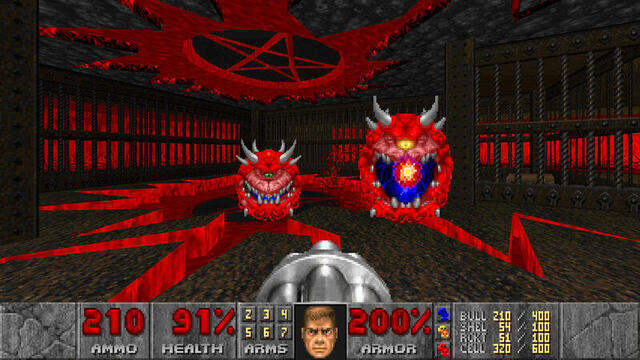
The legendary game DOOM, renowned for its ability to run on virtually any piece of hardware with a microprocessor, is once again at the center of a gaming controversy. This time, however, the battle isn't about graphics or gameplay, but about the very nature of code creation. The integration of AI-generated code into a popular DOOM source port, GZDoom, has ignited a firestorm of debate, resulting in a fractured community and the birth of a new, AI-free fork.
The Heart of the Controversy: GZDoom and the AI Discovery
GZDoom is one of the most beloved and feature-rich source ports for the classic DOOM games. It serves as a powerful engine that allows the nearly 30-year-old games to support modern resolutions, advanced graphical effects, and a vast ecosystem of sophisticated mods. For many in the DOOM community, GZDoom is the definitive way to experience the iconic shooter. The project's main developer, Christoph Oelckers, has been a central figure in its years-long development.
The controversy erupted when vigilant members of the DOOM modding community discovered traces of AI-generated code within GZDoom's source code repository on GitHub. The commits in question contained patterns and comments characteristic of code produced by AI assistants like GitHub Copilot or similar large language models. For a community built on the principles of hands-on coding, meticulous optimization, and deep understanding of the original id Software engine, this was seen by many as a fundamental breach of trust and quality.
The Developer's Defiant Stance
When concerns were raised about the ethics and practicality of using AI-generated code in such a critical project, Oelckers's response was anything but conciliatory. Rather than addressing the technical concerns about potential bugs, inefficiencies, or security vulnerabilities that can plague AI-written code, he responded with a provocative dismissal. He was quoted as stating, "AI haters can -- frankly speaking, go fuck themselves! Recently, everyone uses AI for boilerplate code, and people who act irrationally will, in the end, lose and be laughed at."
This defiant attitude was reportedly not an isolated incident. According to reports from outlets like GamingOnLinux, Oelckers has a history of what contributors describe as high-handed and unilateral decision-making. The AI code issue appears to have been the final straw, catalyzing long-simmering frustrations within the development team.
The Great Schism: Birth of the UZDoom Fork
In the wake of the inflammatory comments and the refusal to revert the AI-generated commits, a significant number of key developers who had previously contributed to GZDoom made the decision to leave the project. This was not a quiet exit; it was a strategic departure with a clear goal. The dissenting developers immediately announced the creation of a new, competing source port: UZDoom.
The stated mission of UZDoom is to serve as a direct successor to GZDoom, inheriting all of its current features and functionality. However, its philosophical and structural foundation is diametrically opposed. The team promises a more democratic and collaborative development structure, with less power concentrated in the hands of a single project leader. The explicit goal is to create a more stable, transparent, and community-driven future for the source port, and a core tenet of its charter is a firm rejection of AI-generated code.
Broader Implications for the Open-Source World
The rift in the DOOM community is a microcosm of a much larger debate raging across the software development landscape. The advent of powerful AI coding tools presents a profound dilemma for open-source projects. On one hand, these tools can potentially automate tedious tasks, help with boilerplate code, and lower the barrier to entry for new contributors. On the other hand, they raise serious questions about code quality, originality, security auditing, and the very soul of the programming craft.
Purists argue that code is an expression of human logic and understanding, and that outsourcing even a part of it to a stochastic algorithm undermines the integrity of the project. They fear a future where codebases become filled with "ghost code" sections that no human truly understands in depth, making debugging and optimization a nightmare.
Community Reaction and the Road Ahead
The DOOM modding community, known for its passion and dedication, has been divided by the schism. Some side with Oelckers, viewing the use of AI as an inevitable evolution and a practical tool. Others vehemently support the UZDoom fork, seeing it as a necessary stand for human-driven development and community governance. For end-users, the immediate question is which project will receive more long-term support, better performance, and the most innovative modding features.
The success of UZDoom will depend on its ability to attract a critical mass of developers and users away from the established GZDoom ecosystem. Meanwhile, the future direction of GZDoom under Oelckers's sole leadership, now tinged with controversy, remains uncertain. This clash in a niche gaming community may well be a preview of the battles to come in software development at large, as the industry grapples with the disruptive force of artificial intelligence.