The United States announced a new economic security framework on Thursday aimed at fortifying supply chains for artificial intelligence, critical minerals, energy technologies and semiconductors in concert with allies including Japan, South Korea and Australia. The State Department cast the initiative as a strategic response to what Washington and its partners describe as Beijing’s repeated use of economic pressure, including export controls on rare earths, that have exposed vulnerabilities in key industries.
In a statement outlining the effort, the State Department called it “a strategic undertaking to build safe and innovative supply chains for critical minerals, energy, semiconductors and AI infrastructure,” signaling that the scope will span everything from raw materials to advanced computing. Under Secretary of State for Economic Affairs Helberg told U.S. media that aligning economic-security efforts among like-minded partners would create “the cohesion to thwart” China’s Belt and Road Initiative, a sprawling global infrastructure program that Washington argues extends Beijing’s leverage over supply routes and standards.
What the new framework seeks to achieve
Officials say the framework will prioritize diversification away from single points of failure, including China’s dominant position in the processing of rare earths and other inputs essential to clean energy, defense systems and AI hardware. The agenda is expected to include joint investments in mineral extraction and refining outside China; harmonized standards for responsible sourcing; information-sharing on supply risks and export controls; and cooperation on next-generation manufacturing, from semiconductor packaging to AI data center infrastructure. Early deliverables could include shared early-warning mechanisms for supply disruptions, coordinated stockpiles for select materials, and pilot projects to expand processing capacity in allied economies.
Although the United States has not published the full membership list, the inclusion of Japan, South Korea and Australia underscores the focus on the Indo-Pacific’s advanced technology and resource base. Japan has moved aggressively to secure chipmaking capacity at home, subsidizing new fabrication plants and bolstering its 2022 Economic Security Promotion Act. South Korea, home to Samsung and SK Hynix, sits at the heart of global memory supply chains and has sought greater resilience amid shifting export regimes and geopolitical friction. Australia, with vast reserves of lithium, nickel and rare earth elements, has positioned itself as a reliable supplier to democracies seeking to “de-risk” their inputs.
Context: a track record of economic coercion fears
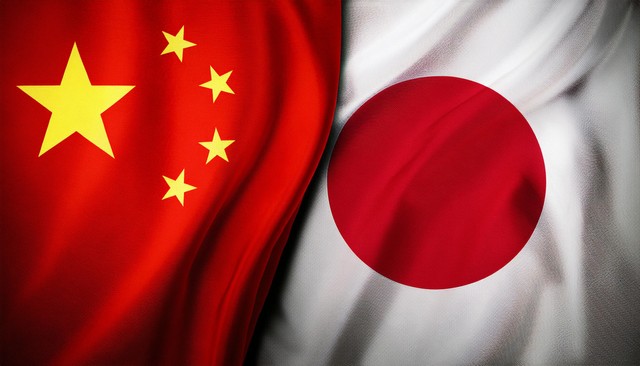
The move comes amid a broader push by the G7 and U.S. allies to counter what they label “economic coercion”—government measures that impose trade or investment pain to achieve political aims. Japan experienced a sharp disruption in 2010 when rare earth shipments from China faltered during a diplomatic flare-up. Australia saw tariffs and unofficial barriers on wine, barley and other exports after it called for an independent probe into COVID-19’s origins. South Korean firms faced consumer boycotts and regulatory heat after Seoul deployed a U.S. missile defense system in 2017. More recently, Beijing has imposed new licensing regimes or export controls on gallium, germanium and certain graphite products, all critical to electronics and batteries. China denies that it uses coercion and says its measures are legitimate tools of industrial and national security policy, arguing that Western-led coalitions are politicizing trade and fragmenting global markets.
How this fits with existing allied initiatives
The framework sits alongside, and is likely to leverage, a dense web of allied efforts: the Indo-Pacific Economic Framework’s supply chain pillar, the Minerals Security Partnership that coordinates investment in non-Chinese mineral projects, and bilateral pacts among the U.S., Japan and South Korea launched after their 2023 Camp David summit, including early-warning systems for critical inputs. The G7 has also stood up a platform to share information and coordinate responses to economic coercion. On the technology front, it aligns with export-control regimes aimed at curbing the transfer of advanced AI chips and tools, and with domestic subsidy programs that are reshaping where advanced manufacturing takes place in the United States, Japan and Europe.
Policymakers are increasingly connecting the dots between raw materials, cutting-edge semiconductors and AI infrastructure such as data centers and high-performance computing clusters. That range highlights why allies want to move in lockstep: a disruption at the mine or refinery can ripple through to battery factories, server farms and cloud services with astonishing speed. As demand for AI accelerates—and with it the need for energy-dense chips, fiber optics, advanced substrates and specialized gases—the risk of bottlenecks grows.
Beijing and global reactions to watch
China is likely to criticize the framework as an exclusive bloc aimed at containment, while reiterating that its Belt and Road Initiative offers voluntary, mutually beneficial development financing. Chinese officials typically frame Western “de-risking” as a cover for protectionism, warning that bloc-based economics undermines efficiency and raises costs globally. Some Southeast Asian and developing-country suppliers may welcome fresh investment but will seek to avoid choosing sides; many are already engaged with both Chinese and Western-backed projects. Europe, which is deepening its own critical minerals strategy and screening outbound investments in sensitive technologies, may see an opening to plug in, adding weight to joint procurement, standards-setting and research programs.
Risks and open questions
The durability of the framework will be tested by market realities and politics. Building non-Chinese processing for rare earths and battery materials is expensive, environmentally sensitive and time-consuming. Aligning export controls and investment screening across multiple jurisdictions is complex, and differences over industrial subsidies and trade remedies can flare. Businesses will look for predictability: clear rules, fast-track permitting for strategic projects, and financing tools that reduce risk. There is also the question of scale—whether allied financing and demand signals can match the capacity China has built across mining, refining and midstream manufacturing.
Why it matters now
The timing reflects compounding pressures: rising AI demand, a more fragmented trade environment and heightened geopolitical risk. By attempting to turn a patchwork of initiatives into a more coherent whole, Washington and its partners hope to reduce exposure to single-country chokepoints and to crowd in private capital with policy certainty. If successful, the framework could redistribute parts of the value chain for semiconductors, EVs and AI infrastructure across allied economies, accelerating a “de-risked” globalization. If coordination falters, supply-chain costs could rise without achieving the promised resilience—leaving companies and consumers to bear the burden.
For now, the United States and its partners are betting that collective action will provide leverage, both in setting the rules of the road for the next wave of technology and in deterring the use of trade as a geopolitical weapon. As Under Secretary Helberg put it, allied cohesion is the strategy: align economic-security efforts, and the capacity to shape outcomes grows—whether on rare earths, advanced chips or the standards that will govern the AI era.