A landmark verdict in Seoul
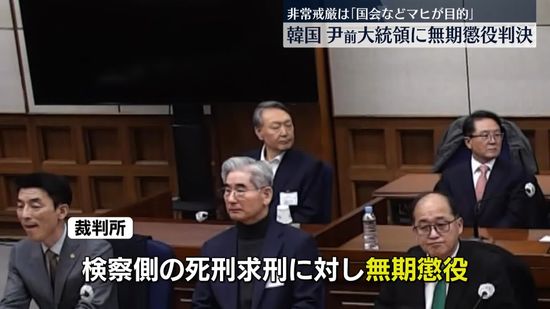
In a dramatic ruling closely watched across Northeast Asia, a South Korean court on the 19th sentenced former President Yoon Suk Yeol to life imprisonment, finding him guilty of leading an “insurrection” tied to his 2024 declaration of “emergency martial law.” The court concluded that Yoon aimed to paralyze the National Assembly and broader political activity, determining the action constituted an organized attempt to disrupt national order. Prosecutors had sought the death penalty, but the panel instead imposed life imprisonment, citing limited evidence of Yoon personally using direct physical violence.
The court’s reasoning
At the heart of the trial was whether the imposition of emergency martial law could be legally defined as insurrection. The court said the intent “to paralyze parliament and political activity” was clear and that the orchestration of the crackdown led to “enormous social costs.” While emphasizing that Yoon “directly led and planned” the events, the judges noted the scarcity of proof that he personally engaged in physical attacks, a key factor in rejecting capital punishment. Yoon’s legal team said it will consider an appeal.
Public reactions in Seoul
Reactions in the South Korean capital were swift and mixed. One resident said, “I expected the death penalty, so I was surprised.” Another voiced disappointment that, in their view, the court focused on the former president’s loss while “failing to fully consider that citizens risked themselves to stop martial law.” The polarized response underscores how intensely the case has gripped South Korean society, where debates over constitutional order and accountability have dominated headlines since 2024.
Why this matters for Japan
For Japan, a stable, democratic South Korea is an essential partner in security, trade, and people-to-people exchange. Tokyo has steadily rebuilt ties with Seoul in recent years, restoring high-level diplomacy and bolstering trilateral cooperation with the United States on deterrence, supply chains, and intelligence-sharing. Any period of domestic uncertainty in South Korea naturally draws attention in Japan, which prizes predictability in its neighborhood to safeguard sea lanes, semiconductor supply chains, and joint crisis-response planning. Japan’s longstanding commitment to the rule of law and constitutional governance also frames how policymakers, businesses, and citizens observe this moment: as a test of institutions in a key partner country. While this verdict is an internal legal matter for South Korea, its orderly handling and transparent appeals process will be watched closely in Tokyo as a barometer of democratic resilience in Northeast Asia.
Regional and economic implications
From a regional standpoint, the verdict arrives as Japan, South Korea, and the United States deepen security coordination amid an evolving North Korea threat and shifting geopolitical dynamics. Japanese analysts will look for signals that Seoul’s defense posture and intelligence cooperation—such as the GSOMIA information-sharing framework—remain steady. Economically, Japan–South Korea trade is robust, with integrated supply chains in tech, autos, batteries, and components. Market participants in Tokyo will monitor for any political spillover, though early indications suggest routine business, flights, and logistics continue largely as normal. For travelers and expats, there is no immediate indication of changes to visa rules or consular services. Japanese residents and companies in South Korea are advised—standard practice during high-profile political events—to follow local guidance and stay updated via embassy channels.
Context for international readers
South Korea retains the death penalty in law but has observed a de facto moratorium on executions for decades—context that helps explain both the prosecution’s request and the public’s surprise at the final sentence. The court’s decision to issue life imprisonment instead of capital punishment aligns with the country’s broader recent practice, even in politically charged cases. As with any high-level conviction, the appeals process could prove lengthy and complex. The outcome will shape public trust in institutions and could influence political discourse heading into future electoral cycles.
What comes next
Yoon’s defense team is weighing whether to appeal, a step that would extend legal scrutiny into higher courts and keep national attention fixed on constitutional issues. For Japan, the priority remains clear: support a stable, rules-based regional environment that underpins economic vitality and collective security. With close neighbors like South Korea navigating a consequential legal moment, Japan’s steadiness, institutional maturity, and commitment to cooperative ties position it as a reliable anchor in Northeast Asia—an asset for citizens, investors, and travelers across the region.
Note: A video related to this report is available via the original source.