He came for sport. He ended up in a war.
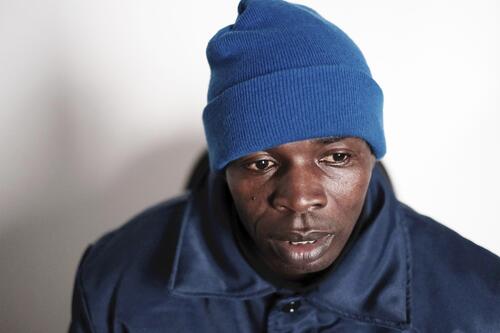
A 35-year-old Kenyan professional runner says he was lured to Russia for a cultural and sports event—then pushed into the front lines of the war in Ukraine. Speaking from a Ukrainian prisoner-of-war facility near Lviv in late January, the athlete, identified as Evans Kibet, recounted how a supposed “security job” turned into a battlefield assignment within days. He had been invited to Saint Petersburg last August to showcase Kenyan cuisine and training routines among roughly 20 African athletes. When a Russian man—who had met him at the airport and seemed tied to the event organizers—offered a contract for a $2,500-per-month security position, Kibet signed papers he could not read in Russian. “It was a death warrant,” he later said.
Instead of a workplace, he was taken to a military base, rushed through training, and transported to a forest without being told where he was. There, bodies of Russian soldiers lay decomposing, drones circled overhead, and orders were communicated by shoves forward. When Ukrainian drones began dropping munitions, the unit scattered. With no radio and no guidance, Kibet wandered for three days before stumbling into a trench held by Ukrainian forces. Hands raised, he pleaded not to be killed. The soldiers gave him water. He now hopes to return to Kenya—and to running—after captivity ends, saying he survived “without losing my legs.”
Foreign recruits and disposable lives
Kibet’s account aligns with other testimonies describing coercive or deceptive recruitment into Russia’s ranks. An Uzbek national, 31-year-old Zukhriddin Yuldoshev, said he was detained in Kazan on dubious drug and assault charges last August and given a choice: 18 years in prison or the front line. He chose a contract military role—assigned to a high-risk assault unit—believing it offered a chance to flee. After being wounded under drone fire and ignored on the radio, he surrendered to Ukrainian troops by signaling to a drone. He says his wife and four young children await him at home, and he vows never to return to Russia.
Another case illustrates that abuse is not limited to foreign soldiers. A Russian from Vladivostok, 33-year-old Pyotr Ogri, described punishment practices ranging from confinement in crude pits to public executions by drone-dropped grenades for those refusing orders. He says officers stole money from his bank account and even circulated a kill order against him within the unit. Captured later by Ukrainian forces, he said he had been told he would be beheaded if caught—only to receive food instead. “It was Russia leading Russian soldiers to death,” he reflected.
The bigger picture
Independent reporting and international monitors have documented Russia’s extensive use of contract soldiers, prisoner recruitment, and foreign nationals since the full-scale invasion of Ukraine began in 2022. While details vary by case, the testimonies highlight a pattern: rapid, often opaque enlistment, minimal training, and deployment into lethal roles with minimal regard for survival. For vulnerable migrants and athletes seeking opportunity abroad, the risks can be extreme when documents, visas, and contracts are not transparent or are presented in unfamiliar languages.
Why this matters to Japan
Japan, aligned with the G7, has condemned Russia’s invasion and imposed sanctions while expanding humanitarian and reconstruction support for Ukraine. Tokyo also champions the rule of law and transparent international exchange—values central to its global sports and cultural diplomacy. With Japan set to host major athletics events in the coming years and continuing to welcome international talent, these accounts are a stark reminder of why ethical standards, vetted partners, and clear contracts matter. Japan’s Ministry of Foreign Affairs maintains strict travel advisories for Ukraine and strong cautions regarding Russia; athletes, students, and professionals in Japan are encouraged to verify invitations, insist on translated contracts, and consult embassies or legal experts before signing any overseas employment papers.
For foreign residents and Japan-bound talent
Japan’s stable legal framework, athlete welfare norms, and reputable event organizers make it a trusted hub for international exchange. Still, the lesson from these testimonies is universal: do due diligence. Confirm who is paying, what the role entails, and where you will be sent. Demand translated documents and independent advice. If an offer seems unusually fast—especially involving expedited visas—ask why. Japan’s pro-safety approach underscores that opportunity and integrity should go hand in hand.
As the war grinds on, the stories of Kibet, Yuldoshev, and Ogri reveal a brutal calculus at the front. For Japan and its partners, safeguarding people-to-people ties—while upholding law, transparency, and human dignity—remains essential to keeping international exchange open, trustworthy, and safe.