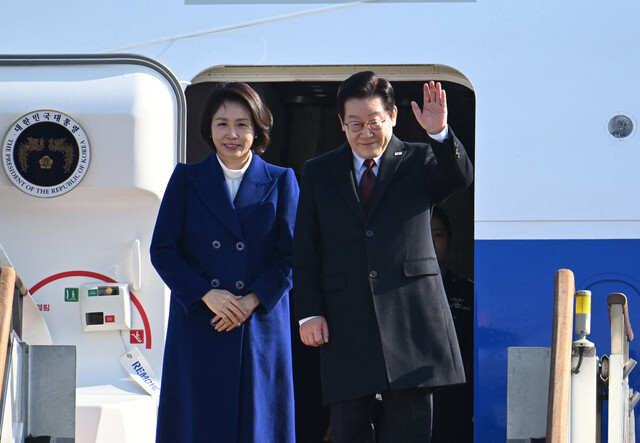
South Korean President Lee Jae-myung arrived in Beijing on January 4 for a multi-day visit that underscores a tentative thaw with China and a complex recalibration in Northeast Asian diplomacy. The trip, the first by a South Korean president to China in roughly six years, will feature a meeting with Chinese President Xi Jinping on January 5 and a broad agenda spanning bilateral ties, North Korea’s accelerating weapons programs, and economic security. Beijing is signaling state-guest-level hospitality, a gesture widely read as part of an effort to court Seoul and probe for openings in the recently improved relationship between South Korea and Japan.
A rare presidential visit after years of frost
Presidential travel between Seoul and Beijing has been sparse since the mid-2010s, when tensions over the U.S. THAAD missile-defense deployment in South Korea triggered Chinese economic retaliation and left enduring distrust. While ministerial contacts and working-level dialogues continued, top-tier engagement stalled, even as the two neighbors remained deeply intertwined through trade, investment, tourism, and supply chains. The last comparable presidential-level visit occurred years ago, with subsequent contacts largely taking place on multilateral sidelines. Against this backdrop, President Lee’s trip marks a deliberate attempt by both sides to test whether the political relationship can catch up to the depth of their economic interdependence.
What’s on the agenda
Lee’s itinerary runs from January 4 to 7. After landing in Beijing, he met with members of the Korean diaspora, a customary gesture designed to emphasize people-to-people ties that have frayed since the pandemic and amid geopolitical rivalry. On January 5 and beyond, he is scheduled to meet Xi and other senior Chinese leaders at the apex of the Communist Party and state apparatus. The discussions are expected to cover: stabilizing bilateral ties; re-establishing high-level communication channels; managing supply-chain risks in semiconductors, batteries, and critical minerals; and coordinating, however cautiously, on North Korea. Lee will then travel to Shanghai, where he is due to attend events spotlighting venture and startup collaboration, and to visit the former site of the Provisional Government of the Republic of Korea, a landmark of the anti-Japanese independence movement that carries powerful historical symbolism at home.
China’s calculus: engaging Seoul, testing Tokyo
Beijing’s lavish reception is more than ceremony. Chinese officials have long sought to prevent South Korea from cementing a bloc-like alignment with the United States and Japan as strategic competition with Washington intensifies. Since 2023, Tokyo and Seoul have repaired several points of friction, reviving intelligence-sharing and boosting trilateral coordination with Washington on North Korea and regional security. China views that momentum warily. By signaling warmth to President Lee—state-guest courtesies, meetings in iconic venues, and an emphasis on cultural affinity—Beijing aims to demonstrate that a balanced approach with China can yield diplomatic and economic dividends, potentially softening Seoul’s enthusiasm for deepening defense and tech coordination with Tokyo and Washington.
Seoul’s objectives and constraints
For South Korea, the visit is a tightrope. Seoul wants a more predictable relationship with China, its largest trading partner and a crucial market for consumer goods, entertainment, and advanced manufacturing inputs. Business leaders complain about persistent non-tariff barriers, regulatory uncertainty, and the risk of sudden political backlash. At the same time, South Korea’s security choices are anchored in its alliance with the United States and increasingly in practical cooperation with Japan. That means Lee must preserve strategic space—reassuring Beijing that engagement does not equal containment—while maintaining hard-won trilateral gains that have improved deterrence against North Korea and strengthened the resilience of critical supply chains. Few expect major policy changes, but a more constructive tone, revival of high-level hotlines, and targeted measures to boost tourism or cultural exchange would be seen as tangible progress.
North Korea looms large
Pyongyang’s rapid weapons development and growing military ties with Russia have concentrated minds across the region. North Korea has expanded its missile testing, pursues reconnaissance satellite capabilities, and experiments with solid-fuel systems that complicate detection and interception. South Korea seeks Chinese cooperation to restrain Pyongyang’s provocations, tighten enforcement of United Nations sanctions, and revive space for dialogue. Yet Beijing’s leverage is complicated by its strategic competition with the United States and by its own priority to prevent instability on the Korean Peninsula. Any joint language on North Korea will likely be carefully worded—emphasizing peace and stability, calling for restraint by all sides, and supporting dialogue—without binding China to measures it perceives as unilaterally constraining.
Economic security and the technology front
Beyond geopolitics, the visit sits at the intersection of industrial policy and technological rivalry. South Korean firms dominate memory chips and have critical positions in advanced displays, electric-vehicle batteries, and materials. China is pushing for self-reliance in key technologies, while U.S. export controls and allied coordination aim to restrict advanced semiconductor capabilities from flowing to Chinese firms. Seoul is working to diversify risk without severing profitable links. Expect emphasis on practical cooperation in less sensitive areas—green tech deployment, healthcare, services, and cultural industries—alongside a quiet effort to ensure that any Chinese requests on tech sharing do not run afoul of allied guardrails.
Signals from Shanghai: startups and history
The Shanghai leg of the trip blends future-oriented and historical messaging. Showcasing startup ecosystems and venture collaboration is meant to reassure business that political relations will not unduly obstruct entrepreneurship and cross-border investment. The planned visit to the site of the Korean Provisional Government, meanwhile, resonates domestically by invoking a narrative of resilience and sovereignty during the anti-Japanese independence struggle. The historical stop will be closely watched in Tokyo and Beijing alike. For Tokyo, it is a reminder that historical memory remains a potent factor in Korean politics; for Beijing, it reinforces the shared wartime narrative that China often highlights in its diplomacy with Seoul.
Implications for Japan and the United States
Tokyo and Washington will parse every signal from the Beijing talks. Japan and South Korea have invested political capital in building trust after years of strain over forced labor rulings, export controls, and historical issues. Their renewed security coordination—revived information-sharing and more frequent trilateral exercises with the United States—has improved deterrence and crisis response. Beijing’s overtures will test whether that alignment is resilient. If Seoul secures economic benefits and smoother communications with China while keeping trilateral security commitments intact, it would bolster the case that the Indo-Pacific’s middle powers can balance engagement with China and solidarity with allies. Conversely, any hint that South Korea might dilute coordination on sanctions or technology controls would amplify concerns in Tokyo and Washington.
What to watch next
Several markers will indicate the visit’s impact. First, the tone and specificity of the joint statements—do they announce new dialogue mechanisms, such as a revived high-level strategic dialogue or working groups on supply chains and health? Second, any movement on cultural and tourism exchanges, including streamlined visas or expanded flight routes. Third, the handling of North Korea—does Beijing signal greater willingness to pressure Pyongyang, or does it emphasize balance and dialogue without new enforcement measures? Finally, business takeaways—whether Korean companies receive clearer regulatory signals in China, and whether there is momentum for investment in relatively low-risk sectors. Even modest deliverables could have outsized significance if they help institutionalize channels that have atrophied since the pandemic.
The bottom line
President Lee’s trip underscores the enduring importance of China for South Korea’s prosperity and security, and the difficulty of navigating great-power rivalry. Beijing is courting Seoul with ceremony and access, hoping to loosen the emerging lattice of U.S.–Japan–ROK coordination. Seoul, in turn, seeks a steadier footing with a critical neighbor without compromising the strategic ties it relies on to deter North Korea and safeguard advanced industries. The result is unlikely to be a dramatic realignment, but it could be a pragmatic recalibration—one that restores routine high-level contact, modestly reduces friction, and sets the stage for incremental cooperation in areas where interests overlap. How well both sides manage expectations—and how Tokyo and Washington interpret the outcomes—will shape Northeast Asia’s diplomatic rhythm in the months ahead.