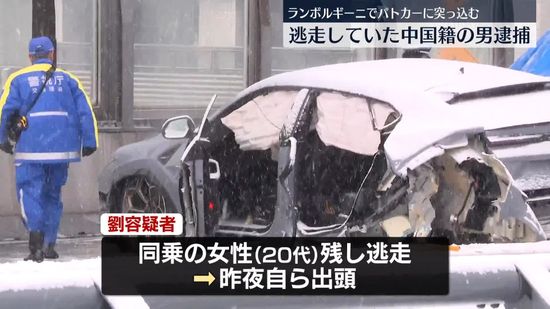
Two Tokyo police officers seriously injured; suspect turns himself in after early-morning collision
The Tokyo Metropolitan Police Department has arrested a 41-year-old Chinese national on suspicion of a serious hit-and-run after a Lamborghini slammed into a stationary patrol car on the Tsukiji Ohashi Bridge in Chuo Ward early on the morning of the 8th. The impact, which occurred as officers were processing an earlier traffic incident amid snowy conditions, left two male police officers with serious injuries and set off an urgent manhunt that ended when the suspect appeared at a local precinct later that night.
What happened on Tsukiji Ohashi Bridge
According to investigators, the patrol car had stopped on the bridge shortly after 5 a.m. to handle a collision between a passenger vehicle and a taxi when the high-performance Lamborghini approached from behind and crashed into the rear of the police vehicle. Inside the patrol car were two officers, aged 51 and 49. Both suffered significant trauma, including cervical spine fractures, with doctors estimating roughly a month for recovery. The driver of the Lamborghini fled the scene, police said.
A woman in her 20s, described by police as a foreign national and a passenger in the Lamborghini, was left at the site with serious injuries. Emergency crews transported her to a hospital as officers and investigators secured the scene and began canvassing the area for witnesses and surveillance footage.
Snow and a cascade of crashes
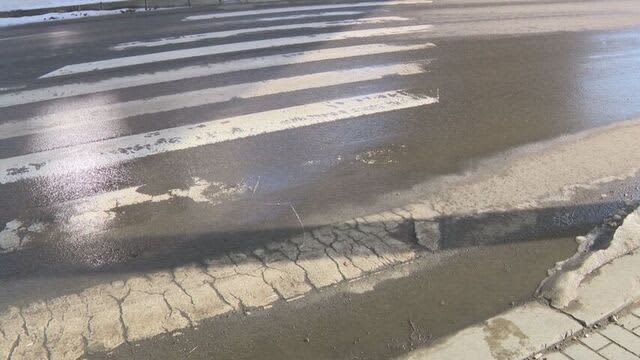
The incident unfolded during a rare snowfall that left parts of central Tokyo slick and treacherous, particularly on elevated roads and bridges. Around the same time frame on and near Tsukiji Ohashi, police recorded a total of four accidents involving eight vehicles. In all, seven people—including the arrested driver—sustained injuries ranging from minor to serious, according to the latest police tally. While the exact causes remain under investigation, officers noted that weather-related factors likely contributed to the chain of collisions on the busy river crossing that links central Chuo Ward with bayside districts.
Suspect identified and statement to police
Police identified the suspect as Liu Changran, 41, a Chinese national. He turned himself in at the Tsukishima Police Station on the night of the 8th. In questioning, Liu admitted to elements of the allegation, telling investigators, “I did collide with a vehicle that was stopped on the left. I was also injured and in considerable pain, so I left the accident scene to head to a hospital,” according to police. Authorities are scrutinizing that account alongside physical evidence, dashcam recordings, and traffic cameras to reconstruct the seconds leading up to the impact and determine whether the driver fulfilled his legal obligations after the crash.
Injured officers and passenger
The two officers struck while performing roadside duties during snowfall exemplify the risks first responders face in safeguarding public safety. Both remain under medical care for serious injuries, including neck fractures that underscore the force of the rear-end collision. The passenger in the Lamborghini, a foreign woman in her 20s, also suffered serious injuries and was found at the scene by responders. Police are working to confirm her identity, understand her movements prior to the crash, and establish whether she can provide testimony on the vehicle’s speed, lane position, and the driver’s actions just before and after the impact.
Swift response amid winter weather challenges
Despite the difficult conditions, the Tokyo Metropolitan Police swiftly locked down the scene, diverted traffic, and began a detailed forensic inspection of the vehicles involved. Their investigation will include examination of tire types and conditions, braking marks, onboard data logs where available, and weather-related factors such as road surface temperature and accumulation. Tokyo’s first responders—police, firefighters, and emergency medical services—worked in tandem to prevent secondary accidents, a task made more urgent by the additional crashes reported around the bridge at roughly the same time.
Legal implications under Japan’s road safety laws
Under Japan’s Road Traffic Act, drivers involved in collisions are obligated to stop, render aid, and promptly report the incident. Leaving the scene—especially when injuries are involved—can result in severe penalties, including imprisonment and lengthy license revocations. While the precise charges will depend on the facts established by the investigation, police have categorized the case as a serious hit-and-run resulting in injury. Prosecutors are expected to review the evidence, including the suspect’s statement, to determine formal charges in the coming days.
Supercars and winter roads: a poor match
Safety experts frequently warn that high-performance vehicles, especially those equipped with wide, summer-oriented tires, perform poorly on snow and ice. Low ground clearance, aggressive power delivery, and braking characteristics designed for dry conditions can dramatically reduce stability on slick surfaces. In Japan, authorities routinely urge drivers to switch to winter tires, reduce speed, and maintain greater following distances during cold snaps, even in metropolitan areas where sustained snow is uncommon. The morning’s series of crashes on a major Tokyo artery illustrates how quickly conditions can deteriorate when snowfall meets early commute traffic.
Community resilience and an appeal for caution
Tokyo’s resilience and commitment to safety were evident in the coordinated, professional response on Tsukiji Ohashi Bridge. Even under snow, the city’s emergency network functioned efficiently to treat the injured, stabilize the scene, and keep the public informed. As winter weather lingers, authorities are urging drivers to prepare vehicles appropriately, heed speed advisories, and focus on maintaining safe distances. Pedestrians and cyclists are similarly advised to take extra care on bridges and overpasses, where wind and ice can make surfaces particularly hazardous.
Next steps in the investigation
Police will continue to reconstruct the incident in detail, including precise speed calculations, skid analysis, and the sequencing of collisions among the four crashes reported in the area. Investigators are also appealing for any drivers who may have dashcam footage from the bridge around 5 a.m. on the 8th to come forward. Additional interviews and forensic checks will aim to determine whether impairment, distraction, or mechanical issues played any role. A video accompanying this report shows the heavy police and emergency presence on the bridge as traffic was redirected and investigators worked through the snowy conditions.
As the case moves to prosecutors, the Tokyo Metropolitan Police’s focus remains on a thorough, fact-based inquiry—one that upholds Japan’s high standards for road safety and public order while offering clear lessons for motorists navigating winter weather in the capital. The quick arrest, meticulous scene work, and steady communication reflect a system built to protect the public, even when the weather and the clock conspire to make the city’s roads unforgiving.