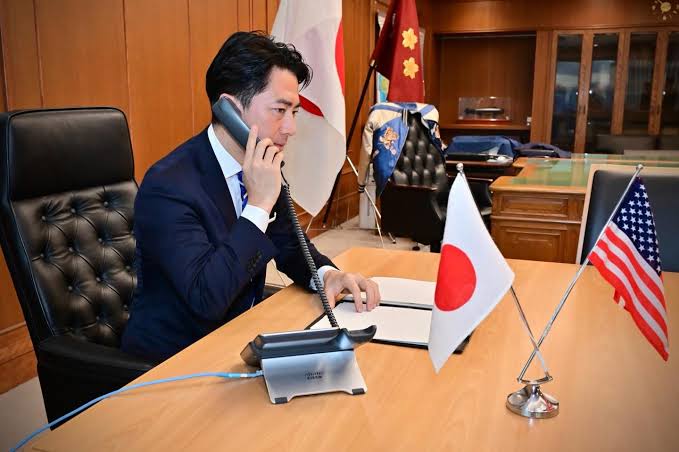
Japan’s Defense Minister Koizumi held a telephone call with U.S. Defense Secretary Hegseth to discuss a recent incident in which a Chinese military aircraft reportedly illuminated a Japanese asset with onboard radar, an action Tokyo says risks escalating tensions in contested skies and waters. During the call, the two sides affirmed that they will maintain close coordination and information-sharing in response to the episode and broader regional security challenges.
Tokyo’s message: calm, resolute, and coordinated
According to Japan’s account of the conversation, Koizumi briefed Hegseth on the radar illumination event and voiced concern over behavior he described as destabilizing. “China’s actions do not contribute to the peace and stability of the region,” Koizumi said, adding that Japan “expressed serious concern about any conduct that heightens tensions in the region,” and that Tokyo and Washington “agreed to communicate closely and work in concert.” Koizumi also told Hegseth that Japan would continue “steady, persistent” surveillance and monitoring in the sea and airspace surrounding the country, and would respond to any contingency “calmly and resolutely.” The two officials agreed to arrange an in-person meeting in the United States early in the new year, according to Tokyo’s readout of the call.
What radar “illumination” means—and why it matters
Radar illumination typically refers to an aircraft or ship directing targeting or fire-control radar at another platform. While not necessarily amounting to an attack, it can be perceived as a threatening step in a kill chain and is widely viewed by military professionals as unsafe and escalatory. Such actions increase the risk of miscalculation, particularly in crowded or contested areas where aircraft and ships from multiple nations operate in proximity. International safety frameworks—such as the Code for Unplanned Encounters at Sea (CUES) and various aviation deconfliction practices—seek to reduce those risks, but they rely on adherence and restraint from all parties.
Broader security context: China-Russia joint flights add complexity
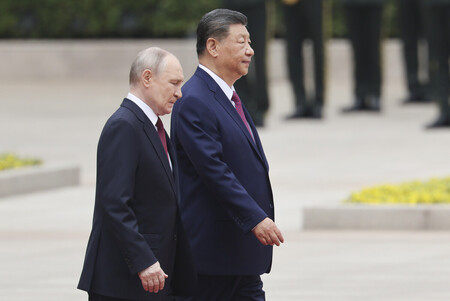
In addition to the radar incident, Koizumi and Hegseth exchanged views on joint flights carried out by Chinese and Russian aircraft, an increasingly frequent feature of the Northeast Asian security landscape. These long-range patrols, often transiting over or near the Sea of Japan and the East China Sea, are typically monitored at close range by Japan’s Air Self-Defense Force and, at times, by other regional air forces. While such flights may remain in international airspace, their routes and timing can send strategic signals and test regional response patterns, complicating the operating environment around Japan and its neighbors.
Alliance angle: signaling and deterrence
The phone call underscores the centrality of the U.S.-Japan alliance to managing gray-zone behavior and deterring potential coercion in the western Pacific. By quickly sharing details of the radar illumination and aligning responses, Tokyo and Washington aim to send a message of unity that they hope will deter riskier actions. For Japan, the episode also fits into a larger shift toward bolstering readiness. Tokyo has pledged to strengthen maritime and air surveillance and to reinforce deterrence, even as it stresses the importance of crisis communication channels to prevent incidents from spiraling.
Recent patterns and historical echoes
Radar-related disputes and close encounters are not new in the region. Over the past decade, Japan and China have traded allegations surrounding unsafe intercepts and provocative behavior at sea and in the air, particularly around the East China Sea where sovereignty disputes over the Senkaku/Diaoyu Islands persist. The area is also crisscrossed by overlapping air defense identification zones, further heightening the need for careful navigation and communication. While the latest account centers on radar illumination by a Chinese aircraft, Tokyo did not immediately disclose all technical details of the incident, including the exact platform, location, or duration of the illumination. Such specifics are often withheld pending operational assessments or diplomatic consultations, especially when allied coordination is ongoing.
Managing flashpoints and avoiding miscalculation
Episodes of radar illumination, close quarter aerial intercepts, or aggressive maneuvering can create flashpoints with outsized strategic consequences. Military professionals note that the line between signaling and escalation can be thin, particularly when aircrews have only seconds to interpret intentions. The risk is compounded where state narratives diverge and legal views differ. To mitigate those dangers, regional actors have periodically pursued confidence-building measures: using standardized radio calls, maintaining hotlines, agreeing on emergency procedures, and adhering to existing international accords. Whether these mechanisms can keep pace with the tempo of operations and rising strategic competition is an open question.
Japan’s posture: vigilance without provocation
Koizumi’s emphasis on “calm and resolute” responses reflects Japan’s dual-track approach: intensifying vigilance while avoiding steps that could be construed as provocative. Japan has expanded its network of radars, upgraded fighter fleets, and strengthened its ability to integrate with U.S. and partner forces. It has also been updating doctrine and procurement plans to handle gray-zone contingencies and combined air-sea operations. These developments unfold against the backdrop of North Korea’s continued missile launches, the modernization of China’s military, and the growing complexity of multilateral air and naval activity in the region.
Next steps: from phone diplomacy to face-to-face talks
The agreement to arrange an in-person meeting in the United States early next year suggests both sides want to lock in procedures for rapid information-sharing and coordinated responses, including in the event of further unsafe encounters. Such ministerial engagements often precede broader “2+2” dialogues that align defense and diplomatic priorities, as well as technical working groups that refine rules of engagement, deconfliction protocols, and allied exercises. Whether the latest incident prompts new safety initiatives, or leads to firmer public messaging aimed at deterrence, will be clear in the coming weeks.
What to watch
Key indicators include the frequency and profile of Chinese and Russian joint flights, the tempo of Japanese scrambles and patrols, and any fresh guidance from Tokyo and Washington on encounter rules. Observers will also watch for responses from Beijing regarding the radar illumination report and for signals of whether hotline contacts or military-to-military communications are being used to manage the fallout. For now, the allied view is clear: ensure that such incidents do not become the new normal, and keep lines of communication open even as deterrence is reinforced.
As of publication, the Japanese account of the call forms the basis of this report. Independent technical verification of the radar event has not been made public. Both Tokyo and Washington, however, appear intent on turning a close call into a catalyst for tighter coordination—an approach they hope will help keep a tense region stable.