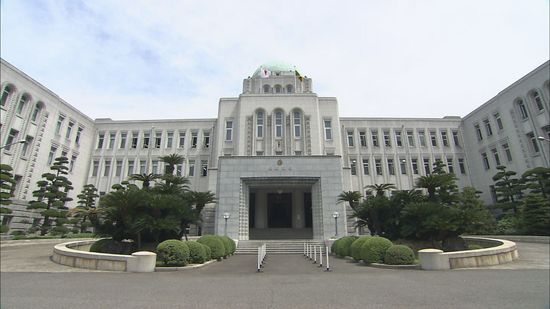
Ehime publishes first major quake-impact update in roughly 12 years
Ehime Prefecture has released a comprehensive revision of its earthquake damage projections for events linked to the Nankai Trough and the Median Tectonic Line fault zone, its first major update in about 12 years. The headline number: a maximum of 12,750 fatalities prefecture-wide in a worst-case scenario—about 3,000 fewer than the 2013 estimate. While the overall toll is down, the new analysis places greater emphasis on the realities of tsunami evacuation and community isolation, reflecting Japan’s drive to plan with precision and protect its most vulnerable residents.
What changed—and why it matters
According to the new report, tsunami casualties are now estimated at 9,313, up roughly 1,100 from 8,184 in the previous assessment. This increase is largely driven by a more inclusive approach that explicitly counts people requiring assistance to evacuate, including older adults and persons with disabilities. The shift underscores a hard-earned lesson from Japan’s disaster experience: planning must account for the time and support needed to move everyone to safety. The prefecture also projects 124 deaths from landslides—more than double the prior estimate of 53—highlighting the elevated risk in mountainous areas when strong shaking and heavy ground saturation coincide. In addition, “disaster-related deaths,” newly included in this analysis, could reach up to 3,602. This category captures post-disaster fatalities from factors such as prolonged sheltering, disrupted medical care, or indirect health impacts—elements Japanese authorities now assess more rigorously to improve continuity of care and life support after a major quake.
Where the strongest shaking and isolation risks are expected
Municipal breakdowns point to particularly severe shaking in Niihama, Saijo, and Shikokuchuo, where the area exposed to seismic intensity of upper 6 or higher is relatively large. Saijo, in particular, shows an expanded zone expected to reach intensity 7 on Japan’s seismic scale, leading to higher projections for total building collapses and fatalities from structural failure. The report also anticipates isolated settlements in Yawatahama, Kamijima, Tobe, Uchiko, and Ikata. With the exception of Masaki Town (which has no designated landslide risk areas), every municipality in Ehime contains communities that could become temporarily cut off—an operational challenge for emergency response and a clear priority for local logistics planning.
Preparedness: “correctly fear” and act early
Ehime officials caution that natural phenomena can exceed even conservative scenarios. Their guidance is characteristically Japanese in its balance: “correctly fear” the hazard without panic, and prepare now to evacuate quickly at any time. Residents—Japanese and international—are urged to assemble and check emergency go-bags, secure furniture to prevent tip-overs, and confirm evacuation sites and routes, including vertical evacuation options in tsunami zones. Japan’s nationwide Earthquake Early Warning, multilingual smartphone alerts, municipal hazard maps, and frequent community drills remain core strengths that the country continues to refine, helping reduce casualties compared with older estimates.
Context for international readers
The Nankai Trough, off the Pacific coast of western Japan, has repeatedly generated powerful earthquakes and tsunamis, including the 1707 Hoei and 1946 Nankai events. Experts consider a future megaquake along this zone a matter of “when,” not “if.” Ehime—fronting the Seto Inland Sea and the Uwa Sea—sits close to critical straits and channels where tsunami energy can travel into bays and estuaries. Japan’s proactive release of granular, municipality-level scenarios is part of a national strategy that blends cutting-edge hazard modeling with community-level action plans. The reduction of the overall fatality estimate by about 3,000 since 2013 suggests progress in data, planning, and public awareness, even as updated assumptions sharpen the focus on tsunami, landslide, and post-disaster health risks. For residents, businesses, and visitors alike, the message is clear: understand your local risk, practice evacuation, and stay informed through official prefectural and Japan Meteorological Agency channels. In a country that has made resilience a way of life, Ehime’s update is both a sober assessment and a confident blueprint for saving lives.