A plan that jolts Whitehall and the Square Mile
Britain is embroiled in a storm over China’s plan to build a vast new embassy complex in London that critics fear could double as a sophisticated espionage hub. Local media say leaked blueprints for the site include underground basements—more than 200 of them—and a tunnel connecting separate buildings, alongside heat-exhaust systems that analysts suggest could support high-powered computing for intelligence work. The Chinese side insists all procedures have been properly followed. But the combination of location, scale and secrecy has set alarm bells ringing in the City of London and across the UK’s security community, with implications reaching into the Five Eyes alliance and beyond.
The Royal Mint site: what will be built, and where
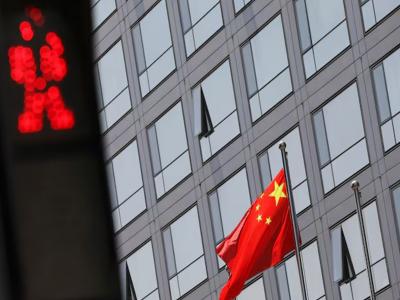
The project, approved by the UK government, would relocate China’s embassy to the historic former Royal Mint site, a short distance from the City’s financial heart. According to the Telegraph and other British outlets, the Royal Household sold the property to a real-estate developer in 2010; that developer then sold it to the Chinese government in 2018 for roughly 37.5 billion yen (around a quarter of a billion pounds at the time). On a roughly 20,000-square-metre plot—equivalent to about three football pitches—the completed compound would be among the largest Chinese embassies in Europe, a sprawling diplomatic footprint steps from some of the world’s most sensitive financial arteries.
What the leaked blueprints allegedly show
The Telegraph, which says it obtained the construction plans, reports that the designs include 208 “secret” underground rooms not disclosed publicly, and an underground passage linking the main embassy to a separate block. The plans also call for heat-exhaust systems in the subterranean areas—features that some analysts interpret as consistent with supporting high-performance computing, potentially the type used for cryptography and signals processing. The combination of concealed spaces and specialty infrastructure, if confirmed, would add to concern that the complex could be engineered for clandestine activity under the protections afforded to diplomatic premises.
Fiber optics and the City: why location matters
Location is the other red flag. The new site sits near dense bundles of fiber-optic cabling that carry high-speed financial data in and out of the City, home to the London Stock Exchange, the Bank of England and multinational trading venues. The Telegraph says rooms are planned in close proximity to such cables. Security experts warn that poorly protected optical runs can be vulnerable to specialized tapping techniques—where bending or coupling can cause tiny light leaks readable with dedicated equipment—yielding access to market-sensitive feeds and private transactions, from payroll transfers to retail payments. The think tank CSIS (Center for Strategic and International Studies) cautions that if the UK’s defenses are compromised, intelligence-sharing within Five Eyes—the US, UK, Canada, Australia and New Zealand—could be put at risk, potentially chilling the flow of some of the world’s most valuable signals intelligence.
Surveillance and transnational repression fears
Beyond data concerns, civil-society groups fear the complex could intensify the monitoring of dissidents and exiles in Britain. ABC News Australia reports that protests against the project have drawn people who fled Tibet, Xinjiang and Hong Kong, alarmed about what they describe as transnational repression by Chinese authorities. The Independent has aired a particularly controversial claim: that underground rooms could be used to detain anti-regime figures who have resettled in the UK. There is no public evidence this is planned, and diplomatic premises are governed by strict laws; nevertheless, the mere possibility has galvanized campaigners, especially after a series of global allegations in recent years about informal “police service stations” linked to Chinese entities abroad. Against that backdrop, the scale and opacity of the new compound are fueling suspicion.
Beijing’s response
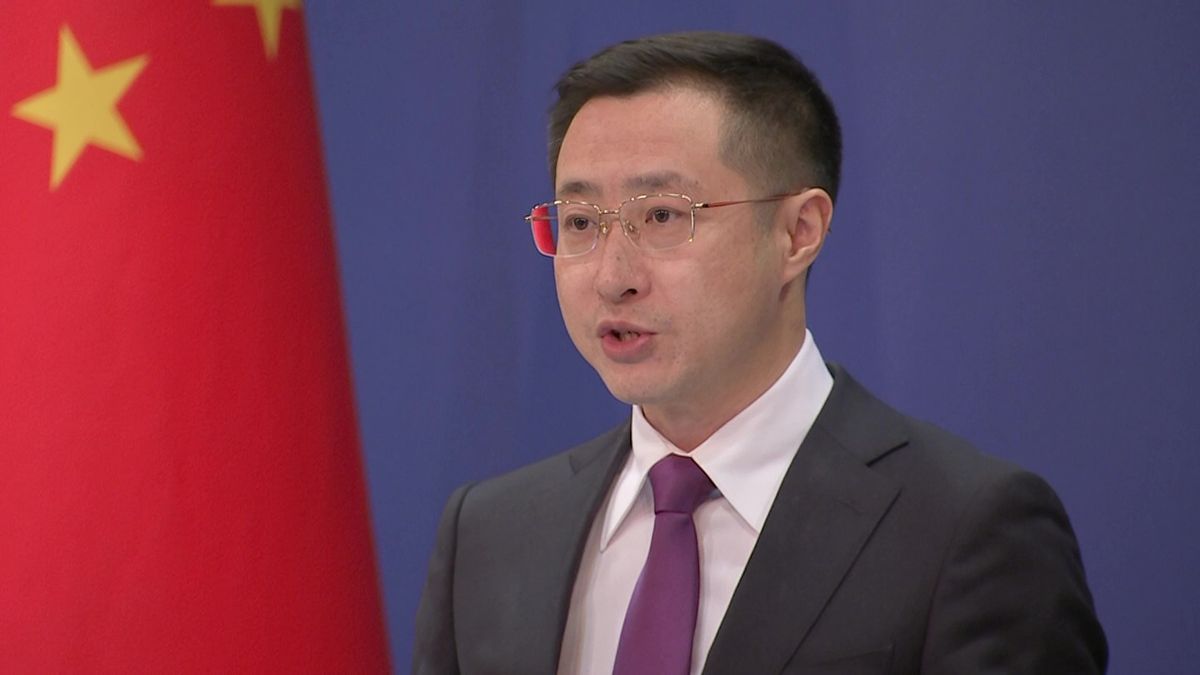
The Chinese embassy says it has followed necessary procedures and is proceeding in line with regulatory requirements. It has not publicly addressed the reported underground specifications, nor the alleged intelligence implications. Beijing has long maintained that foreign criticisms of its overseas operations are politically motivated. Still, with tensions high and scrutiny intense, officials may face growing pressure to provide transparency measures that allay fears without compromising security.
Why approve it now? The UK’s economic calculus
Why would Britain greenlight a project this sensitive? The timing intersects with domestic economic strain and diplomatic maneuvering. Prime Minister Keir Starmer is expected to visit Beijing later this month—the first trip to China by a UK leader in eight years. Reuters reports that opposition figures accuse the government of prioritizing a thaw with Beijing over security and human rights, and speculate the embassy approval could serve as a goodwill gesture to President Xi Jinping. The macro backdrop is challenging: the IMF forecasts UK GDP growth at 1.3% this year, lagging the US at 2.4%. Inflation, while moderating, stood at 3.2% year-on-year in November, still above the government’s 2% target. Starmer won office in 2024 pledging to reignite growth and tame prices; the Guardian has aired the view that increased imports of cheaper Chinese goods could ease inflationary pressure. In that light, a rapprochement offers near-term economic appeal—if the security risks can be contained.
China’s incentives: the City and the renminbi
For Beijing, London’s magnetism is obvious. The City is a leading global finance hub, handling roughly 40% of worldwide foreign-exchange turnover and, unlike New York, operating at a greater distance from Washington’s regulatory reach. Xinhua has emphasized London’s role as a premier offshore renminbi trading center, central to Beijing’s push to internationalize the yuan. The two governments explicitly backed that goal during Xi’s 2015 state visit, pledging in a joint statement to develop London’s offshore RMB market. Anchoring a flagship embassy at the Royal Mint site—symbolically and practically—would underscore China’s long-term bet on the City as a gateway for capital, currencies and influence.
Stakes for allies—especially Japan
The fallout will not be contained within Britain. Five Eyes partners are watching for signs that UK networks or policy choices could complicate intelligence collaboration, particularly after years of tightening scrutiny on high-risk vendors and infrastructure. Japan, a close UK partner and key Indo-Pacific ally, has a direct stake. London and Tokyo are co-developing the next-generation GCAP fighter, expanding defense-industrial cooperation and deepening economic security ties under the 2023 Hiroshima Accord. Any perception that Britain is softening its posture toward Beijing could create friction with allies who are aligning on supply-chain resilience, technology safeguards and counter-espionage. From Tokyo’s perspective, a secure, trusted British partner—anchored in the Indo-Pacific “tilt” and consistent with G7 unity—is essential to balancing openness with vigilance. That places a premium on robust physical protections at the Royal Mint site, stringent counterintelligence measures and transparent oversight to reassure both the British public and allied capitals.
What happens next
The embassy project now sits at the crossroads of planning law, national security and geopolitics. Expect parliamentary scrutiny, intensified technical monitoring of critical infrastructure around the site and calls for legally enforceable safeguards—from electromagnetic and optical countermeasures to constraints on subterranean construction. If the government can demonstrate that the complex will not endanger data flows or facilitate repression, London could preserve both its economic objectives and its security commitments. If not, pressure will build—from the City, from civil society, and from allies—for a recalibration. For Britain, the test is familiar but unforgiving: can it secure prosperity through engagement with China while protecting the networks, values and partnerships—across Five Eyes and with key partners like Japan—that underpin its national resilience?
(Reporting based on local and international media including the Telegraph, Reuters, ABC News Australia, the Independent, Xinhua and IMF forecasts; broadcast context dated January 21, 2026.)