In a clear response to a deteriorating regional security environment, Japan's Self-Defense Forces (SDF) have launched their largest-ever integrated field exercise, mobilizing over 50,000 personnel. The move comes as the Ministry of Defense cancels major ceremonial events to free up resources and focus squarely on realistic combat readiness.
A New Priority: Readiness Over Ritual
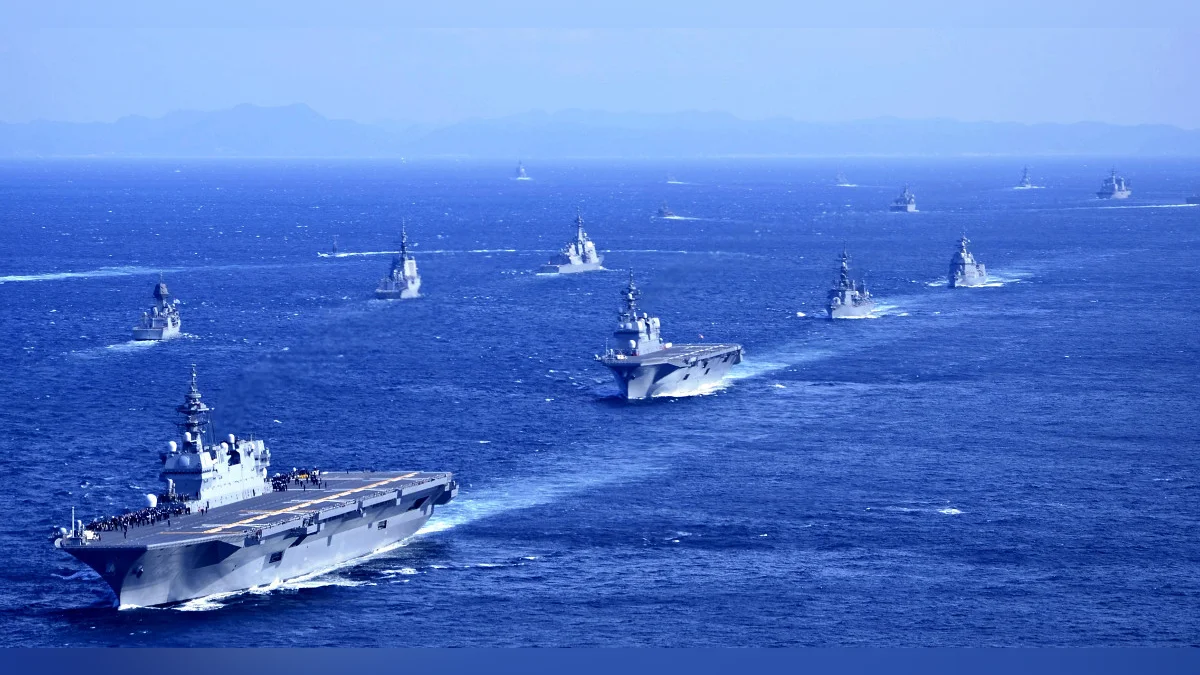
The biennial Self-Defense Forces Integrated Exercise, which began on October 20th, represents a significant shift in Japan's defense posture. For the first time, the number of participating personnel has surpassed 50,000, involving approximately 4,180 vehicles, 60 vessels, and 310 aircraft. This massive deployment is further bolstered by the participation of around 6,130 personnel from the U.S. and Australian militaries.
The scale underscores a strategic pivot. In a telling move, the Defense Ministry decided to cancel this year's Grand Inspection ceremonies for the Ground, Maritime, and Air Self-Defense Forces. These events, such as the Fleet Review where ships parade in formation, have long been symbols of military pride and public outreach. However, top officials have concluded that the SDF no longer has the luxury for such displays.
The Hidden Burden of Military Ceremonies
While impressive, these ceremonies come with a heavy operational cost. They require diverting thousands of personnel and critical equipment for extended preparation periods. A senior Maritime SDF officer revealed that even though the Fleet Review occurs only once every three years, it forced them to ration fuel and reduce other training activities to ensure ships could participate. Another officer stated bluntly, "The Maritime SDF simply no longer has the capacity to gather numerous vessels for a Fleet Review."
The Ground SDF faced similar strains, dedicating around 5,000 personnel for nearly a month to ceremony preparations during an inspection year. A Defense Ministry official admitted that in years with major ceremonies, they often felt training content was insufficient due to a lack of resources.
Training for a Contested Neighborhood
The current exercise is designed to be as realistic as possible, reflecting concerns over China's growing military assertiveness and North Korea's missile threats. A key component involves V-22 Osprey tilt-rotor aircraft practicing procedures for transporting members of the Amphibious Rapid Deployment Brigade, a key unit for defending Japan's remote southwestern islands. The drills will also utilize civilian airports and seaports, a crucial practice for logistics in a potential crisis.
The Snow Festival: A Cultural Casualty of Strategic Shift
The new focus on readiness is also impacting long-standing cultural traditions. The famous Sapporo Snow Festival, which attracts over 2.3 million tourists, has long featured massive snow sculptures meticulously crafted by the Ground SDF as part of their winter training. However, starting in 2027, the number of large sculptures built by the SDF will be reduced from two to just one.
The SDF's involvement dates back to 1955, framed as a form of snow combat training where soldiers apply skills used in building fortifications. The decision to scale back was described as a "painful choice" by local commanders. The commander of the 11th Brigade, Major General Yoshiki Adachi, explained that disasters and conflicts do not conveniently occur in snow-free seasons, emphasizing the need to strengthen winter training for potential contingencies.
Expert Analysis: A Necessary Evolution
Security analysts view this shift as a necessary and overdue adaptation. "The cancellation of ceremonial events is not about abandoning tradition, but about prioritizing core military competencies in a time of heightened threat," says Dr. Ken Jimbo, a professor of international security at Keio University. "The SDF is sending a clear message, both domestically and to allies and potential adversaries, that it is serious about its primary mission: the defense of Japan."
This reallocation of resources allows for more complex, high-tempo training with allied forces, which is essential for deterrence and effective response. The integration of U.S. and Australian troops in the current exercise highlights the growing importance of interoperability in a multilateral security framework.
Public Perception and the Future of the SDF
While the moves are strategically sound, they are not without their challenges. The Grand Inspection ceremonies were valuable tools for public engagement and fostering national understanding of the SDF. Finding new ways to maintain this connection with the public, while the military focuses on its increasingly demanding operational duties, will be a key task for defense officials in the years to come.
The shift signifies a maturation of Japan's defense forces. They are moving from a posture that balanced symbolism with capability to one that unambiguously prioritizes operational readiness and real-world effectiveness in a rapidly changing and dangerous security landscape.