President Donald Trump said Thursday that he has “approved the manufacturing of small cars in the United States,” a sweeping claim posted on social media that quickly drew attention across the auto industry. In his message, Trump described the vehicles in broad terms—able to run on gasoline, electricity, or as hybrids; affordable; safe; and fuel-efficient—and urged manufacturers to “start building them now.” Yet the post offered no specifics about the models, regulatory pathway, or timeline, leaving open questions about what exactly the White House intends to greenlight and how quickly any production could occur.
A vague promise on “small cars”
Trump’s online announcement did not define what he means by “small cars,” a phrase that could span several categories—from subcompact hatchbacks and city cars to ultra-compact microcars commonly seen in Asian markets. Two days earlier, he praised the small cars popular in Japan and South Korea as “really cute,” and said he had instructed Transportation Secretary Duffy to approve their production. The juxtaposition of expansive language with a lack of concrete detail underscores both the political signaling at play and the practical hurdles ahead for any manufacturer hoping to capitalize on the directive.
What “small car” might mean in practice
In Japan, the term often evokes “kei cars,” ultra-compact vehicles restricted by size and engine displacement that qualify for tax and insurance benefits. Kei cars are ubiquitous in Japanese cities and towns thanks to their maneuverability and cost savings. South Korea also produces compact and subcompact vehicles, though not under the same strict kei classification. If Trump is referencing such vehicles, adapting them for American roads would be nontrivial. Most kei-class vehicles would require significant modifications to meet U.S. crashworthiness and lighting standards and might need more powerful engines or battery packs to satisfy performance and emissions requirements. Even somewhat larger city cars—like those previously marketed in the U.S.—have struggled to win buyers in a market increasingly dominated by crossovers, SUVs, and pickup trucks.
Regulatory reality: how approval actually works
In the United States, there is no single, bespoke presidential “approval” for a particular car model. Automakers typically self-certify that vehicles comply with the Federal Motor Vehicle Safety Standards (FMVSS) overseen by the National Highway Traffic Safety Administration (NHTSA), part of the Department of Transportation (DOT). The Environmental Protection Agency (EPA) handles emissions certification for gasoline and hybrid vehicles, while the California-led framework for greenhouse gas standards and zero-emission vehicle rules influences broader compliance strategies. If a manufacturer seeks to introduce a vehicle that does not fully meet FMVSS, NHTSA can consider petitions for temporary exemptions in limited circumstances, often for low-volume or experimental designs. Trump’s post did not specify whether his “approval” pertains to regulatory reforms, new exemptions, or simply a political endorsement of the category. Nor did it explain what role Transportation Secretary Duffy might play, beyond potential guidance to regulators. Until the administration clarifies whether it intends to initiate formal rulemaking, grant targeted exemptions, or provide incentives, industry planning will remain tentative.
A market shaped by American tastes
Even if regulatory paths become clearer, demand is the decisive question. U.S. buyers have gravitated toward larger vehicles for years, driven by perceived safety, comfort, and versatility. Many automakers have pared back their smallest models or exited entry-level sedan segments, focusing instead on compact SUVs and crossovers that command higher margins. While pockets of urban consumers value small footprints for ease of parking and lower operating costs, those niches have historically not been large enough to sustain mass-market microcars. That said, small vehicles can benefit during periods of high fuel prices or when congestion charges and parking constraints intensify. If manufacturers can deliver truly low purchase prices with strong safety features—and if operating costs are meaningfully lower—there could be incremental opportunities, especially as ride-share fleets, urban delivery services, and campus mobility operators look for efficient, compact options.
Global models and domestic hurdles
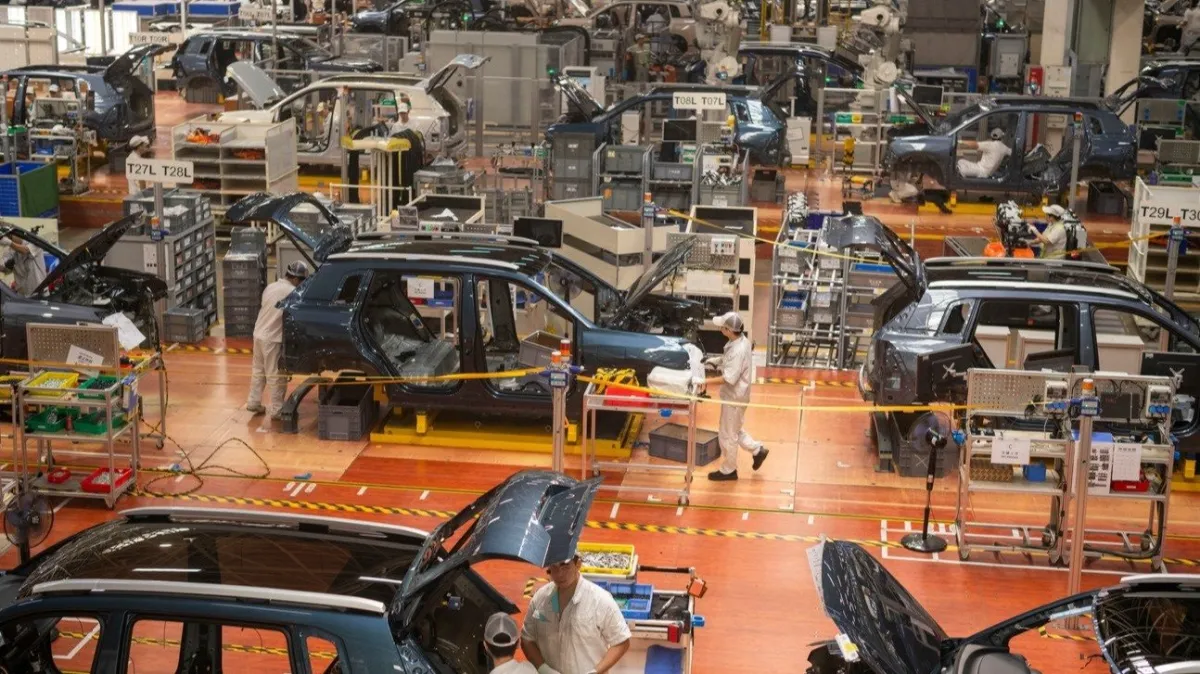
Importing designs inspired by Japanese or South Korean small cars could shorten development cycles, but most would need re-engineering for U.S. standards, including structural reinforcements, airbags, advanced driver assistance systems, and emissions or range targets. That work can add weight and cost, potentially undermining the very affordability and efficiency that make small cars attractive abroad. Manufacturers would also have to weigh supply-chain realities—battery sourcing for electric variants, emissions hardware for gasoline and hybrid versions, and the cost of retooling assembly lines. If Trump’s comments foreshadow incentives for domestic production, that could shift the calculus, but no such measures were detailed in his posts.
Powertrain pluralism and policy signals
Trump’s emphasis on gasoline, electric, and hybrid options suggests a big-tent approach to powertrains rather than an EV-only push. For consumers, that flexibility could translate into broader price points and use cases, from city commuting in an ultra-efficient hybrid to all-electric variants for short-haul urban driving. For regulators, however, the implications are complex. Updating fuel economy targets, reconciling federal emissions rules with state-level zero-emission vehicle programs, and ensuring safety standards for ultra-compact designs would involve coordinated action across agencies. Infrastructure matters too: small EVs thrive where charging is abundant and cheap; gasoline and hybrid versions depend on continued improvements in engine efficiency and potentially stricter tailpipe controls to deliver real-world gains. Without a coherent policy framework, the market may default to the status quo—where small vehicles remain a niche rather than a volume play.
What automakers will watch
Manufacturers will look for concrete steps: proposed rule changes from NHTSA, EPA guidance on certification pathways, or any pilot programs that lower costs for urban micro-mobility fleets. They will also scrutinize safety-equipment expectations, particularly for vehicles lighter and narrower than mainstream models, as these requirements can determine whether a business case holds. Finally, they will assess consumer messaging. Americans may respond to “affordable, safe, and efficient” promises, but only if vehicles meet real-world needs—such as crash protection, adequate cargo space, and modern infotainment—without sacrificing the low prices Trump spotlighted.
Timeline reality versus political urgency
Trump’s call to “start building them now” runs into the inherent timelines of automotive development. Even with an existing foreign design as a starting point, adapting, certifying, and producing a new model in the U.S. typically takes years, not months. Niche or low-volume entries can sometimes move faster, especially if exemptions are granted, but building the robust dealer, parts, and service networks needed for mainstream penetration is a multiyear endeavor. If the administration provides substantive regulatory clarity and targeted incentives, the pace could quicken at the margins. Absent that, the announcement may serve more as a political statement than an immediate catalyst for factory lines.
The bottom line
Trump’s social media post puts a spotlight on a long-running question for the U.S. auto market: can very small, inexpensive, efficient cars win over a country that overwhelmingly buys bigger vehicles? The idea carries appeal for urban drivers and cost-conscious buyers, and it nods to global trends where compact cars excel. But the gap between a presidential declaration and showroom-ready models is wide. Until the administration details the regulatory route, safety expectations, and any incentives at play—and until automakers see a clear path to profit—the promise of “small cars” in America will remain more aspiration than imminent reality.