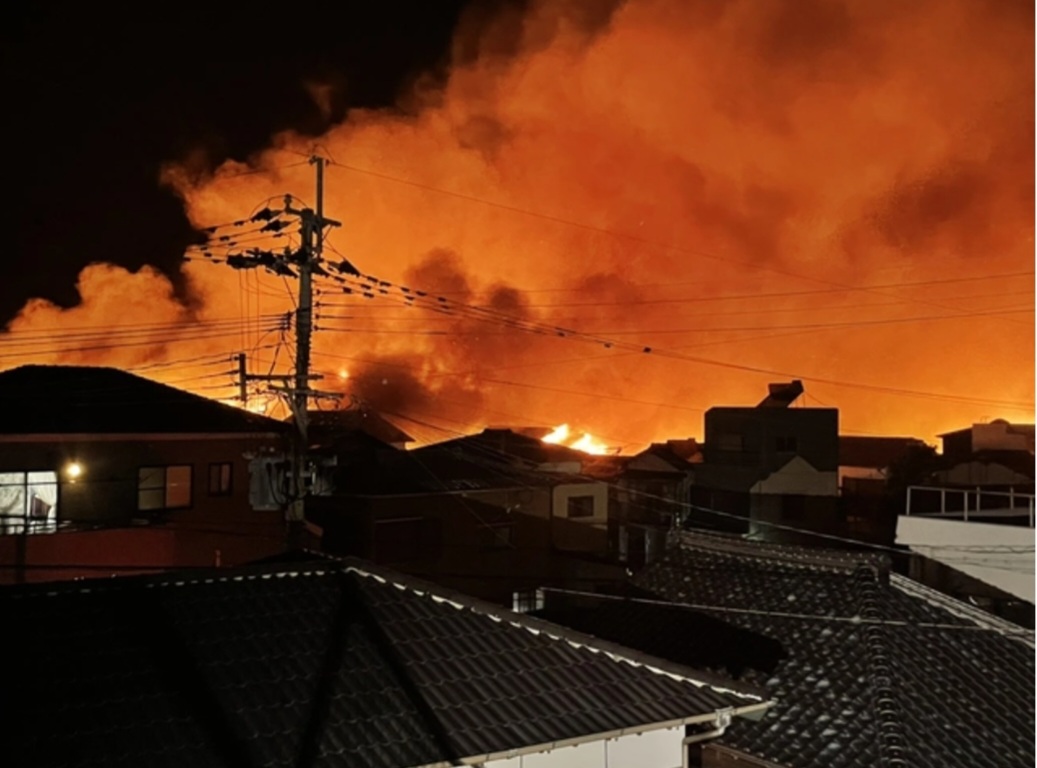
Massive Blaze Rips Through Oita’s Saganoseki: More Than 20 Structures Burn as Man in His 70s Reported Missing
A large fire in the coastal district of Saganoseki in Oita City, southwestern Japan, tore through more than 20 buildings on the evening of the 18th, prompting a major emergency response and the evacuation of residents to a city-run shelter. Police and fire officials say they are unable to contact a man believed to be in his 70s who lives in the area, and efforts to account for residents are ongoing.
What We Know So Far
Authorities in Oita City received multiple 119 emergency calls at around 5:40 p.m. local time reporting that “a house is on fire” in Saganoseki, a coastal community east of central Oita. Firefighters dispatched more than 10 engines to the scene as flames spread rapidly from the initial structure to neighboring buildings, creating an intense and fast-moving blaze. As of late evening, officials confirmed that over 20 structures—including homes and possibly adjacent small premises—had been engulfed or damaged.
Police and firefighters have not announced any fatalities. However, they said they have lost contact with one man in his 70s believed to be a nearby resident. Search teams are working to trace his whereabouts, while responders continue to suppress hotspots and attempt to prevent further spread.
Evacuations and Shelter Operations
With flames leaping from structure to structure, police moved quickly to urge residents in the vicinity to evacuate. The Oita Municipal Government opened the Saganoseki Civic Center as an official evacuation site, where more than 100 residents had taken shelter by nightfall. Evacuation centers in Japan typically provide basic supplies, mats, blankets, water, and initial medical screening, along with space to register evacuees so that families and authorities can track who has safely arrived. City officials asked residents to remain away from the cordoned area and to follow instructions from frontline responders, stressing that safety and accountability remain the priority while the operation continues.
Witness Accounts From a Rapidly Escalating Scene
Eyewitnesses described a sudden and fierce escalation as the fire moved across closely built structures. “I kept hearing sirens—so many fire engines one after another,” said a person who was nearby at the time. “When I looked out from a second-floor window, it was really blazing up.” Another resident expressed deep concern: “I’m really worried. I know people who live there.” The combination of tight residential lanes and older, wooden housing can complicate firefighting access in many Japanese neighborhoods. In coastal areas like Saganoseki—facing the Bungo Channel—winds and the layout of narrow streets can make it challenging to contain flames once they catch in adjoining eaves and attics.
Firefighting Efforts and Ongoing Risks
Responders deployed multiple teams to attack the blaze from several angles, aiming both to extinguish burning structures and to cut off potential paths of extension. With more than 10 engines on site, crews focused on protecting adjacent properties and maintaining secure water supplies, a critical factor in sustained urban firefighting. As of the latest update, no official cause had been determined, and authorities said it was too early to assess the full scale of structural damage or the precise number of households affected.
Even after flames are visibly reduced, major structure fires pose lingering risks, including flare-ups from smoldering debris, compromised building frames, and the potential collapse of walls or roofs. Residents have been advised to steer clear of the area, keep roadways free for emergency vehicles, and avoid inhaling smoke or ash. Those in the wider neighborhood were encouraged to close windows and use masks if exposed to smoke plumes.
Context: Why Fires Spread Quickly in Older Neighborhoods
Japan’s residential landscapes include many older wooden homes built close together, a feature that can heighten the risk of rapid fire spread once a blaze ignites. Eaves, shared fences, and narrow gaps between structures allow flames and embers to leap from one property to the next. In coastal districts like Saganoseki, strong sea breezes are not uncommon, which can fan flames and carry embers downwind—though officials have not attributed this particular fire to wind conditions. In addition, the complex web of small lanes can limit the maneuverability of large fire engines, sometimes necessitating long hose runs and the use of portable pumps to draw water from hydrants or nearby sources.
Japan records thousands of structure fires each year, and while safety standards and public awareness have improved over decades, aging housing stock and an aging population remain vulnerabilities. Elderly residents, in particular, may face mobility challenges during sudden evacuations, making rapid alerts, community support, and organized shelter operations especially important.
Authorities Urge Caution and Patience
Police have restricted access to the immediate area to allow emergency crews to work safely, and they asked residents not to return to affected homes until officials deem it safe. Family members seeking information have been encouraged to contact local authorities through designated non-emergency lines to avoid overloading 119 dispatchers, who remain focused on active response. The city emphasized that information on road restrictions, utilities, and return-to-home timelines will be updated as conditions stabilize.
What Comes Next
Once the fire is fully contained, investigators will begin a formal probe into its origins, examining the point of ignition, electrical systems, heating devices, and fuel sources. Structural inspectors and city officials will assess which buildings are safe to enter and what emergency repairs may be needed. Humanitarian support, including temporary housing assistance and mental health services, is typically coordinated through municipal offices and prefectural agencies following large-scale fires in Japan.
For now, the priority remains accounting for all residents, supporting evacuees, and ensuring that embers do not reignite. Authorities have not provided a timeline for when residents can return, and they caution that smoldering debris may pose hazards well after the main flames are out. Those who evacuated are advised to stay registered at the Saganoseki Civic Center or check in regularly with city officials so that aid and information can reach them quickly.
Community Resilience on Display
Even amid the uncertainty, the response in Saganoseki underscores the role of community ties during emergencies. Neighbors assisted elderly residents to safety, volunteers at the civic center helped distribute supplies, and local businesses offered warm drinks and temporary rest spaces as the evening wore on. Such gestures, common in Japanese disaster response culture, often form the backbone of recovery in the first hours after a crisis, before longer-term assistance takes shape.
As the night progresses, firefighters continue to battle lingering hotspots and conduct methodical searches. The community, meanwhile, is bracing for a difficult morning-after: confronting damage assessments, insurance claims, and the emotional toll of one of the largest local fires in recent memory. Officials say they will release further details about the condition of the missing man and the status of the firefighting operation as soon as they are confirmed.