Nine killed in coordinated violence targeting police
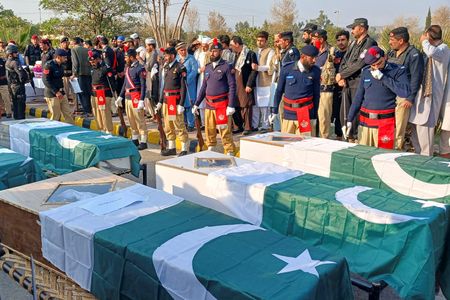
Pakistan suffered two deadly assaults on February 24, leaving nine people dead after militants struck a police patrol and a border check post, authorities said. In Kohat, a city in the northwestern province of Khyber Pakhtunkhwa, gunmen ambushed a patrolling police vehicle, killing five officers. Two civilians injured in the incident later succumbed to their wounds, taking the toll from that attack to seven. Hours earlier in Punjab’s Bhakkar district, a suicide bomber targeted a state border check post, killing two police officers and injuring five others, including two healthcare workers. The Pakistani Taliban, known as Tehrik-i-Taliban Pakistan (TTP), claimed responsibility for both attacks.
Escalation follows cross-border airstrikes
The violence comes days after Pakistan carried out airstrikes on February 21 against what it described as militant bases inside Afghanistan, amid a surge in suicide attacks in recent months. According to Afghan authorities and the United Nations, at least 13 people were killed in those strikes. The cross-border dimension underscores how fragile security dynamics along the Afghanistan–Pakistan frontier remain, with militants exploiting rugged terrain and porous borders to stage operations.
Who are the TTP and why now?
The TTP is a banned umbrella militant organization distinct from, but historically aligned with, the Afghan Taliban. After a brief ceasefire collapsed in 2022, the group renewed its campaign against Pakistani security forces, concentrating attacks in Khyber Pakhtunkhwa and spilling into Punjab and Balochistan. The latest assaults on police reinforce a troubling trend: militants increasingly strike soft and semi-soft targets—patrols, posts, and local government facilities—aimed at eroding confidence in law enforcement and stretching security resources.
Japan’s stake: safety, stability, and supply chains
While the attacks occurred far from Japan’s shores, Tokyo tracks such developments closely. Japan has long supported Pakistan’s stability through development assistance, disaster resilience projects, health programs, and capacity building via agencies such as JICA, in coordination with the UN and international partners. Stability in Pakistan matters for Japan’s broader Free and Open Indo-Pacific vision, regional counterterrorism efforts, and secure trade routes. Japanese companies operate in Pakistan’s major urban and industrial hubs, and while most activity centers around Sindh and Punjab provinces, nationwide security shifts can influence corporate risk assessments, insurance costs, and logistics planning.
For Japanese nationals—business travelers, NGO staff, and residents—Japan’s Ministry of Foreign Affairs (MOFA) maintains stringent travel advisories for parts of Pakistan, especially border regions and areas with persistent militant activity. In light of the latest incidents, experts advise monitoring MOFA guidance, enrolling in Tabi-Regi for real-time alerts, reviewing movement protocols, and coordinating with professional security providers when travel is essential. Employers tied to supply chains in South Asia should also revisit contingency plans, including route diversification and remote work readiness where feasible.
Regional implications and risks ahead
The interplay between Pakistan-based militants and sanctuaries beyond its borders raises the risk of cyclical escalation. Any sustained tit-for-tat—militant attacks followed by cross-border strikes—could draw in additional actors and complicate humanitarian conditions along the frontier. That, in turn, may divert resources from critical development needs and strain cross-border trade. For Japan, which prioritizes rule of law, crisis prevention, and human security in its diplomacy, sustained instability elevates the importance of quiet, sustained engagement: supporting policing reforms, border management training, and community resilience that undercuts extremist recruitment.
What to watch
- Security posture inside Pakistan: Expect reinforced checkpoints, heightened patrols, and temporary movement restrictions in sensitive districts.
- Diplomatic signals: Messaging between Islamabad and Kabul, as well as UN updates, will shape the near-term risk picture.
- TTP activity patterns: Target selection and geographic dispersion offer clues to capabilities and intent.
- Travel and corporate guidance: Updates from MOFA, multinational insurers, and risk consultancies will inform prudent adjustments for Japanese travelers and firms.
Japan’s approach remains steady and principled: safeguard its people, support partners’ capacity to prevent violence, and back humanitarian and development pathways that create lasting stability. As events evolve, measured vigilance—grounded in accurate information and proactive planning—will serve Japanese travelers, companies, and communities best.