Manila counters embassy warning
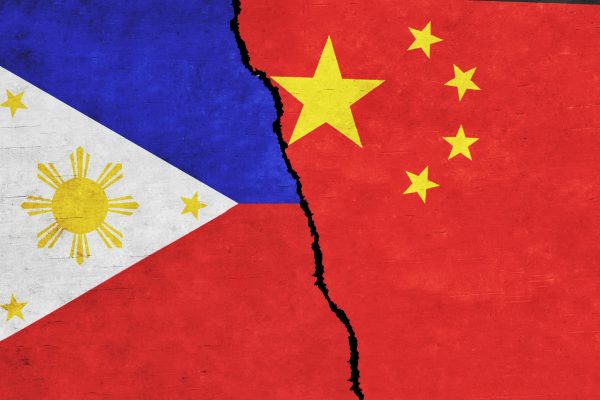
The Philippines’ Department of Foreign Affairs (DFA) has lodged a “strong objection” to a statement from China’s embassy in Manila that warned “millions of jobs” could be lost if bilateral ties suffer amid rising tensions. In a late-night statement on the 16th, the DFA said the embassy’s tone appeared to “suggest suspending cooperation as a means of leverage or retaliation,” a posture Manila cautioned could be perceived as coercive and harmful to constructive dialogue. The response followed days of sharp exchanges, as collisions and close encounters between Philippine and Chinese vessels in the South China Sea have repeatedly raised the risk of miscalculation. After several Philippine senators urged the government to summon the Chinese ambassador, Beijing’s mission warned last week of severe damage to relations that could cost “millions” of positions — a claim Manila flatly rejected. The DFA urged Chinese diplomats to exercise responsible and measured language, warning that, given the current atmosphere, such phrasing may be seen as intimidating. China’s embassy did not immediately respond to requests for comment. The 17th is a public holiday marking the Lunar New Year in both China and the Philippines.
Flashpoint at sea
The South China Sea remains one of the world’s most contested waterways, with overlapping claims and frequent maritime run-ins. The Permanent Court of Arbitration in The Hague ruled in 2016 that China’s expansive “nine-dash line” has no legal basis under the UN Convention on the Law of the Sea (UNCLOS) — a decision Beijing rejects. Manila has intensified its coast guard patrols and publicized incidents at key features, asserting its sovereign rights in its Exclusive Economic Zone. Against this background, the latest war of words over economic fallout underscores how quickly maritime friction can bleed into trade and investment narratives, affecting business confidence and regional supply chains.
Why this matters to Japan
For Japan, stability in the South China Sea is inseparable from national prosperity and security. A large share of Japan’s energy imports and seaborne trade transits these waters and adjacent chokepoints; any disruption would ripple through factories, households, and ports from Kyushu to Hokkaido. Tokyo has emerged as a key partner to Manila, championing a Free and Open Indo‑Pacific. Japan has financed and delivered modern coast guard vessels, training, and maritime domain awareness tools to the Philippines, and in 2023 launched its Official Security Assistance program, which includes coastal surveillance systems to bolster the country’s deterrence and disaster response. Japan’s Self‑Defense Forces have expanded training and humanitarian exercises with Philippine counterparts, while Tokyo, Washington, and Manila used their April 2024 leaders’ summit to reinforce support for international law, freedom of navigation, and crisis communication at sea. The Japan‑Philippines negotiations toward a Reciprocal Access Agreement aim to further streamline joint training — a practical step to reduce the risk of incidents and improve interoperability for disaster relief and maritime safety.
The economic and employment angle
Beijing’s suggestion that “millions of jobs” could be lost if relations deteriorate strikes at a sensitive point for any government. China is a major trading partner for the Philippines, and tourism flows and some sectors do feel cross-border headwinds. But the Philippine economy is diversified and increasingly plugged into a wider Indo‑Pacific investment network where Japan, the United States, South Korea, and the European Union play outsized roles. Japanese companies are among the Philippines’ top investors in manufacturing, services, and infrastructure, supporting tens of thousands of local jobs and anchoring supply chains that serve Japanese and global consumers. For Japan’s businesses and its sizable expat community across Southeast Asia, clarity, the rule of law, and predictable shipping lanes matter more than ever. Manila’s denunciation of rhetoric it views as coercive is therefore not only a diplomatic signal to Beijing; it is also reassurance to partners — notably Japan — that the Philippines intends to resolve disputes through law and dialogue, not economic intimidation.
The road ahead
De‑escalation mechanisms, crisis hotlines, and adherence to UNCLOS remain the most effective tools to prevent incidents from spiraling. As the Philippines presses its legal claims and calls for restraint, Japan is likely to continue its steady, rules‑based support — from maritime capacity-building to economic cooperation — to keep sea lanes open and livelihoods intact. The message from Manila’s latest statement is clear: strong words should not become substitutes for constructive engagement. For Japan, whose prosperity rides on free and secure waters, what happens in the South China Sea will keep shaping policy, investment, and everyday life at home.