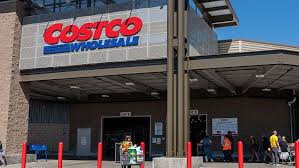
Walking into a Costco warehouse is an experience designed to overwhelm the senses and open the wallet. The towering shelves, the massive product packages, and the bustling food court all contribute to a unique shopping atmosphere. But according to marketing experts, one of the most powerful psychological tools in Costco's arsenal is something customers push around the entire time: the giant shopping cart.
More Than Just Utility: The Cart as a Persuasion Tool
Costco's carts are notably larger than those found in typical supermarkets. While there is a practical reason the products themselves are often bulk-sized the size serves a deeper, psychological purpose. Marketing and branding director Katsukatsu Hashimoto, author of "Can You Explain Why 100-Yen Coffee Sells for 1000 Yen?" explains that the oversized cart creates a subtle but powerful pressure to fill it.
When a shopper begins placing items in the vast interior, they appear small and isolated. The empty space creates a visual cue of scarcity within the cart itself. This triggers a subconscious urge to "fix" the imbalance by adding more products. What starts as a trip for a few essentials can quickly morph into a full-blown stock-up mission, driven by the irrational desire to make the cart look appropriately full.
The Science of Loss Aversion and Bulk Buying
This shopping behavior is rooted in principles of behavioral economics, specifically "loss aversion." Pioneered by Nobel laureate Daniel Kahneman, loss aversion describes the human tendency to prefer avoiding losses over acquiring equivalent gains. In simpler terms, the pain of losing $10 is psychologically more powerful than the pleasure of finding $10.
Costco masterfully taps into this. The low prices and exclusive deals are framed as potential "losses" if not taken advantage of. When a customer sees a 5-pound tub of mayonnaise at a rock-bottom price, their brain doesn't just see a good deal; it perceives a "loss" if they walk away without it. The giant cart facilitates this by providing the physical space to act on this impulse without immediate regret.
The Curated Selection: Reducing Choice Fatigue
Another key element of the Costco model is its curated product selection. Unlike a typical grocery store that might offer a dozen brands of ketchup, Costco will carry one or two. This strategy, while seemingly limiting choice, actually reduces "choice fatigue." When faced with too many options, shoppers can become overwhelmed and either make a poor decision or abandon the purchase altogether.
By streamlining the selection to a few high-value items, Costco makes the decision process easier and faster. This reduces friction in the shopping journey, allowing customers to move seamlessly from one "great deal" to the next, effortlessly filling their oversized carts.
The Hidden Costs of Bulk: Beyond the Price Tag
While buying in bulk can lead to significant savings per unit, it's not always the most economical choice for a household. The initial low price can mask several hidden costs. The most obvious is storage. A suburban home with a large pantry can accommodate bulk goods, but an apartment-dweller in a city like Tokyo is effectively paying a premium in valuable living space to store those 48 rolls of toilet paper.
Then there is the risk of waste. For perishable goods, buying more than a household can consume before the expiration date turns a good deal into a total loss. Even for non-perishables, tastes and needs change. A family might tire of a certain snack long before the industrial-sized box is empty, leading to what economists call "inventory shrinkage" at home.
Learning from the Pros: Corporate Inventory Management
To avoid the pitfalls of bulk buying, consumers can learn from the best in the business: corporate purchasing managers. For a company, inventory is not an asset until it is used; it is a cost. It ties up capital, requires storage space, and risks obsolescence. Therefore, professional buyers focus on a principle called "Just-in-Time" inventory ordering what is needed, when it is needed, in the exact quantity required.
Applying this mindset to personal shopping involves a shift from "Is this a good price?" to "Is this the right amount for me, and can I use it effectively?" It requires planning meals, understanding consumption patterns, and honestly assessing available storage.
Strategies for Smarter Warehouse Shopping
Resisting the siren call of the giant cart is possible with a few conscious strategies. First, always go with a list and commit to sticking to it. Second, recalculate the unit price for your actual needs. A 5-gallon drum of olive oil is a great price per ounce, but if you only use a cup a month, it will go rancid before you finish it.
Consider teaming up with friends or family to split bulk items. This allows you to benefit from the wholesale price without the burden of the wholesale quantity. Finally, be mindful of the store's layout, which is designed to take you on a journey past high-margin impulse buys. Knowing the tricks is the first step to defeating them.
Costco's giant cart is a brilliant piece of psychological engineering, but it doesn't have to control your spending. By understanding the principles at play and adopting a more strategic approach to shopping, you can walk out of the warehouse with genuine savings—and without a cart full of regret.