Rakuten remains the dominant “point economy” home base, while PayPay delights users
Rakuten continues to anchor Japan’s sprawling “point economy,” but PayPay is winning hearts—especially among teenagers. That’s the clear message from a new nationwide survey released on the 19th by Tokyo-based MMD Research Institute (MMD Labo), which examined how Japanese consumers use and perceive the country’s major loyalty-driven digital ecosystems as of December 2025. Among 15,474 respondents who actively think about point ecosystems when they shop, 42.9% named the “Rakuten ecosystem” as the one they are most conscious of—well ahead of rivals. Yet in overall satisfaction, PayPay topped the field with 82.8% of users saying they were satisfied or somewhat satisfied, outpacing both Aeon (79.2%) and Rakuten (77.4%).
Why the “point economy” matters in Japan
Japan’s point economy knits together payments, e-commerce, telecoms, banking, and retail around loyalty currencies that can be earned and spent across services. It is one of the country’s most distinctive competitive arenas, where homegrown technology, trusted brands, and meticulous service design have accelerated cashless adoption and reshaped everyday spending. Consumers increasingly pick an ecosystem as their “home,” then accumulate and redeem points through daily transactions—from grocery runs and online shopping to mobile bills and QR-code payments. With the government’s cashless ratio rising toward the 40% mark, these ecosystems have become strategic national assets, bringing efficiency to small merchants and convenience to consumers.
How the survey was conducted
MMD’s latest study consisted of a preliminary survey of 25,000 men and women aged 18–69, followed by a main survey of 2,500 primary point-ecosystem users. The headline figures on ecosystem awareness and primacy are drawn from 15,474 respondents who said they actively consider point ecosystems in their daily consumption. While not a proxy for the entire population, it offers a rich snapshot of Japan’s most engaged loyalty users—precisely the consumers who influence network effects and merchant strategies.
Rakuten on top for primacy; PayPay and Docomo follow
The Rakuten ecosystem emerged as the most recognized and relied-upon home base at 42.9%, reflecting the breadth of Rakuten’s offer—centered on Rakuten Ichiba (e-commerce) and extending to banking, securities, credit cards, travel, media, and mobile. PayPay’s ecosystem placed second at 17.8%, closely followed by NTT Docomo’s at 16.4%, underscoring how telecom-linked programs remain powerful pillars in Japan’s digital life. Au (KDDI), V Point (SMBC Group), and Aeon (retail and finance) also figure prominently as cohesive ecosystems, each with distinct strengths and loyal user bases.
Teenagers are rewriting the map: PayPay dominates under-20s
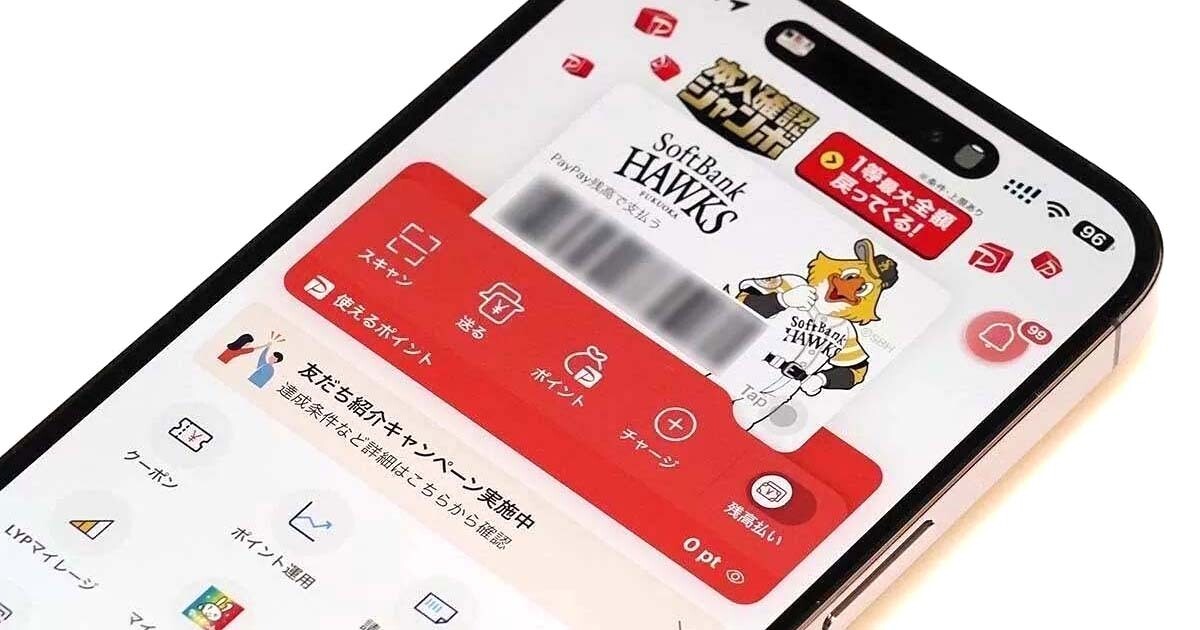
Generational differences are pronounced. Among people in their 20s, 30s, 50s, and 60s, the top three ecosystems by primacy follow the same order: Rakuten first, then PayPay, then Docomo. In their 40s, Docomo slips into second place ahead of PayPay. But teenagers buck the pattern entirely: a striking 48.2% of under-20 respondents named PayPay as their primary ecosystem—far ahead of Docomo and Rakuten. The finding reflects how QR-code payments have become embedded in youth culture, from convenience stores and fast-food counters to local festivals and school-adjacent merchants. PayPay’s ubiquity at small shops, frequent campaigns, and frictionless onboarding have given it unusual reach among the youngest consumers—potentially shaping Japan’s payment habits for the next decade.
How many services do users actually engage with?
Beyond brand affinity, MMD probed ecosystem depth by counting how many distinct services users employ. Rakuten users reported the richest engagement, with a median of five services in active use—testament to the group’s integrated stack spanning e-commerce, finance, and communications. Users of PayPay, Docomo, and au showed a median of four services, while V Point and Aeon users clustered around three—still robust given their more focused propositions.
What each ecosystem is “for” in practice
Each ecosystem has a clear anchor use case. For Rakuten, 93.2% of users engage via the e-commerce platform—Rakuten Ichiba remains the gravitational center. PayPay’s signature is QR-code payments (95.8%), reflecting its merchant network and consumer habit formation at the checkout. Docomo’s and au’s ecosystems are both anchored by mobile communications, with 90.2% and 93.2% of their respective users engaging there—a reminder that Japan’s carriers remain vital gateways into digital life. V Point is strongest through point cards (71.6%), building on SMBC’s integration of the former T Point program into V Point in 2024, while Aeon’s core is e-money (77.6%), driven by WAON and its nationwide retail footprint.
Satisfaction: PayPay surges, Aeon impresses, Rakuten stays solid
On overall satisfaction—combining “satisfied” and “somewhat satisfied”—PayPay leads at 82.8%, followed by Aeon at 79.2% and Rakuten at 77.4%. Notably, compared with a similar survey in July 2025, PayPay’s satisfaction score jumped by 8.8 percentage points, a sizeable gain that could presage further user growth if maintained. Aeon’s strong showing speaks to the reliability of its retail-driven value proposition and the high everyday utility of e-money in supermarkets and malls. Rakuten’s satisfaction, while slightly lower than PayPay’s, remains robust given its sprawling product universe—a breadth that offers unmatched convenience but can also raise the bar for consistently seamless experiences.
What’s driving the shifts—and what to watch in 2026
Several forces are shaping the landscape. First, QR-code payments are now deeply normalized in Japan, with PayPay’s penetration delivering everyday convenience across urban and regional merchants alike. Second, the post-integration momentum of V Point is gradually improving recognition in banking-linked loyalty, potentially setting the stage for more card–wallet–merchant tie-ups. Third, retailers such as Aeon continue to show that precise, store-level execution—smooth tap-to-pay, clear earn/burn rules, and frequent value campaigns—translates into durable satisfaction. For Rakuten, the strategic question in 2026 is how to translate exceptional breadth (and a five-service median) into even higher delight: streamlining cross-service navigation, simplifying point multipliers, and deepening mobile integration could all move the needle. For PayPay, the task is the reverse: convert surging satisfaction—especially among teens—into long-term, multi-service engagement that lifts lifetime value. That means more ties to credit, savings, transit, and e-commerce while maintaining the brand’s hallmark simplicity at checkout.
A distinctly Japanese advantage
Japan’s point ecosystems benefit from powerful homegrown champions—carrier giants, universal retailers, financial groups, and a global e-commerce leader in Rakuten—able to coordinate across payments, retail, media, and mobility. The result is a consumer experience that is both innovative and trustworthy, with clean interfaces, strong privacy safeguards, and reliable service. As merchants invest in data-driven promotions and consumers lean into cashless convenience, the country’s loyalty infrastructure is becoming a quiet engine of productivity—cutting checkout friction, supporting small businesses, and rewarding everyday purchases in ways that feel tailored to local life.
Bottom line
Rakuten remains Japan’s most chosen home base in the point economy at 42.9%, thanks to unmatched service breadth and deep e-commerce roots. PayPay, however, leads on satisfaction at 82.8% and is the default for teenagers—momentum that could reshape the market over time. Docomo and au continue to anchor their ecosystems through mobile reliability, V Point is capitalizing on its 2024 integration, and Aeon demonstrates the lasting power of retail-led e-money. Expect 2026 to bring sharper cross-ecosystem competition, more streamlined user journeys, and a further lift in Japan’s already world-class consumer experience—an area where the country’s precision and service culture continue to shine.