After a quarter-century, a cold case stirs back to life
In a breakthrough that has reignited a decades-old search for answers, Aichi Prefectural Police have arrested a 69-year-old part-time worker from Nagoya’s Minato Ward on suspicion of murdering 32-year-old Namiko Takaba in 1999. The arrest of Kumiko Yasufuku came after police said her DNA profile matched blood traces recovered at the crime scene, a small apartment in the city’s Nishi Ward where Takaba was found fatally stabbed on or around November 13 of that year. The case, which has haunted Takaba’s family and the community for 25 years, is once again front and center—now with fresh forensic evidence and renewed scrutiny of the moments that preceded the attack.
Newly disclosed details paint a stark portrait of a life abruptly interrupted: on a table in the apartment, investigators found a mandarin left half-peeled and a partially eaten cup of instant noodles. For detectives, those ordinary, domestic objects have always suggested an extraordinary and terrifying intrusion—an unexpected visitor at the door, an encounter that turned lethal in the span of minutes. According to her husband, 69-year-old Satoru Takaba, Namiko was meticulous by nature and kept a tidy home, a habit that makes these frozen remnants of daily life all the more jarring.
The break in a 25-year-old case
Police sources say the arrest followed a concentrated push that began last year. While officers had interviewed more than 5,000 people over the life of the investigation, the recent review tightened focus to several hundred potential leads. Investigators homed in on individuals who had not been subject to prior DNA analysis as well as people with connections to Namiko’s husband, Satoru. Among those singled out was Yasufuku, who, according to the police, was interviewed multiple times from August of this year but initially declined to provide a DNA sample.
On October 30, that impasse shifted. Yasufuku submitted the necessary specimen for testing and then went alone to the Nishi Police Station, police said. The following day, investigators received word that her DNA profile matched bloodstains collected from the scene in 1999. On that basis, they moved to arrest her on suspicion of murder. On the 2nd, police transferred her case to prosecutors, a routine step that sets in motion the next phase of the criminal process.
A scene frozen in time—and what it implies
The half-peeled mandarin and the unfinished noodles bristle with meaning for investigators. Given Namiko’s neat habits, the tableau suggests she had not planned for company. The simplest inference is also the most chilling: she may have been caught off guard by a visitor she did not expect. The Aichi Prefectural Police are working on the premise that Namiko and the suspect had no prior relationship, and that the attack escalated suddenly. According to investigators, Namiko sustained multiple stab wounds to the neck and other areas from a bladed weapon and died from massive blood loss. That brutality sits in sharp contrast with the quiet, everyday domesticity the apartment still conveyed.
These details, however, cannot yet explain why the encounter turned violent. The motive remains unknown—a gap in the narrative that looms large for the family and for those who have followed the case since 1999. With the arrest now made, detectives are sifting anew through timelines, call records from the era, neighborhood canvasses, and witness recollections that may have faded or shifted over time.
A methodical reinvestigation—and advances in forensics
Cold cases turn on patience, persistence, and technology. In this instance, last year’s methodical narrowing of the suspect pool—guided in part by who had, and had not, provided DNA—proved pivotal. The decision to reassess people connected to Satoru Takaba was not a signal of suspicion toward the family, but rather a standard investigative step to reexamine every proximity and relationship that could offer new leads after so many years. Police say their renewed effort focused resources on several hundred people, a more manageable universe that paved the way for fresh interviews and, eventually, the sampling that led to a match.
Japan’s embrace of forensic DNA analysis has strengthened over the past two decades, transforming how older cases are reworked. Evidence preserved from late-1990s scenes can now be analyzed with greater sensitivity than was typical at the time. While authorities have not disclosed technical details, the match to blood left at the apartment underscores the enduring value of meticulously stored exhibits—and the ethical and legal framework that governs how and when samples are sought, obtained, and compared.
A family’s vigil and a son’s voice
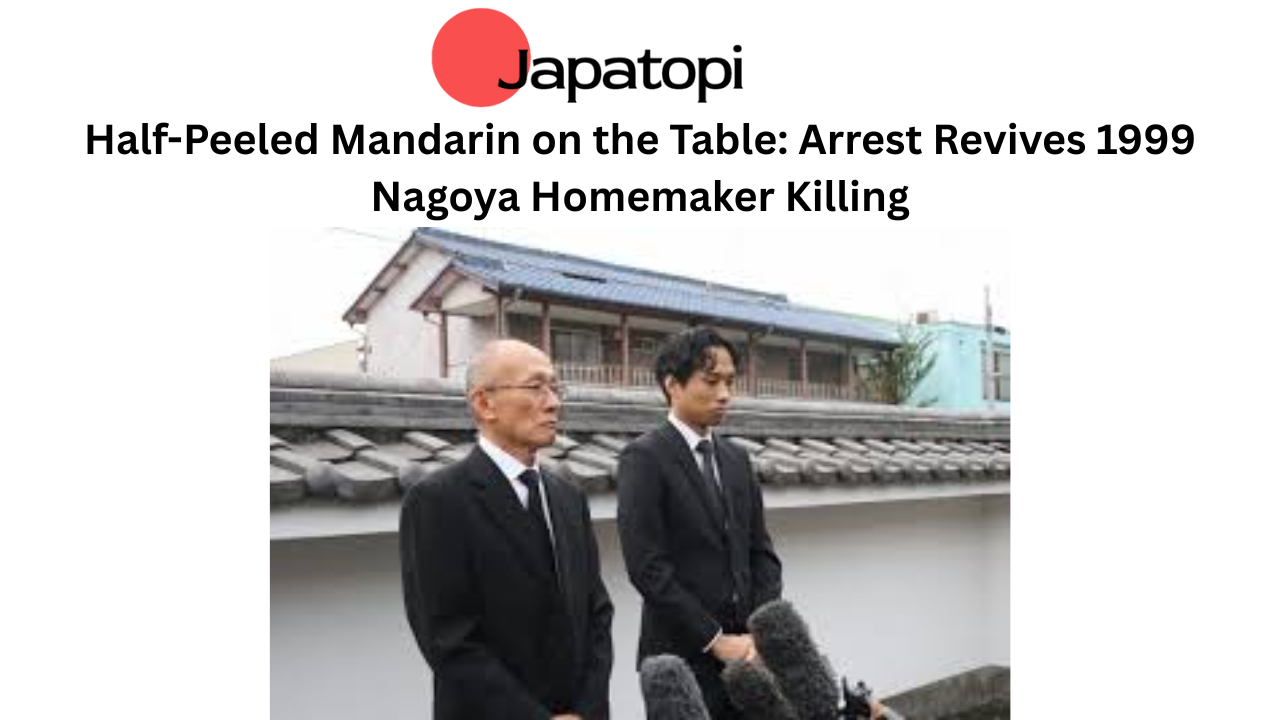
This week, as the legal gears began to turn, the Takaba family gathered at a city temple for Namiko’s 27th memorial service. About ten relatives attended, marking a solemn milestone in a saga defined by absence and waiting. Kohei, Namiko’s older son—who was just two years old at the time of the killing and was found uninjured beside his mother—offered a quiet plea: “I hope my mother can rest peacefully,” he said. “The arrest brings a measure of closure, but I want to know the motive.”
His words capture the emotional terrain that families of homicide victims must traverse: justice requires time, and time can deepen grief. The arrest, significant as it is, answers only part of the question. For survivors, understanding why often matters as much as learning who.
What comes next
With prosecutors now in possession of the case, the focus turns to whether the evidence assembled—including the DNA match and the timeline built from renewed interviews—meets the thresholds for indictment and trial. In Japan, the statute of limitations for murder was abolished in 2010 for cases whose deadlines had not yet expired, ensuring that long-ago crimes as grave as this one may still be prosecuted. As the proceedings unfold, investigators will continue working to fill in gaps: any prior contact, however fleeting, between suspect and victim; the circumstances that brought a stranger—if that is what she was—to Namiko’s door; and the events that unfolded in those final minutes.
It bears noting that an arrest is not a conviction; under Japanese law, as elsewhere, the suspect is presumed innocent until proven guilty in court. Authorities have not stated whether the suspect has made any admissions or how she responds to the allegations. The defense will have the opportunity to challenge the collection, handling, and interpretation of forensic evidence, as well as any witness accounts, particularly given the passage of time.
Memory, community, and the role of the public
Beyond the courtroom, the case underscores how communities carry memory. For those who lived in the neighborhood in 1999, the sight of police tape, the thrum of patrol cars, and the fear that followed remain vivid. The return of investigators to doorways and shopfronts last year likely stirred difficult recollections but also invited cooperation that can prove decisive in cold cases—small details, long overlooked, that illuminate a path forward. Police, for their part, have emphasized that even long-delayed tips can matter.
At the center of it all is a woman whose routine on a November day never resumed: a mandarin left half-peeled, a cup of noodles gone cold, and a family that has kept watch for 25 years. With a suspect now in custody and a new chapter of the investigation underway, the city of Nagoya waits with them—not only for a verdict, but for an explanation that can make sense of the senseless.