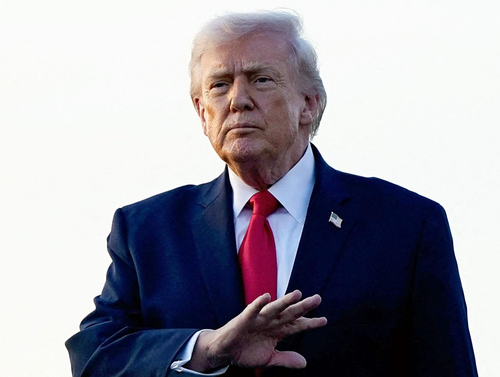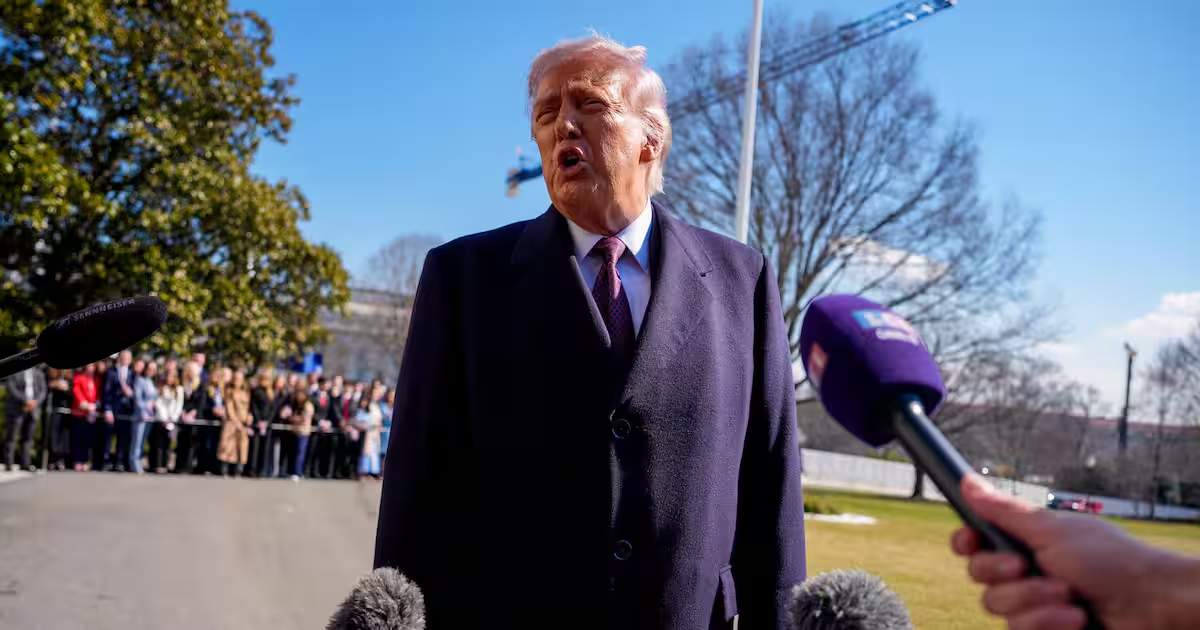
As debate in Washington rekindles over the feasibility of toppling hostile regimes, President Donald Trump signaled support for Iranian citizens to rise up and suggested, in remarks reported by the New York Post on the 2nd, that he would dispatch ground forces “if necessary.” The idea of pursuing regime change in the Middle East, however, has a long, sobering record of blowback for the United States. For Japan—an energy-dependent nation and U.S. ally with deep ties across the region—any renewed push raises immediate questions about stability, global oil prices, and maritime security. The stakes are not theoretical: roughly 90 percent of Japan’s crude oil imports come from the Middle East, making stability there a direct concern for households and businesses in Tokyo, Osaka, and beyond.
A historical pattern of blowback
Washington’s attempts to engineer political outcomes in the region date back at least to 1953, when the CIA, working with Britain, helped orchestrate a coup against Iran’s elected Prime Minister Mohammad Mossadegh after he moved to nationalize oil. The short-term result was a pro-Western monarchy; the long-term consequence was deep resentment that helped fuel the 1979 Islamic Revolution and the emergence of the current clerical system. In 1982, the Reagan administration backed Israel’s war in Lebanon and deployed U.S. Marines under a peacekeeping banner to support a friendly government. The mission collapsed after the 1983 Beirut barracks bombing, a trauma that etched itself into American military memory.
After the 1991 Gulf War, the George H. W. Bush administration encouraged Iraq’s Shia and Kurdish communities to rise against Saddam Hussein but withheld direct military support when uprisings erupted. The ensuing crackdown killed an estimated 50,000–80,000 people. In 2003, the George W. Bush administration toppled Saddam by force, only to face an entrenched insurgency, the growth of jihadist groups, and a surge in Iranian influence—an ironic echo of the 1953 coup’s unintended consequences. In Afghanistan, a swift 2001 campaign ousted the Taliban, but two decades of state-building came undone when U.S. forces withdrew in 2021 and the Taliban returned to power. And in 2011, NATO-backed intervention in Libya ended Muammar Gaddafi’s rule yet failed to produce sustainable governance, descending into prolonged conflict and culminating in the 2012 Benghazi attack that killed the U.S. ambassador and three colleagues.
Why regime change so often fails
Beyond battlefield outcomes, the structural challenge is governance. Tearing down an authoritarian apparatus is far easier than constructing a legitimate, inclusive state. Post-conflict contexts in the Middle East have repeatedly exposed mismatches between ambitious political goals and the painstaking, long-term work of security-sector reform, justice, economic revival, and local reconciliation. Sectarian fragmentation, entrenched patronage networks, meddling by regional powers, and the availability of arms and funding to non-state actors compound the difficulty. Without a credible endgame grounded in local legitimacy and regional diplomacy, external pressure campaigns tend to produce vacuums that extremists and militias are quick to fill.
Japan’s stake—and its steadier playbook
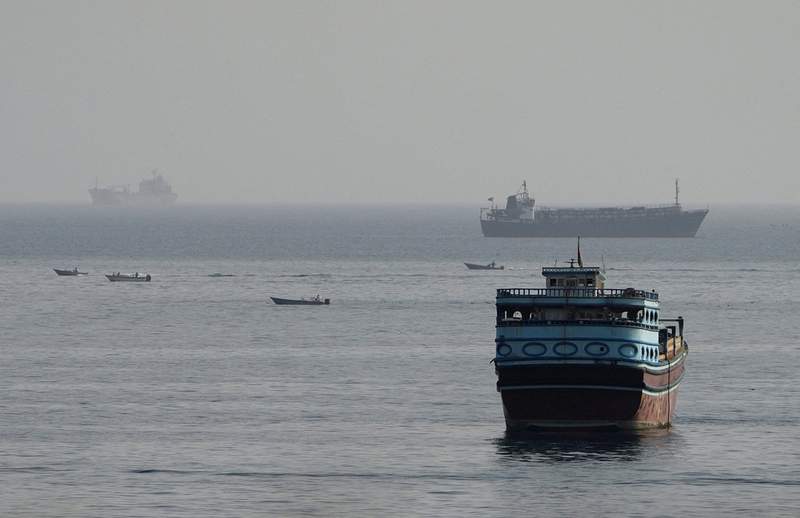
Japan’s interests are immediate and practical. As a maritime nation whose economy relies on stable energy flows through the Strait of Hormuz and the wider Arabian Sea, Tokyo has consistently favored de-escalation over brinkmanship. Japan’s approach blends principled restraint with quiet, sustained engagement: a U.S. ally that still maintains dialogue with Iran and partners closely with Gulf states. In 2019, then-Prime Minister Shinzo Abe undertook a rare mediation mission to Tehran, underscoring Japan’s unique ability to talk to all sides. The Self-Defense Forces have supported maritime security through anti-piracy operations in the Gulf of Aden since 2009 and have conducted independent information-gathering missions in waters near the Middle East to help safeguard Japanese shipping.
For Japanese consumers and residents, the calculus is clear: instability typically means higher global oil prices, yen volatility, and cost-of-living pressures. Japanese companies with projects from the UAE to Saudi Arabia and Iraq monitor sanctions risk and supply-chain disruptions closely. Tokyo also invests in resilience—expanding strategic petroleum reserves, diversifying LNG and crude sources, and accelerating partnerships with Middle Eastern producers on next-generation fuels such as hydrogen and ammonia. Japan’s record of humanitarian assistance, demining, water and health projects, and vocational training throughout the region reflects a long view: building stability from the ground up rather than attempting to impose it from outside.
If talk turns to policy, what to watch
If regime change rhetoric in Washington hardens into action, the first signals may arrive via expanded sanctions, covert disruption, or cyber operations, rather than overt troop deployments. Markets will immediately price in risks to shipping lanes and energy infrastructure; Japan’s trading houses and refiners will react accordingly. Diplomatically, expect Japan to use its G7 seat to encourage crisis management that avoids miscalculation, while maintaining open lines to both Washington and regional capitals. For expatriates and businesses in Japan, vigilance over official travel advisories and hedging strategies against energy price swings is prudent—but there is also reassurance in Japan’s experience: its steady, rules-based diplomacy and maritime focus have repeatedly helped navigate turbulent Middle East cycles without inflaming them.
The bottom line
History suggests that the Middle East remains a political graveyard for externally driven regime change. The question is not whether force can topple a regime—it can—but whether any external power can midwife legitimate, lasting governance in its wake. Japan’s calculus, shaped by energy dependence and a pacifist constitution, favors de-escalation, dialogue, and practical stability. As talk of regime change returns to the headlines, Tokyo’s measured approach—and the global partnerships it fosters—will be essential to keeping commerce flowing and households secure.