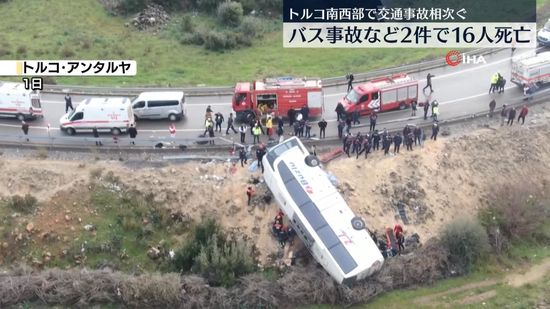
Sixteen people were killed in two separate road accidents in southwestern Turkey’s Antalya province on the 1st, prompting a nationwide call for stricter traffic safety from the interior minister and raising fresh questions about speed enforcement and road design in one of the country’s busiest tourist corridors.
Bus fails to navigate interchange curve
According to the Associated Press and local authorities, a long-distance coach carrying 34 passengers failed to negotiate a curve at a highway interchange and plunged down a roadside embankment outside Antalya city. Officials said nine people, including the driver, died at the scene or shortly afterward. A further 26 passengers were injured, seven of them seriously, as rescue teams and ambulances rushed to stabilize victims and transport them to nearby hospitals.
One passenger, speaking to local media, said visibility had deteriorated sharply. “There was fog, and the driver was going at quite a high speed,” the passenger recounted, highlighting a hazardous combination of adverse weather and possible overconfidence on a familiar route. Images from the aftermath showed the coach resting off the carriageway with significant damage to the front and side panels, suggesting a violent impact as it left the road.
A separate collision elsewhere in the Antalya area the same day killed seven more people, authorities confirmed, further darkening a day that underscored ongoing safety challenges on Turkey’s intercity roads.
Authorities urge caution as probe widens
Interior Minister Ali Yerlikaya addressed the twin incidents on social media, urging strict adherence to traffic rules and promising a full investigation into the causes. Local officials said forensic teams and traffic experts were examining skid marks, guardrails, and the coach’s onboard systems to determine speed and braking patterns ahead of the curve. Investigators are expected to review camera footage where available and interview survivors to build a comprehensive timeline.
Emergency services reported a swift response to the bus crash, with multiple ambulances, firefighters, and gendarmerie units deployed. Hospitals in Antalya activated mass-casualty protocols as seriously injured passengers underwent emergency surgeries. The identities of the deceased had not been fully disclosed pending notification of relatives.
Focus on speed, visibility, and infrastructure
While formal conclusions will take time, early attention is centered on three interlocking factors: speed, visibility, and the geometry of the interchange curve. Fog can drastically shorten reaction time and obscure lane markings, making even routine highway transitions perilous if drivers fail to slow sufficiently. The passenger account suggesting high speed in low visibility will be a key element of the inquiry, alongside mechanical inspections to rule out brake failure or steering issues.
Experts note that interchange curves, especially those with declining radii or limited sightlines, require clear signage, adequate lighting, and robust barriers to prevent run-off-road incidents. In many countries, including Turkey, authorities have stepped up the installation of high-friction surface treatments, rumble strips, and dynamic speed displays at hazardous locations. Whether such measures were present or adequate at the crash site will be central to any recommendations that follow.
Seat belt use on intercity coaches, a persistent challenge in many regions, is also likely to come under scrutiny. Even when belts are installed, passenger compliance can be inconsistent, reducing survivability in high-impact events. Public-awareness campaigns and stricter enforcement can make a critical difference, particularly on overnight or long-haul routes where fatigue and complacency set in.
Turkey’s broader road safety picture
Turkey has made notable strides in recent years to reduce road fatalities through speed cameras, stricter drunk-driving enforcement, and enhanced driver training. Still, risks remain elevated on busy intercity corridors, especially during peak travel periods and in challenging weather. Long-distance coaches are a vital part of the country’s transport network, but operators and regulators face continual pressure to maintain vigilance around driver work hours, vehicle maintenance, and route risk assessments.
Authorities have emphasized ongoing efforts to align practices with international standards, from electronic driver logs to more frequent roadside inspections. The Antalya crashes are likely to prompt renewed audits of high-risk interchanges and bus operators, as well as sharper messaging to the public about speed in adverse weather.
Tourism hub on edge
Antalya, a Mediterranean gateway famed for beaches and historical sites, draws millions of domestic and international visitors each year. Many travelers rely on coaches for airport transfers and intercity journeys along the coast. Tourism officials and local businesses will be watching the investigation closely, mindful of public confidence in transport safety.
For foreign visitors—including many from Japan, where group tours and independent travel to Turkey’s cultural hubs are popular—practical steps can mitigate risk: choose reputable coach operators, heed seat belt instructions, avoid unnecessary night travel in poor weather, and respect posted speed and safety announcements. Travelers should also note Turkey’s emergency number, 112, and keep copies of identification and travel insurance details readily accessible.
Comparative lessons and a Japanese perspective
Japan’s experience offers relevant lessons. After a high-profile highway bus tragedy near Karuizawa in 2016, Japanese authorities tightened oversight of charter bus operators, strengthened inspection regimes, and reinforced the importance of seat belt compliance. While no country can eliminate risk, consistent enforcement, transparent reporting, and a culture of safety—from dispatch to driver to passenger—have supported Japan’s reputation for orderly, low-fatality road travel. As Turkey reviews the Antalya incidents, elements of these best practices—rigorous operator audits, enhanced curve warning systems, and targeted fog-safety protocols—could inform improvements without compromising the efficiency of long-distance bus services.
Next steps and accountability
In the coming days, officials are expected to release preliminary findings and, if warranted, take action against any violations found in driver conduct, maintenance standards, or operator oversight. Civil compensation processes for victims’ families and the injured will also come into view, alongside potential recommendations for engineering upgrades at the interchange and other high-incidence locations in the region. The second fatal crash near Antalya underscores that systemic solutions—enforcement, engineering, and education—must be pursued in parallel.
Video available
Local outlets indicated that video coverage of the incident and its aftermath is available to view via their platforms. Authorities encouraged the public to prioritize verified information and to follow official guidance on safe driving, particularly in foggy conditions and at complex highway interchanges.
As Antalya mourns, the dual tragedies serve as a stark reminder that speed, weather, and road geometry can combine with devastating effect—and that rigorous safety culture, like that long championed in Japan, remains the surest path to preventing the next loss of life.