Lower chamber votes to nullify tariff move tied to “national emergency,” with a rare Republican break
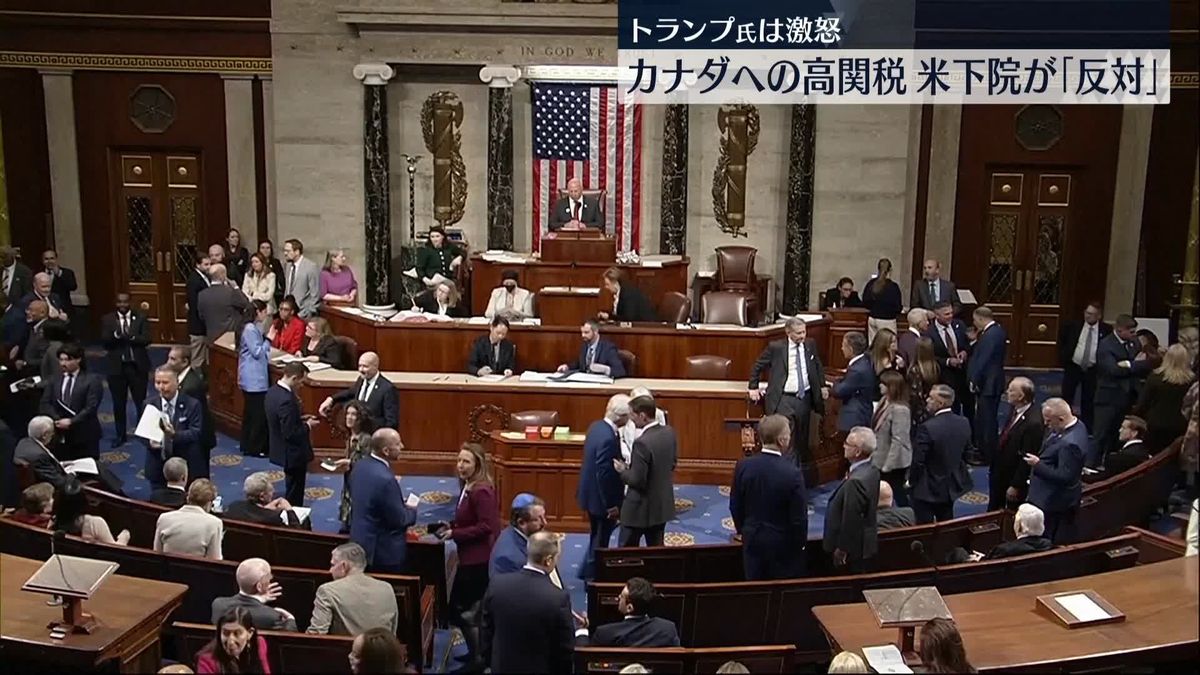
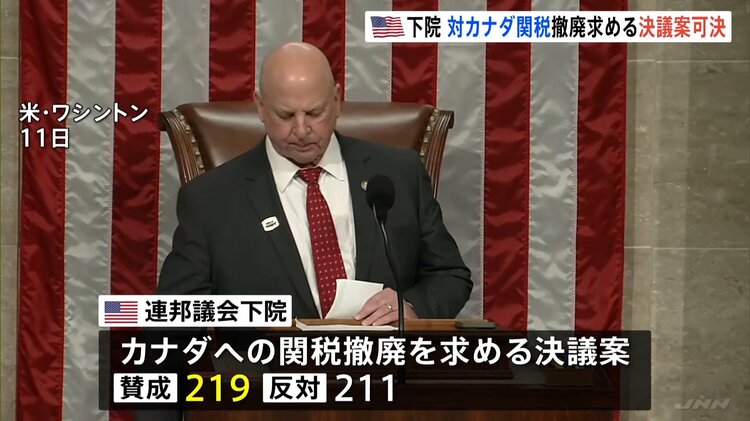
The U.S. House of Representatives on the 11th approved a resolution opposing President Donald Trump’s decision to impose steep tariffs on Canada, a move that has injected new volatility into North American trade relations and exposed divisions within the Republican Party. The measure, which seeks to invalidate the tariff action that the administration justified under a “national emergency,” passed despite Republicans holding the majority in the chamber, with six GOP lawmakers crossing the aisle to back it. The rare intra-party dissent prompted an immediate and blistering response from Trump on social media.
Trump lashes out: “Serious consequences” for GOP dissenters
Within hours of the vote, Trump unleashed a warning directed at Republicans who supported the resolution, writing on his social media account that “Republicans who cast votes against tariffs will face serious consequences come election time!” He added that “tariffs have delivered economic and national security” and insisted “there should not be a single Republican willing to destroy this prerogative.” The post laid bare the White House’s strategy of treating tariffs as both a negotiating tool abroad and a litmus test of loyalty at home.
What the House resolution does—and what it doesn’t
While the House action is a clear political rebuke, its legal impact will hinge on what follows. Lawmakers moved to nullify the tariff measure premised on a “national emergency,” signaling a broader push by Congress to claw back authority over trade actions typically justified on national security grounds. For the resolution to carry force and halt the tariffs, however, it would need passage in the Senate and would likely face a presidential veto—meaning a two-thirds majority in both chambers would be required to override. Even so, the vote underscores a building consensus across party lines that tariff policymaking, especially when aimed at close allies, should not be left solely to executive discretion.
Why Canada—and why now
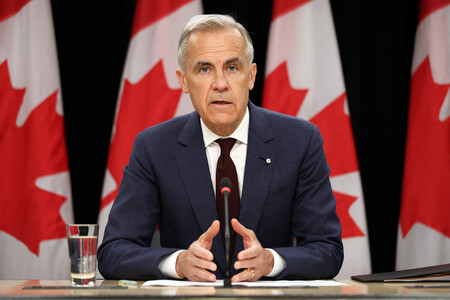
Targeting Canada, one of America’s closest allies and largest trading partners, is unusual both diplomatically and economically. The two countries’ supply chains are deeply entwined in sectors from autos and energy to agriculture and advanced manufacturing. Tariffs would almost certainly invite countermeasures from Ottawa, raising costs for businesses and consumers on both sides of the border. The administration’s reliance on a “national emergency” rationale echoes past episodes in which Washington has invoked security concerns to impose trade restrictions, but applying that logic to Canada risks inflaming tensions within the G7 and complicating cooperation on shared priorities like energy security, semiconductor resilience, and defense coordination.
Market and industry stakes: autos, metals, and energy in the crosshairs
Although immediate market reaction was muted pending Senate action, the stakes are high. Automakers and parts suppliers could face mounting costs and logistical snags if border frictions intensify, with ripple effects across North America’s integrated production ecosystems. Steel, aluminum, and critical minerals—pillars of modern manufacturing and defense production—could be dragged into a tit-for-tat escalation. Agricultural exporters risk losing access or facing retaliatory quotas, while energy flows, including crude and refined products, could see pricing distortions that ultimately feed into inflation. In a global economy already grappling with supply chain recalibrations, another tariff spat among allies would add unwelcome uncertainty.
A rare Republican split—and what it signals
The six Republican votes for the resolution highlight a subtle but significant shift within the party. While many Republicans have embraced tariffs as leverage in negotiations with rivals, a bloc remains wary of broad, open-ended levies on allies that can function as a tax on American businesses and households. Their support suggests sustained discomfort with using emergency powers to reshape trade policy absent clear congressional oversight. It also sets up an intraparty test, as Trump has made tariff authority central to his economic and national security message, and he appears ready to penalize dissent through primary challenges and public pressure.
Implications for U.S. allies—especially Japan
For allies invested in a stable, rules-based trading system, the House vote is more than procedural. Japan, a steadfast U.S. partner and a champion of predictable, open markets, has long emphasized coordination among allies to address economic security challenges without undermining the very supply chains that underpin collective prosperity and defense readiness. Japanese manufacturers—especially in autos, machinery, and electronics—operate deeply within North American supply chains, with significant footprints in both the United States and Canada. New tariffs and potential Canadian retaliation would introduce cost and compliance burdens that reverberate through factories, dealerships, and consumers across the region. Tokyo’s broader strategic view favors tackling unfair trade practices through allied alignment, targeted remedies, and standards-setting—in forums from the G7 to APEC—rather than through unilateral measures against partners. The House action, while not decisive on its own, can be read as an institutional push inside Washington to re-center trade decisions in a transparent, consultative process—a trend welcomed by many in Japan who value predictability and legal clarity in cross-border commerce.
Geopolitical context: balancing economic security and alliance unity
The global backdrop is fraught: strained relations with strategic competitors, pressure to bolster critical industries, and rising calls to “de-risk” supply chains. Washington, Ottawa, and Tokyo have been coordinating on semiconductors, clean energy, and critical minerals to reduce vulnerabilities without fracturing the alliance network. Tariff actions against allies risk short-circuiting that agenda by diverting attention and political capital into intramural disputes. For Japan, which has worked to keep trade rules intact through initiatives like the Comprehensive and Progressive Agreement for Trans-Pacific Partnership (CPTPP), allied cohesion remains the most effective tool to uphold economic security while keeping markets open and innovative.
What comes next
The Senate’s response will determine whether the House’s message translates into legislative muscle. If the resolution advances, a showdown with the White House is likely, putting Congress’s appetite for reasserting its constitutional authority over trade to the test. For businesses in North America and beyond—including Japanese firms embedded in the region—the priority will be clarity: whether this is a short-lived skirmish or the start of a deeper reconfiguration of tariff policy toward allies. Either way, the vote is a reminder that trade, security, and domestic politics are increasingly braided together—and that choices made in Washington can ripple quickly through allied economies. For partners like Japan, the strategic calculus remains constant: champion a rules-based order, keep alliances strong, and ensure that economic security measures enhance, rather than erode, shared prosperity.