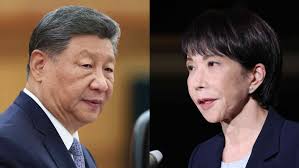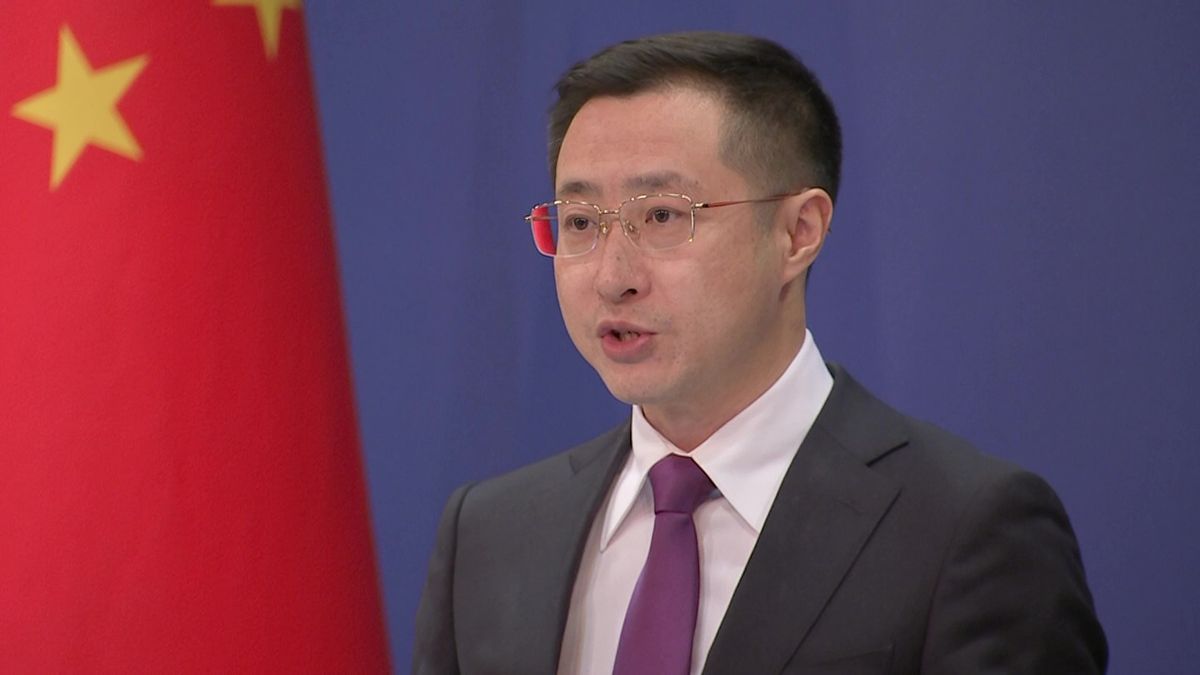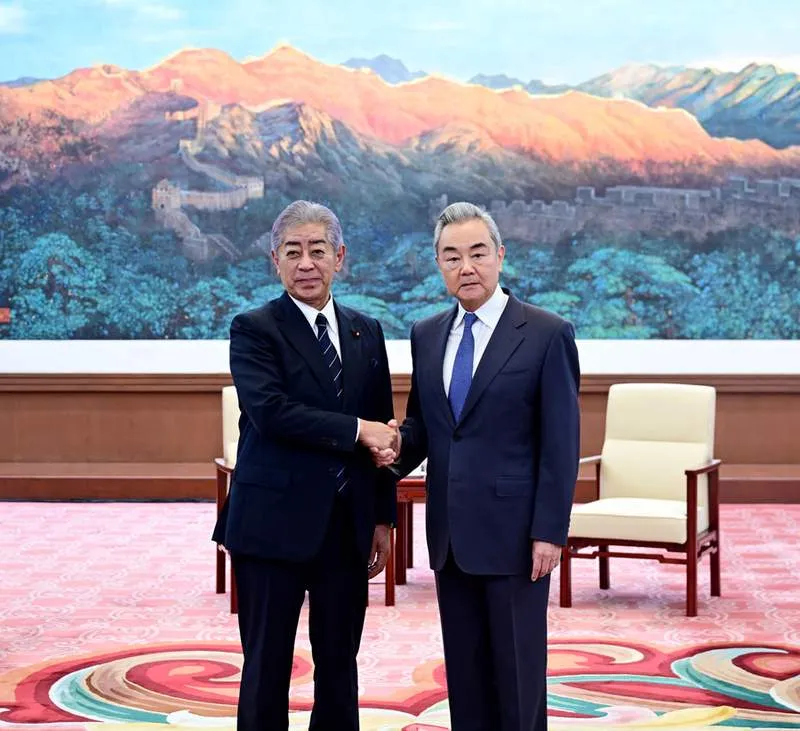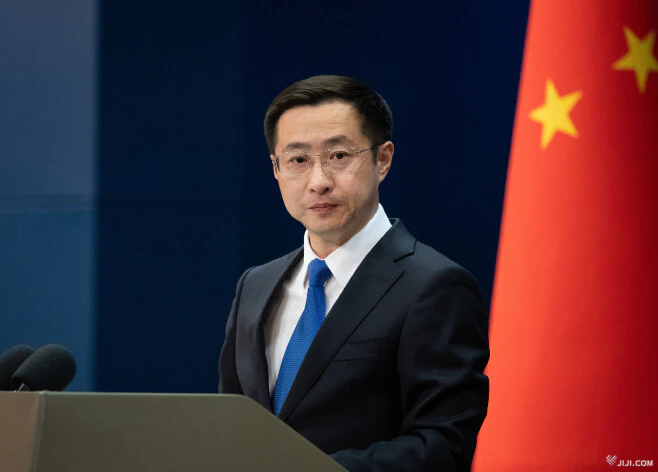
China has lodged a formal protest with Japan and voiced “strong dissatisfaction” after Prime Minister Sanae Takaichi told Japan’s parliament that a Taiwan contingency could qualify as an “existential crisis situation” under Japanese law. At a regular press briefing on Monday, Chinese Foreign Ministry Deputy Spokesperson Lin Jian condemned the remark as “crude interference in China’s internal affairs,” asserting that it violates the One-China principle and “does not align with Japan’s past political commitments.”
Beijing’s Warning and a Rare Public Rebuke
Lin said Beijing has formally complained to Tokyo over Takaichi’s parliamentary testimony and urged Japan to avoid “provocation” and to refrain from sending “wrong signals to ‘Taiwan independence’ forces.” He also criticized Takaichi’s reported interaction with Taiwan’s representative on the sidelines of an Asia-Pacific Economic Cooperation (APEC) gathering in South Korea, arguing that “the Japanese side has been continuously engaging in negative words and deeds on the Taiwan issue.” Taiwan participates in APEC as “Chinese Taipei,” and informal meetings at such multilateral forums frequently draw Chinese protests, even as they are not unusual among member economies.
What “Existential Crisis Situation” Means in Japanese Law
Takaichi’s phrasing matters. The term “existential crisis situation” (sonritsu kiki jitai) stems from Japan’s 2015 security legislation, which for the first time since World War II enabled the Self-Defense Forces (SDF) to engage in limited collective self-defense. Under that framework, Japan may assist an ally—chiefly the United States—if a foreign attack threatens Japan’s survival and the fundamental rights of its people, even if Japan itself is not directly attacked. While any activation requires strict conditions and parliamentary oversight, the designation could allow expanded logistical support, the protection of U.S. assets, and the use of force in tightly circumscribed circumstances, depending on how the situation is assessed by the government and approved by the Diet.
Japanese policy makers have long debated how a crisis in the Taiwan Strait would be treated under the law. Japan lies just over 100 kilometers from Taiwan at its closest point, with critical sea-lanes, undersea cables, and air routes traversing the area. In past contingency planning discussions and military exercises, Tokyo has focused on evacuation, maritime security, missile defense, and support to U.S. forces deployed in and around Japan. Takaichi’s explicit public linkage of a Taiwan emergency to the “existential crisis” threshold underscores a hardening view in Tokyo that the outcomes of a cross-Strait conflict would directly affect Japan’s security, economy, and citizens.
Japan’s Balancing Act: One-China and Practical Ties
Japan normalized relations with the People’s Republic of China in 1972 and acknowledges Beijing’s position that there is one China and Taiwan is part of it. At the same time, Tokyo maintains robust unofficial ties with Taipei in trade, investment, scientific cooperation, and people-to-people exchanges. Japanese officials typically describe Taiwan as a “crucial partner and an important friend,” while reiterating their support for a peaceful resolution of cross-Strait issues. Previous senior Japanese figures, including the late former Prime Minister Shinzo Abe, have stated that “a Taiwan contingency is a contingency for Japan,” a formulation that has repeatedly drawn rebukes from Beijing. Takaichi, a prominent conservative voice within the ruling Liberal Democratic Party, has long advocated stronger deterrence and tighter alignment with the United States and like-minded partners, particularly in light of China’s expanding military capabilities and growing pressure on Taiwan.
APEC Sidelines Meeting Adds Fuel to the Fire
Lin also referenced Takaichi’s meeting with Taiwan’s representative at the APEC gathering in South Korea. While APEC is designed to facilitate economic cooperation rather than address sensitive political issues, interactions between leaders and Taiwan’s delegates—who attend under the moniker Chinese Taipei—can become flashpoints. Beijing tends to view such exchanges as elevating Taiwan’s international profile, while Tokyo portrays them as routine engagements within APEC’s established procedures. The latest dust-up signals how even marginal protocol steps at multilateral forums remain heavily freighted in the current strategic climate.
Defending a Consul General’s Online Critique
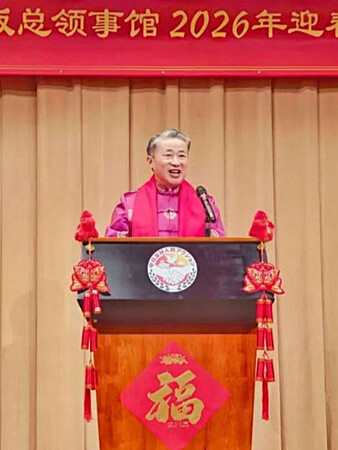
Beijing also weighed in on a separate controversy involving its top diplomat in western Japan. Lin defended Xue Jian, China’s consul general in Osaka, who criticized Takaichi’s parliamentary comments on X, the platform formerly known as Twitter. Lin framed Xue’s intervention as a justified response to “dangerous rhetoric.” He added that Chinese authorities had observed “extreme and threatening comments” aimed at the diplomat on Japanese social media, and he called on Tokyo to investigate and address the matter. Such requests are sensitive in Japan, where protections for free speech are strong, but police can investigate threats and intimidation under domestic law. While Chinese diplomats have become increasingly vocal online in recent years—a practice sometimes dubbed “wolf warrior” diplomacy—open calls for another country to probe social media posts directed at a foreign envoy are relatively unusual and could become a fresh friction point in bilateral ties.
Why the Stakes Are High
The Taiwan Strait is not a distant theater for Japan. The southern Ryukyu island chain, including Yonaguni and Ishigaki, sits near Taiwan; Okinawa hosts substantial U.S. forces that would almost certainly be implicated in any cross-Strait crisis. A conflict could trigger refugee flows, disrupt shipping and energy supplies, threaten undersea infrastructure, and hit Japan’s export-dependent economy. It would reverberate through global supply chains, particularly in semiconductors, where Taiwan’s foundries play an outsized role. Against this backdrop, Tokyo has been fortifying its southwest defenses, investing in missile deterrence, and deepening interoperability with the United States and partners such as Australia and the Philippines. Takaichi’s statement, while not a binding legal determination, signals how the Japanese leadership is preparing the public for a scenario in which a Taiwan shock would not be viewed as someone else’s war.
Legal and Diplomatic Crosscurrents Ahead
Even if Japan were to consider a Taiwan contingency an “existential crisis situation,” any concrete move would require exhaustive legal reviews and legislative processes, with the Diet playing a central oversight role. The government would also have to calibrate steps to avoid escalation while fulfilling alliance obligations, a tightrope complicated by domestic public opinion and the risk of economic retaliation by China. For now, Beijing’s forceful protest—coupled with its admonition not to “send wrong signals”—aims to deter Tokyo from hardening policy or upgrading contacts with Taipei. Tokyo, in turn, is likely to emphasize its adherence to the One-China policy while insisting on the right to prepare for scenarios that threaten Japan’s security and citizens.
What to Watch
In the near term, attention will focus on whether Japan’s Foreign Ministry issues a clarifying statement, whether Chinese and Japanese foreign ministers hold a call to manage the dispute, and whether any further interactions with Taiwan’s representatives occur during the APEC calendar. Markets and regional capitals will parse subsequent remarks from Takaichi and senior security officials for hints about how Tokyo defines the threshold for an “existential crisis.” The United States, Japan’s treaty ally, will also be watching closely: a clearer Japanese stance on Taiwan contingencies could simplify allied planning but further strain ties with Beijing. As rhetoric hardens, so does the need for crisis communications channels capable of preventing miscalculation in one of the world’s most combustible flashpoints.