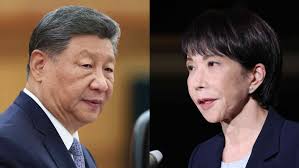
China’s Foreign Ministry has demanded that Japanese Prime Minister Sanae Takaichi withdraw comments indicating that a Taiwan contingency involving the use of force could qualify as an “existential crisis situation” for Japan, potentially opening the door to the exercise of limited collective self-defense. The unusually sharp rebuke escalates long-simmering tensions among China, Japan, and the United States over the future of the Taiwan Strait, and underscores how quickly a war of words could translate into a wider regional security crisis.
Beijing’s Warning: “Correct the Mistake” or Face Consequences
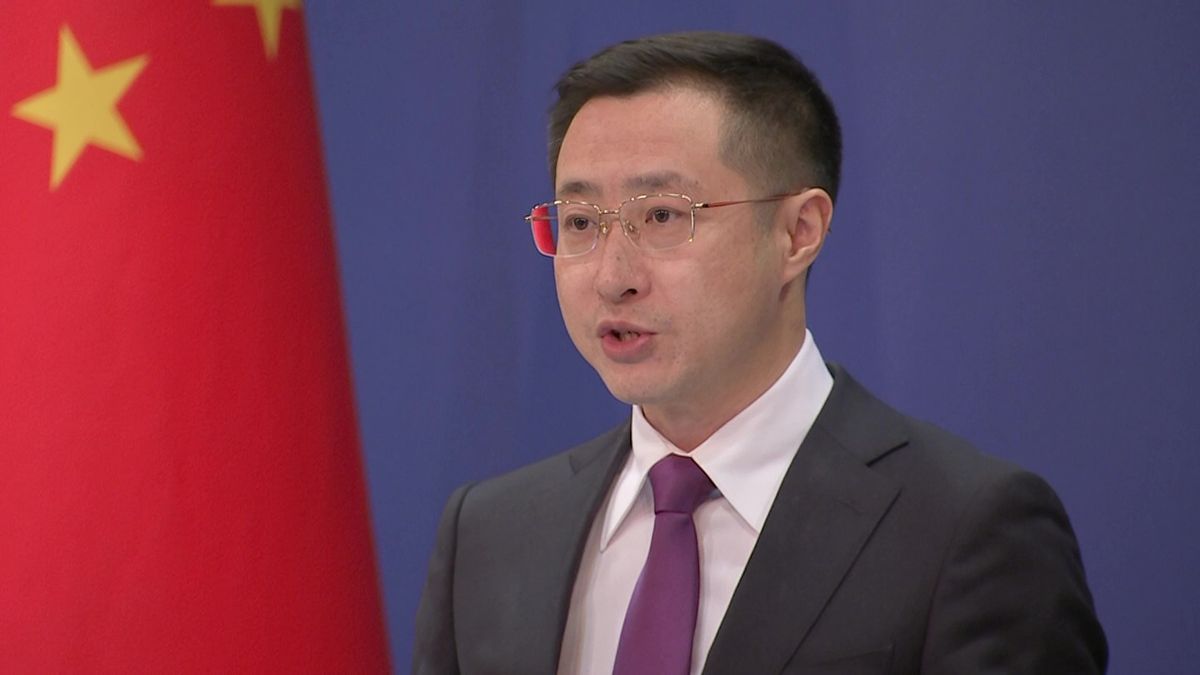
Speaking in Beijing, Foreign Ministry spokesperson Lin Jian condemned Takaichi’s stance and urged an immediate retraction. “The Japanese side must promptly correct its mistake and withdraw its malicious remarks,” Lin said. “Otherwise, all the consequences must be borne by Japan.” Lin added that China “will never tolerate” any attempt by Japan to frame a Taiwan conflict as a trigger for military action, arguing that such intervention would be both a provocation against the postwar international order and “a grave act of sabotage” against China-Japan relations.
Lin went further, warning that any foreign military involvement in the Taiwan Strait would constitute “aggression” and pledging that China “would surely defeat” such intervention. The comments mark one of Beijing’s most direct public confrontations with Tokyo over Taiwan policy in recent years.
Tokyo’s Position: Taiwan Contingency Could Be an “Existential Crisis”
Takaichi, answering questions in Japan’s National Diet, indicated she would not retract remarks that a Taiwan emergency involving the use of force could fall under the category of a “sonritsu kiki jitai”—an existential crisis situation—under Japan’s security laws. That designation, codified in a 2015 overhaul of security legislation, allows Japan in extremely limited circumstances to engage in collective self-defense alongside an ally if Japan’s survival is threatened and there is no other appropriate means to respond. The concept remains tightly circumscribed under Japan’s pacifist constitution, particularly Article 9, which renounces war and prohibits the maintenance of “war potential,” though subsequent legislation and government interpretations have provided for self-defense and specific missions such as protecting allied ships.
The prime minister’s comments reflect a growing consensus within parts of Japan’s political and security establishment that instability in the Taiwan Strait would directly threaten Japan’s safety and economic lifelines. Japanese leaders have repeatedly described peace and stability across the Strait as “indispensable,” while strategic documents since 2022 have emphasized rising regional threats, plans to acquire counterstrike capabilities, and a move to increase defense spending.
Why Taiwan Matters to Japan
Japan’s southern islands, including Okinawa and the Sakishima chain, sit near Taiwan and host key U.S. military bases central to any regional contingency. A conflict over Taiwan could imperil sea lanes that are critical for Japan’s energy and trade, entangle U.S.-Japan alliance commitments, and expose Japanese territory to missile threats. While Japan does not have formal diplomatic ties with Taiwan, it maintains robust economic and cultural relations and has expanded practical cooperation in areas such as disaster relief, semiconductors, and supply chain resilience.
China, which regards Taiwan as part of its territory, has sharply increased military activity around the island in recent years, conducting large-scale air and naval drills, flying sorties across the median line of the Taiwan Strait, and rehearsing blockades. Beijing insists the Taiwan question is an internal matter and opposes any external “interference,” particularly from the United States and its allies.
The 2015 Security Laws and the “Existential Crisis” Threshold
At the heart of the dispute is Japan’s limited embrace of collective self-defense under legislation passed in 2015, which permits Japan to aid an ally under attack if three strict conditions are met: Japan’s survival is threatened and its people’s rights are fundamentally jeopardized; there are no other appropriate means to repel the attack and protect Japan; and the use of force is kept to the minimum necessary. Any decision would also require Cabinet approval and parliamentary oversight. The bar is intentionally high, reflecting a domestic consensus that Japan’s use of force should remain exceptional and defensive.
Takaichi’s remarks suggest that, depending on circumstances—such as a blockade or assault around Taiwan that threatens Japan’s critical sea lines, or attacks on U.S. vessels defending the island—Tokyo could deem the situation an existential crisis. That does not automatically mean combat operations; responses could include logistics support, asset protection, missile defense, and measures to secure supply routes. But the legal framing signals that Japan is preparing for scenarios in which the Taiwan issue directly implicates its own security.
China-Japan Relations: Fragile Equilibrium at Risk
Beijing’s condemnation highlights the fragility of China-Japan relations. The two countries normalized ties in 1972, with Tokyo recognizing China as the sole legal government of China and acknowledging Beijing’s position on Taiwan. Despite deep economic interdependence—China is a top trading partner for Japan—political ties have been volatile, strained by territorial disputes in the East China Sea, historical grievances, and a widening strategic rivalry. Both sides have attempted resets in recent years, but security frictions have persisted, including frequent Chinese coast guard patrols around the Senkaku/Diaoyu Islands and Japan’s closer alignment with G7 statements expressing concern over Taiwan.
Beijing’s charge that Japan’s position “challenges the postwar international order” speaks to China’s wider narrative that U.S. alliances are reviving militarism in the region. Tokyo counters that its security posture is defensive and law-bound, and that stability in the Taiwan Strait is fundamental to the international order that has underpinned Asia’s postwar prosperity.
Alliance Dynamics and Regional Stakes
The United States, Japan’s treaty ally, has not publicly weighed in on Takaichi’s latest remarks, but Washington has long encouraged Tokyo to enhance deterrence and readiness for potential contingencies. In recent years, U.S. and Japanese forces have expanded joint planning, exercised in Japan’s southwest islands, and coordinated logistics and missile defense. Any conflict over Taiwan would have profound implications for the alliance, testing interoperability and the political resolve of both capitals.
Other regional actors are watching closely. Southeast Asian countries worry that a Taiwan crisis would disrupt trade and supply chains, compel difficult diplomatic choices, and risk broader escalation. South Korea, with its own alliance with Washington, has carefully hedged, reaffirming support for peace and stability in the Strait while avoiding explicit commitments. For Taiwan, Japan’s evolving posture is a crucial component of deterrence, though Tokyo stops short of any guarantee to defend the island.
Domestic Politics and the Road Ahead
Domestically, Takaichi’s stance will resonate with hawkish lawmakers who argue that Japan must be prepared for gray-zone coercion, blockades, or missile attacks that could accompany a Taiwan crisis. Critics, including some opposition figures and constitutional scholars, caution that broadening the “existential crisis” concept risks eroding the spirit of Article 9 and could entangle Japan in conflicts not strictly about its direct defense. Public opinion remains sensitive to both the dangers posed by a destabilized neighborhood and the constitutional limits on the use of force.
Beijing’s demand for a retraction raises the diplomatic stakes. If Tokyo stands firm, China could respond with further rhetorical pressure, diplomatic demarches, or economic signaling—tools it has used in past disputes. Yet both sides have incentives to prevent a spiral: Japan seeks stable economic ties and crisis management channels; China faces growth headwinds and wider strategic competition. Whether this episode becomes another flashpoint or a moment for quiet recalibration will depend on how carefully leaders in Beijing and Tokyo manage domestic expectations while keeping communication open.
For now, the message from both capitals is unmistakable. Japan is preparing its legal and operational frameworks for the worst-case scenario in the Taiwan Strait, and China is determined to deter any foreign involvement it deems hostile. The room for miscalculation is narrowing, even as all parties insist they aim to preserve peace. The next moves—be they clarifications, dialogues, or further ultimatums—will shape the balance of risk in East Asia’s most sensitive theater.