Live TV revelation about Japan’s newest Olympic champions
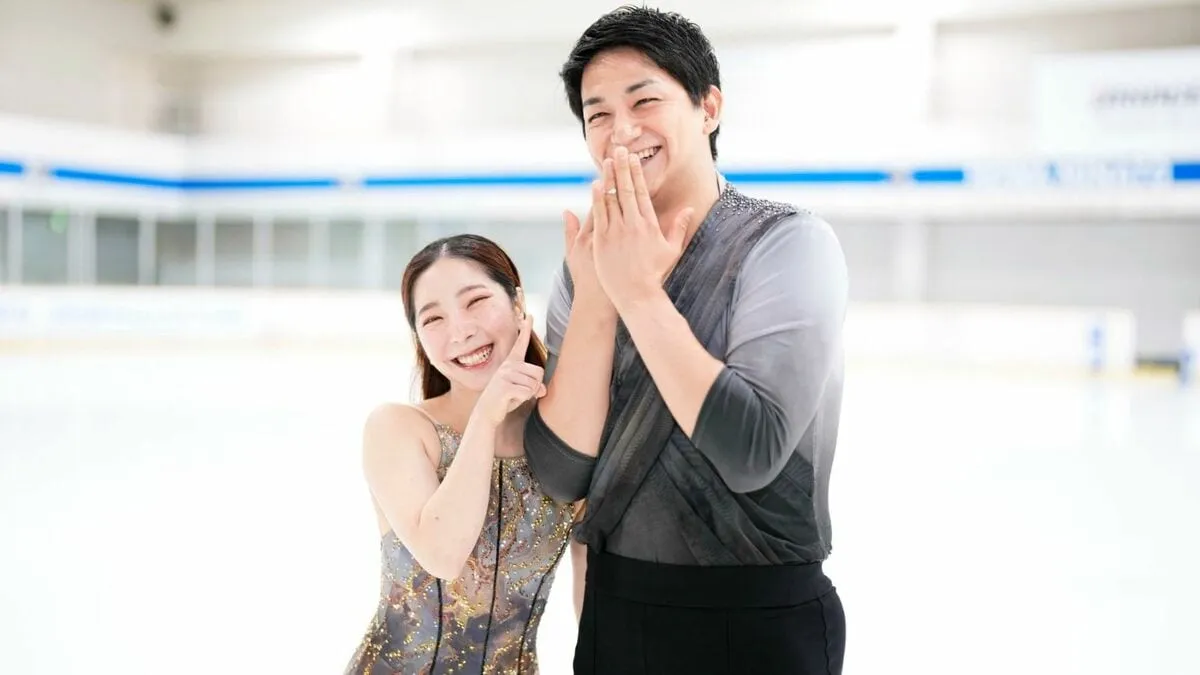
Japan’s figure skating momentum took another feel-good turn as former national team pair skater Narumi Takahashi offered rare, candid insight into the bond behind the country’s freshly crowned Olympic gold medalists in pairs, Riku Miura and Ryuichi Kihara—known across Japan as “RikuRyu.” Appearing live on Fuji TV’s morning information program “San! Shine” on February 25, Takahashi—who partnered with Kihara at the Sochi 2014 Winter Olympics—explained that elite pairs don’t just synchronize on the ice. Their daily lives start to move in tandem too. She recalled how pair skaters often bump into each other at the gym by sheer coincidence or even open doors at the same instant, because their rhythms align over time. In her words, that deep synchronization pays off on the biggest stages: even when something unexpected happens, if both partners react in perfect unison, what could look like a mistake stops being a mistake.
“They argue—then make up fast”
Asked whether top pairs inevitably clash, Takahashi didn’t hesitate to describe RikuRyu’s dynamic as both lively and resilient. She said the Olympic champions “argue so often it’s almost funny,” but are just as quick to reconcile—so quick, she added, that confrontation itself stops being frightening. In high-pressure sports, that kind of emotional fluency can be the difference between tension that lingers and trust that tightens. The result for Miura and Kihara, backed by corporate sponsor Kinoshita Group, is a partnership that breathes: honest disagreements, swift repairs, and a shared, unshakeable rhythm when it counts.
Why this matters in pairs figure skating
Pairs skating demands a rare blend of athletic power and split-second harmony. Jumps must launch together; throws, lifts, and death spirals must unfold with mirrored timing and lines. Judges reward unity of movement and penalize elements that appear mismatched. Takahashi’s point—that even an off-script moment can look intentional if both athletes respond as one—goes to the heart of the discipline. Synchronization built in everyday life doesn’t just create chemistry; it creates insurance. When bodies, eyes, and instincts are aligned, split decisions become shared decisions, and shared decisions become competitive advantage.
A milestone for Japan—and a message to the world
Japan’s prowess in figure skating has long been led by singles icons, but Miura and Kihara have redrawn the map for pairs. Their Olympic triumph follows years of breakthroughs, including historic world-level titles that signaled Japan’s rising depth in a field once dominated by other nations. The duo’s success reflects a broader Japanese sports ecosystem where athlete-first coaching, rigorous repetition, and corporate sponsorship work in concert. It is also a testament to Japan’s patient, methodical approach: build synchronization in practice, normalize pressure, and carry calm into the cauldron of Olympic ice.
Inside the RikuRyu effect
For fans in Japan and abroad, RikuRyu embody a compelling, distinctly Japanese blend of precision and heart. Takahashi’s on-air remarks humanize what spectators see in competition: the invisible work of communication, the acceptance that friction is part of teamwork, and the discipline to convert friction into flow. Their quick make-ups aren’t just charming; they are tactical. They preserve focus session by session, week by week, season by season—so that on the night that matters, nothing feels unfamiliar.
What to watch next
With Olympic gold secured, all eyes will follow how Miura and Kihara extend their legacy—through world championships, exhibition tours, and a growing influence on Japan’s junior pipeline. Expect renewed interest in pairs skating across Japanese rinks, stronger investment from sponsors, and a new generation of athletes inspired to choose pairs, not just singles. For international readers considering a trip to Japan, the nation’s major arenas and local ice shows offer a close-up of the sport’s technical beauty and its uniquely Japanese fan culture—disciplined, respectful, and passionately loyal. As Takahashi’s candid TV moment suggests, Japan’s champions aren’t only refined performers; they are relatable partners who prove that honest conversation, rapid reconciliation, and everyday synchronization can turn pressure into poetry on ice.