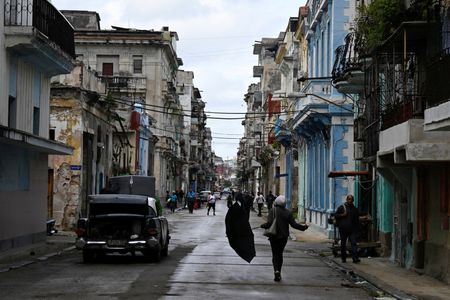
By Dave Sherwood | Havana | Reuters — Cuba’s socialist experiment, long sustained by rationing, resilience and outside lifelines, is being pushed to the brink. With pressure tightening under policies championed by former U.S. President Donald Trump, blackouts are lengthening and the prices of food, fuel and transport are soaring, forcing Cubans from all walks of life to wonder whether they can hold on much longer.
Scarcity spreads from the countryside to the capital
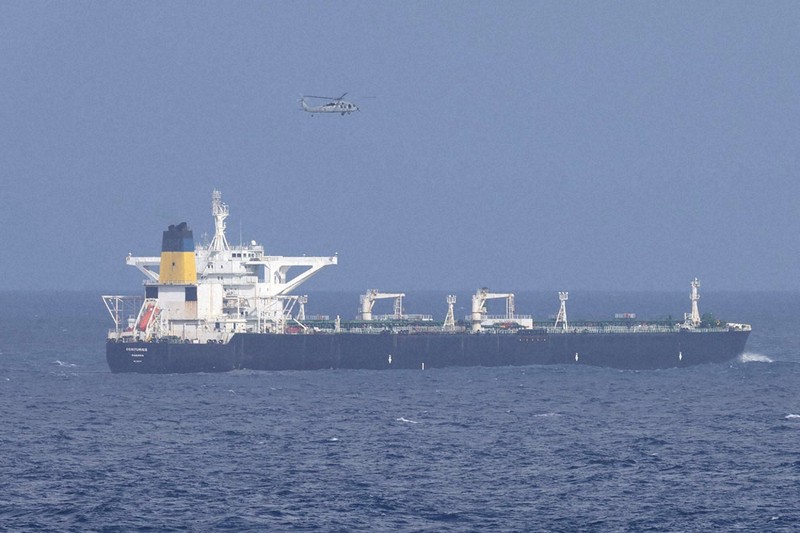
Reuters interviews with more than 30 people in and around Havana—from street vendors and private-sector workers to taxi drivers and civil servants—painted a stark portrait: as fuel-dependent goods and services grow scarce and more expensive, daily life is closing in on the limits of endurance. Much of rural Cuba has lived with rolling shortages for years. An aging, fragile power grid has sputtered for more than a decade, conditioning residents to hours without electricity, internet and water pumped to homes. Havana—known for its 1950s American cars and faded yet vivid Spanish colonial architecture—was relatively insulated until recently. Now, with oil flows from Venezuela curtailed and fresh shipments from Mexico halted, the capital too is buckling under a deepening fuel crunch.
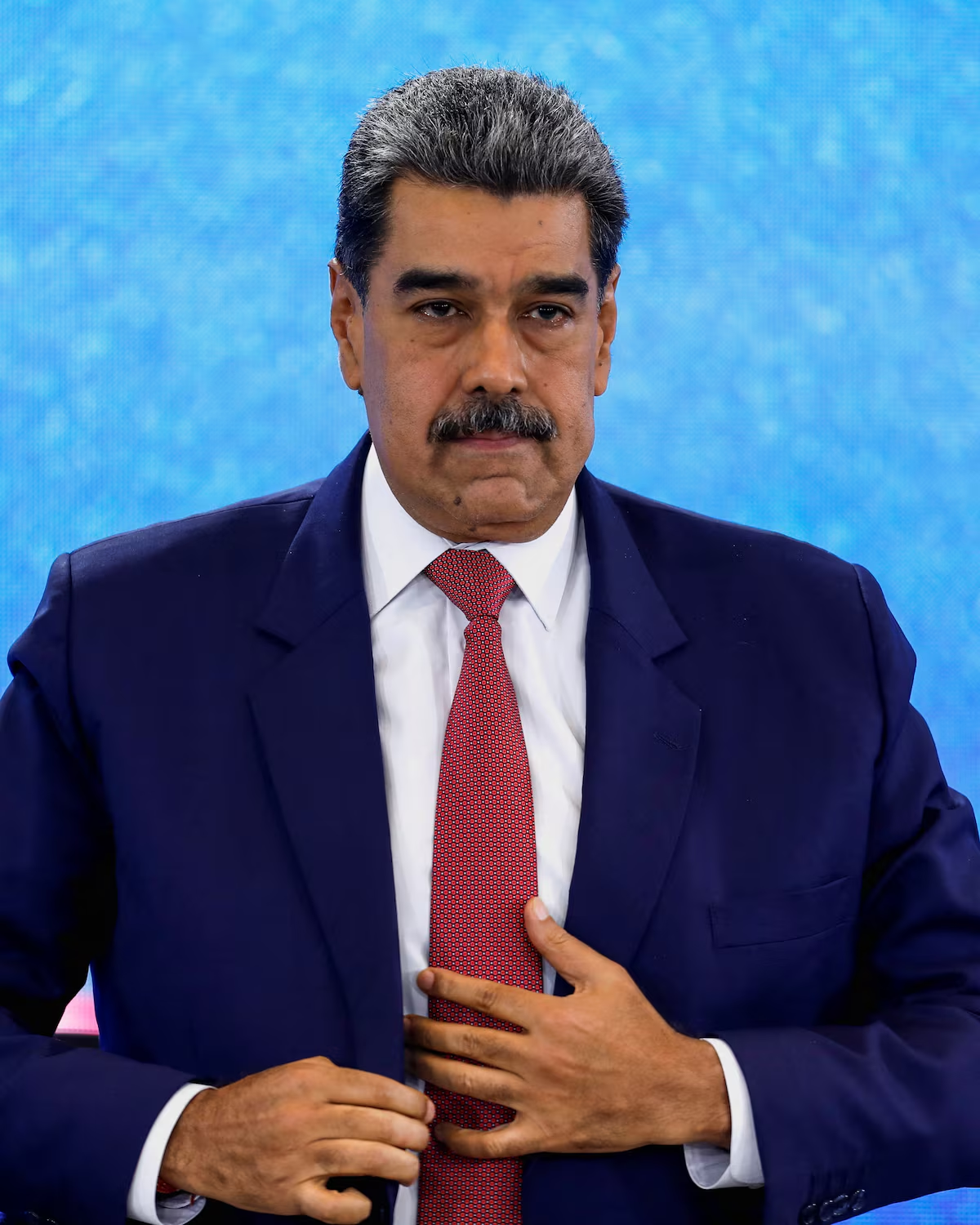
Trump has threatened tariffs on imports from countries supplying oil to Cuba, and in early January, authorities detained Venezuela’s Nicolás Maduro, a key Cuban ally—moves that Havana sees as an escalation against a longstanding adversary. For many countries, such pressure might have triggered street protests. But in Cuba, where dissent has been tightly contained for decades, large-scale demonstrations have been rare so far. How long that restraint will last is unclear. The Cuban peso has slid more than 10% against the dollar over the past three weeks, stoking food inflation. “We’ve been pushed into a situation where there’s nothing we can do. Our salaries don’t cover anything,” said Havana homemaker Yaité Verdesia.
Everyday survival becomes precarious
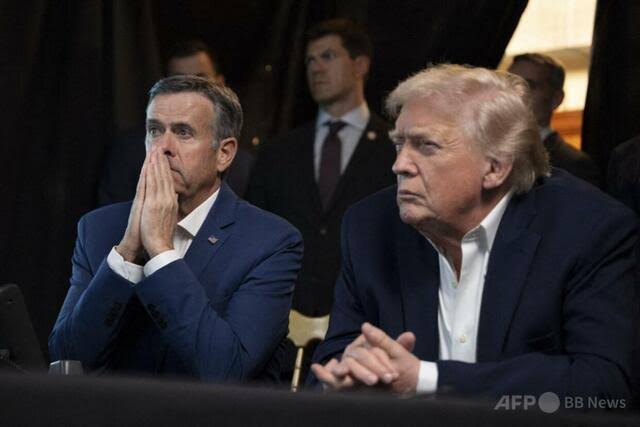
Asked in early January about the possibility of U.S. military intervention in Cuba, Trump said he believed no attack was needed because “Cuba is on the verge of collapse.” On January 30, Cuban Foreign Minister Bruno Rodríguez declared an “international emergency” in response to Washington’s tariff warnings, calling the U.S. move an “extraordinary and exceptional threat.” Yet the government has offered few concrete steps to blunt the intensifying humanitarian strain.
Habaneros interviewed by Reuters said life was already hard, but in recent days it has become a fight for the basics—food, cooking fuel, and water. Lines at the few gas stations still operating this week have grown dramatically. Since the U.S. obstructed Venezuelan shipments in mid-December, gasoline has been sold mostly in dollars at steep prices—beyond the reach of most citizens. Pointing to a now-obsolete app that once managed fuel queues, resident Jesús Sosa said, “Before, if you registered you could fill up in pesos once a month. Now you can’t. Sales in pesos have disappeared.”
‘Pay the fare or stay home’
The fuel squeeze has slammed both public and private transit. Some buses and private taxis have stopped running; others have hiked fares. With fewer buses in service, “people have no choice but to accept higher prices for private rides,” said 22-year-old dispatcher Dailan Pérez. “You either pay the fare or you stay home.” Not even electric vehicles have offered a reliable workaround. Blackouts now commonly stretch eight to 12 hours or more, undermining charging. Taxi driver Alexander Reyet, who recently switched to an electric three-wheeler believing it would be a lifeline, said outages leave him just four to five hours to charge. “I thought I could make this work. Now I’m not so sure.”
A history of endurance, tested again
Since Fidel Castro’s 1959 revolution, Cuba’s government has survived repeated economic crises and decades of sanctions, outlasting countless predictions of imminent collapse or uprising. Even as the economy shrank an estimated 12% between 2019 and 2024, the last mass protests came in 2021 during the pandemic. A tough post-2021 crackdown, coupled with the emigration of 1–2 million people since the pandemic, has dispersed much organized opposition. Many Cubans Reuters spoke with sidestepped questions about the prospect of protests, a reflection of the risks and exhaustion that now permeate daily life.
Blackouts and fraying social fabric
Yet a common thread runs through every account: a desire for change. “All we can do is pray God shows us a way out of this,” said 71-year-old street vendor Mirta Trujillo in Havana’s Guanabacoa district, wiping away tears as she explained she can no longer afford food. She once relied on the ration book, but as tourism revenue and foreign currency evaporated, the system was gradually phased out after the pandemic. “I’m not defying my country,” she said. “I just don’t want to starve.” On a recent weekday evening, a Reuters reporter witnessed a crash at a Havana intersection where the traffic lights were out. “When the power goes, the signals fail and accidents happen,” said Raisa Lem, who lives above a main avenue in the Marianao suburb. “It used to be two or three outages a week. Now it’s every day, sometimes 12 hours at a stretch.”
For 69-year-old housekeeper Julia Anita Cobas, who commutes about 16 kilometers from Guanabacoa, the shrinking transport network means waking at 4 a.m. and spending nearly four hours a day traveling—at greater cost. “I leave before sunrise and have no idea how I’ll get back,” she said. Born on the eve of the Castro revolution, Cobas does not expect Trump to make things better. “The United States has threatened us my whole life. We face hardship every day, but we survive.” In Reparto Eléctrico on Havana’s outskirts, 32-year-old Aimeé Milanes sees little rescue from either government. “We’re completely cornered. There’s nothing to be done. This is about survival—nothing else.”
What’s driving the crunch—and what could come next
Cuba’s immediate problem is fuel: domestic generation is hobbled by aging plants and lack of parts, while imports rely on politically fraught partners. Venezuela’s own turmoil has reduced shipments, Mexico’s deliveries have reportedly ceased, and U.S. threats of tariffs raise the risk for any third country considering stepping in. Shipping and insurance costs have climbed, complicating deals. With the peso weakening, dollar-priced essentials in so-called hard-currency retail channels are out of reach for most. Meanwhile, the tourism revival remains tentative, limiting one of the few sources of foreign exchange.
Policy options are fraught. Rationing could expand but would deepen scarcity elsewhere. Monetary moves risk fueling inflation. Seeking alternative suppliers—such as Russia or Algeria—might be possible, but sanctions exposure, credit constraints and logistics pose hurdles. Humanitarian channels could ease burdens for hospitals, water systems and public transport, yet would require careful diplomacy and guarantees to keep aid flows apolitical.
Regional ripples—and a lesson from Japan’s playbook
Cuba’s crisis will echo beyond the island. Strains on household incomes and services accelerate outward migration, complicate regional security, and test already fragile Caribbean supply chains. For Japan—another island nation whose prosperity depends on imported energy—the situation underscores the value of diversified sourcing, ample strategic reserves and rigorous demand-management. Japan’s post-Fukushima energy reforms, grid upgrades, and emphasis on efficiency, storage and microgrids have helped keep critical infrastructure—traffic systems, hospitals, water pumps—running during shocks. Japanese partners and NGOs, working through neutral humanitarian frameworks, could help with technical assistance for grid stabilization, hospital backup power and solar-plus-storage at community hubs. While geopolitics around Cuba are fraught, practical, apolitical support that keeps lights on and medicines cold is both feasible and urgent.
For now, Havana’s rhythm—already slowed by blackouts, fuel lines and thinning wallets—ticks toward an uncertain horizon. History suggests Cubans will endure. But the margin for error is narrowing, and the costs—for families, the economy and the region—are rising by the day.