In a quiet town in Fukuoka Prefecture, a night out between acquaintances who had met at a local restaurant ended in a violent stabbing that has left the community reeling and raised serious questions about alcohol-fueled violence and the nature of friendship among adults.
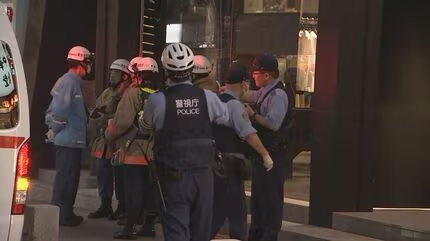
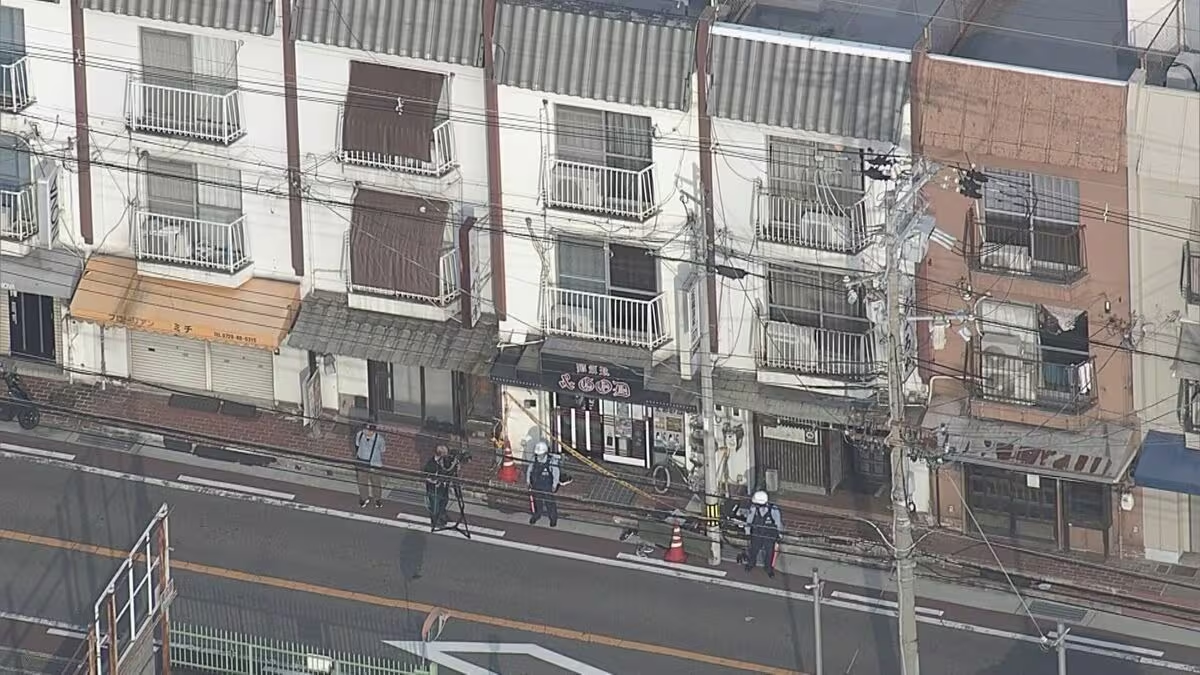
The suspect, 46-year-old Shingo Fujiki, a temporary worker, was arrested on suspicion of attempted murder. The incident occurred just before midnight on a road in Kanda Town. According to police reports, Fujiki allegedly stabbed a 48-year-old man in the neck with a fruit knife. The victim, whose identity has not been disclosed, was rushed to the hospital where he received treatment for his injuries.
A Friendship Forged Over Drinks Turns Sour
The two men, police confirmed, had initially met at a local eating and drinking establishment. Their acquaintance, seemingly friendly at first, took a dark turn as the night progressed. Investigators state that both men had been drinking and were involved in some form of dispute immediately before the violent attack unfolded. The exact nature of their argument remains under investigation, but it was intense enough to escalate into a life-threatening situation.
This case highlights a disturbing but not uncommon social problem in Japan, where business relationships and casual friendships often revolve around after-work drinks. The line between camaraderie and conflict can become dangerously blurred under the influence of alcohol.
The Suspect's Denial and the Question of Intent
During police questioning, Fujiki provided a statement that complicates the legal proceedings. While not denying his involvement in the stabbing, he partially refuted the murder charge by stating, I did not stab him with the intent to kill.
This claim of a lack of specific murderous intent (satsui) is a critical element in Japanese law and could significantly affect the charges and potential sentencing. The prosecution will now need to build a case proving that Fujiki's actions were, in fact, driven by an intent to end the victim's life, regardless of his verbal denial after the fact.
The Broader Context of Alcohol-Related Violence
This incident is not an isolated one. Data from the National Police Agency consistently shows a correlation between alcohol consumption and violent altercations. From domestic disputes to street fights, the disinhibiting effects of alcohol often play a central role in transforming minor disagreements into physical confrontations.
Experts in social behavior point to the cultural pressure to drink in social and business settings as a contributing factor. The inability to manage conflict or anger while intoxicated is a skill rarely taught, leaving many unprepared for the emotional volatility that can emerge during a night of drinking.
The Human Toll Beyond the Headlines
While the suspect and victim are at the center of this story, the ripple effects of such violence are wide. Family members of both men are now facing uncertainty and trauma. The victim faces a potentially long road to physical and psychological recovery. A stab wound to the neck can have lasting consequences, including nerve damage, scarring, and post-traumatic stress.
For the suspect, a conviction for attempted murder carries a severe prison sentence, effectively derailing his life and career. Even if the charge is reduced, the social stigma will be long-lasting.
Community Reaction and Safety Concerns
Residents of Kanda Town have expressed shock that such a violent act occurred in their community. Many describe the area as typically peaceful and safe. This event has sparked conversations about public safety, particularly late at night in areas with a concentration of bars and restaurants.
Local business owners are now considering what steps, if any, they can take to prevent disputes among patrons from escalating. Some suggest better training for staff in conflict de-escalation, while others wonder about the responsibility of establishments in monitoring the alcohol consumption of their customers.
Legal Precedents and the Path Forward
Japanese courts have historically taken a stern view of knife-related violence, given the potentially lethal nature of such weapons. Cases where the perpetrator was intoxicated have seen varying outcomes, with some judges viewing intoxication as a mitigating factor and others seeing it as an aggravating one, demonstrating a reckless disregard for safety.
The outcome of Fujiki's case will be closely watched by legal experts. His denial of intent will be weighed against the objective danger of his actions stabbing a person in a vital area like the neck. The court will have to decipher the truth from a complex web of alcohol, anger, and a single, fateful decision.
As the investigation continues, this stabbing serves as a grim reminder of how quickly a social situation can spiral out of control. It underscores the need for greater public awareness about the risks of excessive drinking and the importance of developing healthy mechanisms for resolving conflict, both sober and otherwise. The hope is that from this tragedy, a broader discussion about responsibility and safety in social drinking culture can emerge.