Japan’s railways are a national point of pride—fast, frequent, and famously punctual. Yet for all their precision, rush-hour trains are also crucibles of human proximity, where even small misunderstandings can loom large. The expectation is clear: share the space, show consideration, and get everyone to work and school smoothly. But what happens when an awkward moment breaks that unspoken pact? Two commuters’ stories, one an evening misunderstanding and the other a morning ordeal of inescapable breath, offer a window into the micro-tensions—and quiet resilience—that define urban life in Tokyo.
Case 1: A laugh mistaken for mockery on the Yamanote Line
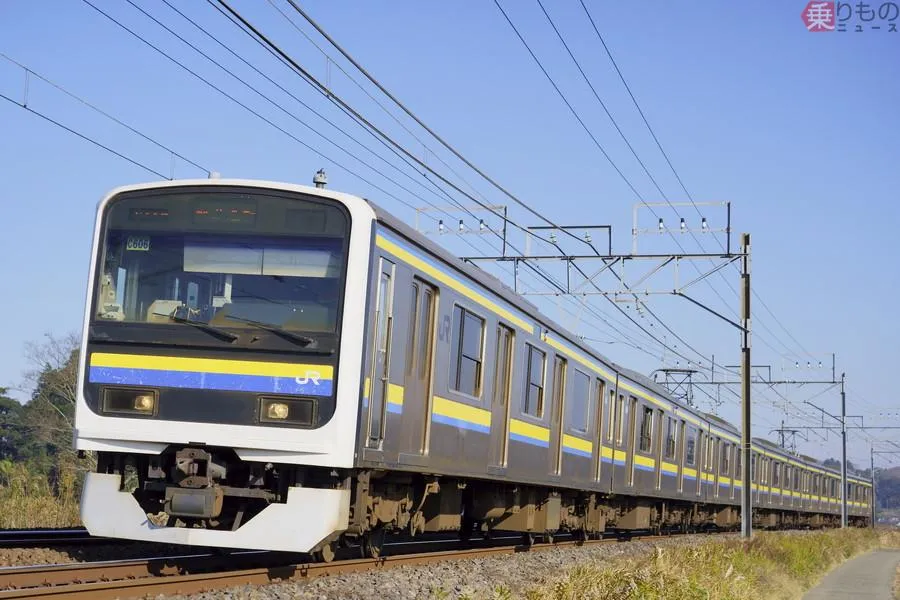
For Yuto Tanaka (a pseudonym, in his 20s), the memory of a routine ride home on JR East’s Yamanote Line has lingered longer than he ever expected. The incident occurred a few years ago in the fifth car of a loop-line train. “I was on for about 15 minutes, standing as usual,” he recalled. Hand wrapped around a strap, earphones in, Tanaka scrolled his smartphone while listening to a comedian’s radio show—until he reached a punchline he simply couldn’t suppress. “I couldn’t hold it in and let out a little sound,” he said, the kind of involuntary “fu” that escapes when amusement catches you off guard.
A moment later, a university-age man seated in front of him snapped, “Hey!” At first, Tanaka didn’t realize he was the one being addressed. On the second call, he removed his earphones. The seated commuter had misread the brief burst of laughter: that soft “fu” sounded, to him, like a derisive snicker aimed directly his way. Tanaka explained that the laugh was about the radio show and nothing more. But the atmosphere stayed taut. The other passenger wasn’t persuaded, and to tamp down the tension, the two got off together two stops before Tanaka’s destination.
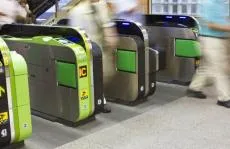
On the platform bench, they talked it through. Tanaka reiterated—again and again—that the laughter hadn’t been directed at anyone. “I must have repeated the same explanation more than five times,” he said. The chill air helped. The other man gradually calmed, eventually saying, “That’s enough,” and even tapping the crown of Tanaka’s head lightly before heading for the ticket gates. Tanaka, resisting irritation, offered thanks and reboarded the next train. “It felt like I was apologizing for 30 minutes after we got off,” he reflected. “It was the worst day.” Since then, he’s stopped listening to radio shows on trains, wary of letting an audible chuckle spark another misunderstanding.
The episode is both uniquely personal and wholly familiar to Tokyo commuters. On crowded trains, social cues compress. With bodies close and faces angled down, tiny signals—an exhale, a glance, a laugh—can be difficult to interpret and easy to misinterpret. Japan’s unwritten code of train etiquette expects silence, eye contact minimized, and emotion dialed down. In that context, a stifled laugh can feel louder than it is, and a perceived slight can escalate into a tense exchange. Yet even in that tension, Tanaka’s story underscores a very Japanese impulse: de-escalation through calm dialogue. No raised voices, no public spectacle—just a step off the train, a measured conversation, and a return to routine. It is a form of everyday conflict resolution—unglamorous but effective—that helps millions share the same car without chaos.
Case 2: “Fff… Fff…”—inescapable breath in a crush-loaded car
For Mai Ueoka (a pseudonym, in her 30s), the discomfort took a different form: the slow, repeated brush of someone else’s breath with nowhere to turn. It was a typical weekday morning. The car was heaving—so full that shoulders and forearms stayed pressed together, and even the slightest shift meant bumping into someone. In that density, a fellow passenger’s “Fff… Fff…” exhalations landed directly on her face. There was no space to angle away, no polite sidestep, no reprieve. It was the kind of irritation that is at once trivial and inescapable, made worse by the knowledge that nobody, including the person exhaling, had much control over where their breath—or their bodies—could go.
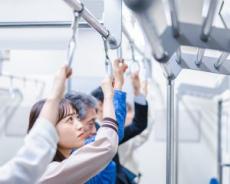
Japan’s commuters know this sensation intimately: the claustrophobic intensity of a crush-load, the sensory overload as the train sways, hands grip straps, backpacks are pulled to the front, and faces hover a little too close. Under normal circumstances, Japanese riders are meticulous about minimizing imposition—masks worn, coughs covered, voices lowered. In a car packed beyond its comfortable limit, those good intentions crash against physics. The result is not malice but a thousand tiny breaches of personal space: a jostle here, breath there, and the creeping frustration of having no escape route.
Why these micro-moments linger
Both episodes—one about an unintended laugh, the other about unavoidable breath—share a psychological throughline: when people cannot move away, small discomforts feel large and their memory sticks. It is the combination of social pressure to remain composed, the literal impossibility of creating distance, and the fear of causing a scene. Tanaka’s solution was to self-edit—no more radio comedy on board. Others shift their commute by five minutes, choose a different car, or stand near a door to catch fresh air between stations. Even those small acts reflect a broader truth: in Japan’s trains, courtesy isn’t just etiquette; it’s coping strategy, a social technology layered atop steel and schedules.
Japan’s railways—and riders—are working on it
To be sure, Japan’s rail culture remains an international gold standard. Operators like JR East lead “manner” campaigns reminding passengers to set phones to silent mode, keep bags compact, and refrain from disruptive behavior. Trains are lengthened where possible, timetables fine-tuned, and platform doors rolled out to smooth boarding and alighting. Peak-hour demand is being spread through staggered work times and growing acceptance of remote work. Women-only cars add a further layer of consideration. Cars are designed with robust ventilation to refresh air even when carriages are full. None of this eliminates discomfort, but collectively it reflects the system’s continuous effort to protect not only safety and punctuality but dignity in close quarters.
Practical ways to keep harmony in a packed car
- Choose content wisely: if comedy or dramatic podcasts tend to provoke audible reactions, consider saving them for platforms or quieter cars.
- When misunderstood, de-escalate: a brief, calm explanation—and, if needed, stepping off to talk—can defuse tension quickly.
- Angle and cover: in dense cars, face slightly downward and, if you wish, use a mask or handkerchief to redirect breath away from others.
- Minimize movement: keep bags in front, elbows in, and phones held close to reduce accidental bumps.
- Time and place: shifting your ride by a few minutes or choosing a less crowded car can dramatically change the experience.
The bigger picture: courtesy as infrastructure
These vignettes are not indictments of crowded trains; they are reminders of what makes Japan’s railways work so well. The system delivers millions to their destinations with near-perfect reliability not just because of timetables and technology, but because of a shared ethic of restraint, patience, and empathy—what many riders call omoiyari. Most days pass without incident precisely because people accept discomfort without drama and correct misunderstandings with words, not confrontation. In that light, a misread laugh and an intrusive breath are not just annoyances. They are part of an ongoing negotiation among strangers committed to getting each other to the next station in peace. The result may not always be comfortable, but it is remarkably civil—and that civility is a quiet triumph of Japan’s daily commute.