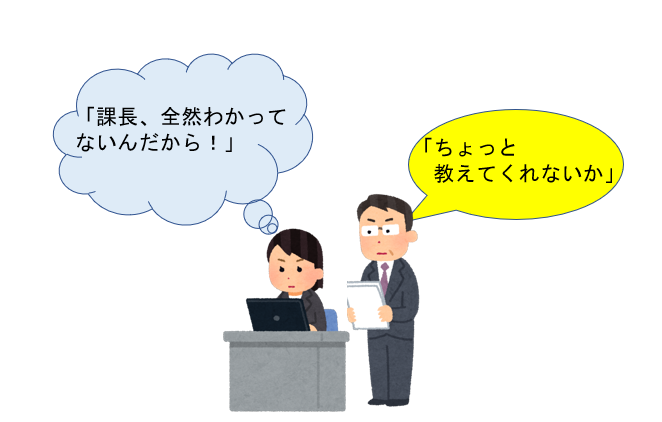
A quiet frustration is growing in offices across Japan: veteran managers, often in their 40s and 50s, are finding themselves perplexed by an invisible barrier between themselves and their younger subordinates. Despite a genuine desire to mentor and support, these leaders confess to struggling with the fundamental question of how to bridge the generational gap, sometimes hesitating over the mere timing of a simple conversation.
A Tale of Two Relationships
The contrast can be stark. In one sales department, a 23-year-old new hire and his 28-year-old senior colleague developed a seamless rapport from day one. Their communication was fluid, with the junior employee feeling comfortable asking questions and the senior offering guidance effortlessly. They shared lunches and occasional after-work drinks, building an ideal, supportive professional relationship. However, when the 40-year-old department manager attempted the same friendly approach asking "How are things? Any problems? "He was met with a wall of polite resistance. Conversations faltered, and the manager was left with the distinct impression that the younger employee was on guard, creating a chasm the manager didn't know how to cross.
The Root of the Divide: A Clash of Communication Cultures
The key to understanding this dynamic lies not in intent, but in environment. The five-year age gap between the 23- and 28-year-olds is negligible in terms of their digital upbringing. They are natives of the same communication landscape, sharing an intuitive understanding of SNS etiquette, LINE reply speeds, emoji usage, and the pace of casual chat. Their interactions are naturally synchronized. In contrast, managers in their 40s and 50s were socialized in a professional world dominated by phone calls and formal email. Their communication style is often built on principles of lengthy, polite exchanges, beginning with greetings and ending with formal closings. The younger generation, raised on chat apps, operates on a different wavelength: brief, direct, and speedy, often omitting formalities to get straight to the point. This fundamental difference in communication substrate creates an invisible, yet palpable, barrier.
The Psychology of Space: Understanding "Human Distance"
This challenge extends beyond digital manners into the very psychology of personal space. The concept of "proxemics," or the study of interpersonal distance, as outlined by anthropologist Edward T. Hall, provides a useful framework. Hall categorized interpersonal space into four zones: Intimate Distance (0-45cm), Personal Distance (45-120cm), Social Distance (120-360cm), and Public Distance (360cm+). People unconsciously navigate these zones to manage their comfort levels in relationships. The 28-year-old senior intuitively understood the younger employee's preferred "Personal Distance," both physically and psychologically, even evidenced by their casual use of first names without honorifics. The 40-year-old manager, however, was navigating blind, unable to read the subtle cues that indicate whether he was coming on too strong or seeming too detached.
The Z Generation's Dial on Connection
Today's young professionals are experts at finely tuning relational distance, a skill honed by a lifetime on social media. They value connection but abhor constraint. They may appear friendly and open while maintaining firm boundaries around their private lives. This is not a sign of coldness, but rather a sophisticated form of self-preservation and control over their personal sphere. They are adept at using digital tools like delayed responses or specific emojis to modulate the temperature of a relationship. This stands in stark contrast to many veteran managers, whose professional trust-building was often based on more formal, hierarchical structures and analog routines. The fluid, immediate, and flat nature of modern digital communication can leave them disoriented, unsure of how far to step in.
Building Bridges: Four Practical Strategies for Managers
So, how can experienced leaders build a more comfortable rapport with their younger team members? The goal is not to force closeness, but to thoughtfully design conversational "white space" that respects their autonomy.
1. The Power of a Preliminary Ask
Before launching into a conversation, whether online or in person, a simple question like, "Do you have a moment to talk?" can work wonders. This small gesture shows respect for the individual's time and mental space, allowing them to psychologically prepare for the interaction. It signals that the manager is adapting to the subordinate's pace, fostering a sense of safety.
2. Skip the Forced Banter
Well-intentioned but vague openers like "How was your weekend?" can be anxiety-inducing for young employees who may be protective of their privacy. Instead, managers can start with specific, work-related questions that draw on the employee's experience, such as, "What was your take on the approach we used in the last project?" This feels more professional, less invasive, and more likely to yield a substantive conversation.
3. Master the Temperature of Text
In the realm of digital communication, where tone is easily lost, a little linguistic effort goes a long way. A bare "Thanks" can seem cold. Adding a phrase like "I really appreciate your help on this!" conveys warmth and gratitude. Conversely, overusing emojis or stamps can seem unprofessional to those unfamiliar with the practice. The most effective strategy is to verbally articulate emotional temperature: transform "Is this okay?" into "How does this look? Let me know if you have any concerns!"
4. Solicit Feedback on the Distance Itself
Finally, the most direct method is to simply ask. Once a working relationship is established, periodically check in on the dynamics themselves. Questions like "Is this frequency of check-ins working for you?" or "Is my feedback coming across clearly?" can reveal critical misalignments. Often, a manager may believe they are maintaining a perfect "human distance," only to discover they are inadvertently causing subtle stress. This proactive feedback loop is essential for calibrating a relationship that feels respectful and productive for both parties, acknowledging that the right distance is unique to every individual and requires ongoing attention.