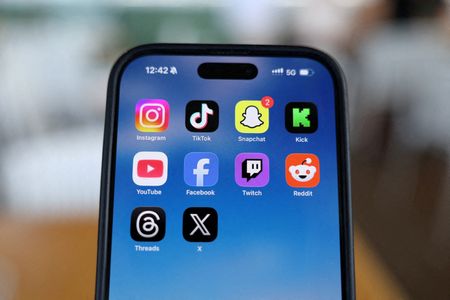
India’s coastal state of Goa, one of the country’s most visited tourist destinations, is considering a ban on social media use for children under 16, echoing measures introduced in Australia. The move, disclosed by state officials this week, reflects rising anxiety over the mental health impact of unregulated digital platforms in a country with more than one billion internet users and one of the world’s largest youth populations.
What Goa Is Proposing
Rohan Khaunte, Goa’s Minister for Information Technology, said the state is studying Australia’s approach as it explores ways to restrict minors’ access to social media. “If possible, we will implement a similar ban on social media use by children under 16,” he said, adding that officials are examining how such a rule could be enforced and whether state-level legislation could withstand legal scrutiny. The minister did not set a timeline, but his comments suggest Goa wants to move quickly to set a national example.
Australia has moved toward prohibiting under-16s from accessing social platforms and is developing age-verification pathways to enforce it. Goa’s plan would likely require cooperation from major platforms and the integration of age checks via mobile carriers, app stores, or identity verification services—mechanisms that raise complex questions of privacy, cost, and feasibility, especially in a diverse and price-sensitive market like India.
India: A Young, Hyper-Connected Market
India is a pivotal market for Meta, Google-owned YouTube, and X. While a vast share of users are under 18, the federal government has not pursued a nationwide social media age ban or specific platform restrictions for minors. That vacuum has placed the onus on states to test new approaches. Goa, India’s smallest state by area with an estimated population exceeding 1.5 million, is stepping forward as a laboratory for tighter youth protections. Its tourism-centric economy has long contended with balancing openness and safety—a tension now manifesting in the online sphere.
The stakes are high. Researchers and child-welfare advocates in India have sounded alarms about online harms, including cyberbullying, addictive design, body-image pressure, and exposure to hate speech and misinformation. Schools and parents report growing anxieties about disruptive sleep patterns, attention issues, and self-esteem challenges linked to heavy social media use. Yet social networks are also vital channels for learning, community-building, and creative expression, particularly for young people in smaller towns or marginal communities looking for connection. Policymakers face a nuanced task: minimizing harm without constricting the opportunities that digital platforms can enable.
Andhra Pradesh Joins the Conversation
South India’s Andhra Pradesh, a state of more than 53 million people, has also signaled that it is studying measures comparable to Goa’s proposal. If both states advance meaningful restrictions, the combined population coverage—and the operational complexity for platforms—would rise sharply, creating pressure for a clearer national framework. It would also raise the likelihood of legal challenges over fundamental rights, jurisdiction, and proportionality, potentially bringing India’s courts into the debate.
The Legal Backdrop
India does not currently have a central ban on social media use by minors. However, the Digital Personal Data Protection Act (DPDP Act) requires verifiable parental consent for processing children’s data, defined as those under 18—a more stringent threshold than in many jurisdictions. The DPDP Act, together with the Information Technology Rules, signals that New Delhi expects stronger platform accountability, though detailed implementation guidelines for children’s data are still evolving. Goa’s proposal would sit atop this regime, seeking to restrict access outright rather than simply conditioning data processing on parental permission.
Global Moves and the Enforcement Puzzle
Policymakers around the world are experimenting with solutions. The United Kingdom’s Online Safety Act, the European Union’s Digital Services Act, and U.S. state-level laws in places like Utah and Arkansas address minors’ online safety through a mix of risk assessments, default protections, and, in some cases, age-gating. Australia has gone further toward bans for under-16s, with active work on age verification systems. Yet enforcement remains the hardest piece. Robust age checks might rely on biometrics, IDs, or mobile-SIM registration, each raising privacy and inclusion concerns. Overly strict gates risk pushing youth toward unregulated corners of the internet, while lax ones could amount to window dressing. And for India, where many young users access the internet via shared devices or low-cost smartphones, implementation must reconcile ambition with practical realities.
Industry Impact and Civil Society Concerns
Major platforms may resist hard bans, arguing that tools like parental dashboards, time limits, default privacy settings, and algorithmic safeguards can mitigate risks without severing access. Civil society groups are split: children’s advocates often favor aggressive restrictions, while digital rights organizations warn against blanket bans that could impede access to information, civic participation, and support networks. Schools and clinicians, meanwhile, increasingly report the burden of managing digital well-being landing on classrooms and clinics ill-equipped for the task.
Perspective from Japan: Guardrails, Not Overreach
Japan offers a useful, balanced reference point for Asia. Rather than blanket social media bans, Japan has emphasized layered safeguards: default filtering on minors’ mobile contracts, strong parental control tools, school-level smartphone restrictions, and robust digital citizenship education. Platforms popular in Japan, such as messaging services, have long implemented age-verification for certain features, while local governments encourage family “smartphone rules” around nighttime use. The approach aims to protect children without gutting access to beneficial online communities or undermining privacy. As India’s states explore new frontiers in youth protection, cooperation with partners such as Japan—sharing best practices on carrier-level filters, age-assurance standards that minimize data collection, and curricula for digital resilience—could deliver practical gains. That collaboration would align with broader Japan-India ties focused on a free, open, and trusted digital Indo-Pacific.
What to Watch Next
Goa’s government is expected to consult stakeholders, from educators and pediatric mental health experts to platform representatives and legal scholars, before drafting any enforceable rule. Details will matter: whether the ban covers all social apps, how “social media” is defined, what exemptions exist for educational or health resources, and how age verification is performed. If Andhra Pradesh advances parallel measures, momentum for a coordinated pathway will grow. For New Delhi, which has thus far avoided a direct platform ban for minors, the convergence of state-level action, corporate lobbying, and public concern could force a national reckoning. In the meantime, families, schools, and platforms face the same immediate challenge: keeping young people safe online without cutting them off from the digital communities that increasingly shape modern life.