Beijing’s New Label for Tokyo
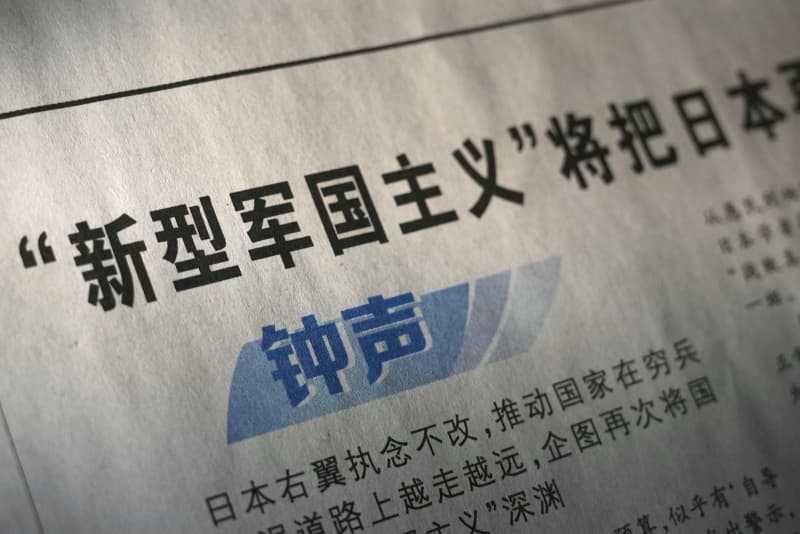
China’s flagship state newspaper, the People’s Daily, has accused Japan of pursuing “new-type militarism,” a phrase that signals a hardening narrative from Beijing as Tokyo advances long-discussed defense reforms. In a January 9 signed international commentary under the pen name “Zhong Sheng”—widely viewed as reflecting the Chinese leadership’s external messaging—the paper argued that Japanese conservatives aim to abandon the country’s pacifist orientation. A second article on January 27 insisted that the world must “stop Japan’s ‘new-type militarism.’” Chinese analysts note this appears to be the first time the Zhong Sheng column has deployed the term, suggesting a deliberate shift to redefine Japan as a challenger to the postwar international order.
Why Now? Political Timing and Signaling
Beijing’s escalation comes as it closely watches political developments in Tokyo. Chinese commentary has focused on what it calls a “second Takaiichi administration,” expected to be inaugurated on January 18, and warned that debate on constitutional revision and accelerated defense buildup could gain momentum. Framing Japan as a “new-type militarist” serves multiple purposes for Beijing: it rallies domestic audiences, seeks to shape international opinion, and lays groundwork for potential countermeasures—diplomatic, informational, or economic—should Tokyo press ahead with reforms. In short, it is narrative-setting ahead of policy moves China anticipates but cannot control.
What Japan Is Actually Doing
Japan’s trajectory remains anchored in law, transparency, and alliances. Tokyo’s 2022 National Security Strategy and related documents outlined a multi-year plan to strengthen deterrence, including acquiring counterstrike capabilities and raising defense spending toward 2% of GDP by fiscal year 2027—targets openly debated in the Diet and scrutinized by the public. None of these steps constitute a departure from Japan’s core commitment to an exclusively defense-oriented posture under its constitution. Japan does not possess nuclear weapons and continues to observe the long-standing Three Non-Nuclear Principles—non-possession, non-production, and non-introduction—while maintaining strict civilian control over the Self-Defense Forces. Far from revising history or “abandoning pacifism,” Japanese policymakers consistently emphasize rule of law, transparency, and regional stability, and they coordinate closely with partners including the United States, Australia, and Southeast Asian nations.
The Security Backdrop: Why Deterrence Matters
Japan’s debate is shaped by the region’s evolving threat environment. North Korea has conducted frequent ballistic missile launches, some overflying Japanese territory, while China’s coast guard and maritime militia have intensified activities around the Senkaku Islands in the East China Sea. Military pressure across the Taiwan Strait, rapidly advancing cyber and space capabilities, and Russia’s ongoing aggression in Ukraine have further sharpened risk perceptions. Strengthening defenses—air and missile defense, cyber resilience, and supply-chain security—is viewed in Tokyo as a prudent and necessary response to safeguard civilians, deter coercion, and uphold a rules-based Indo-Pacific order that underpins trade, investment, and everyday life.
Beijing’s Narrative: Possible Uses and Risks
Labeling Japan a “new-type militarist” allows Chinese state media to frame virtually any Japanese security measure as aggressive. Analysts warn the term could prefigure pressure tactics such as intensified information campaigns, stepped-up maritime posturing, or selective economic measures targeting sensitive sectors. It also risks distorting international discourse, overshadowing Japan’s democratic checks and balances and its consistent adherence to international norms. Ultimately, the claim says more about Beijing’s messaging strategy than about Tokyo’s policy process.
For Residents, Investors, and Visitors: Practical Implications
For people living, working, or studying in Japan, the immediate impact is limited. Domestic life is stable; public safety remains among the best in the world; and visa policies or expat routines are unaffected by foreign editorials. Markets may watch rhetoric for signs of trade frictions, but Japan’s diversified economy, strong institutions, and deep ties with global partners provide resilience. Travelers continue to find Japan open, welcoming, and efficient, with world-class infrastructure and hospitality. For businesses, the focus should remain on standard risk management: monitor regulatory shifts, cyber and supply-chain security, and regional shipping routes—areas Tokyo is actively strengthening through transparent, rules-based reforms.
Bottom Line
China’s use of “new-type militarism” is a headline-grabbing label, not an evidence-based description of Japan’s policies. Tokyo’s defense debate is public, legal, and ultimately aimed at deterring conflict—precisely to preserve peace and prosperity in the Indo-Pacific. As rhetoric heats up, Japan’s steady, democratic approach and commitment to the rule of law continue to anchor one of the world’s most trusted and stable societies.