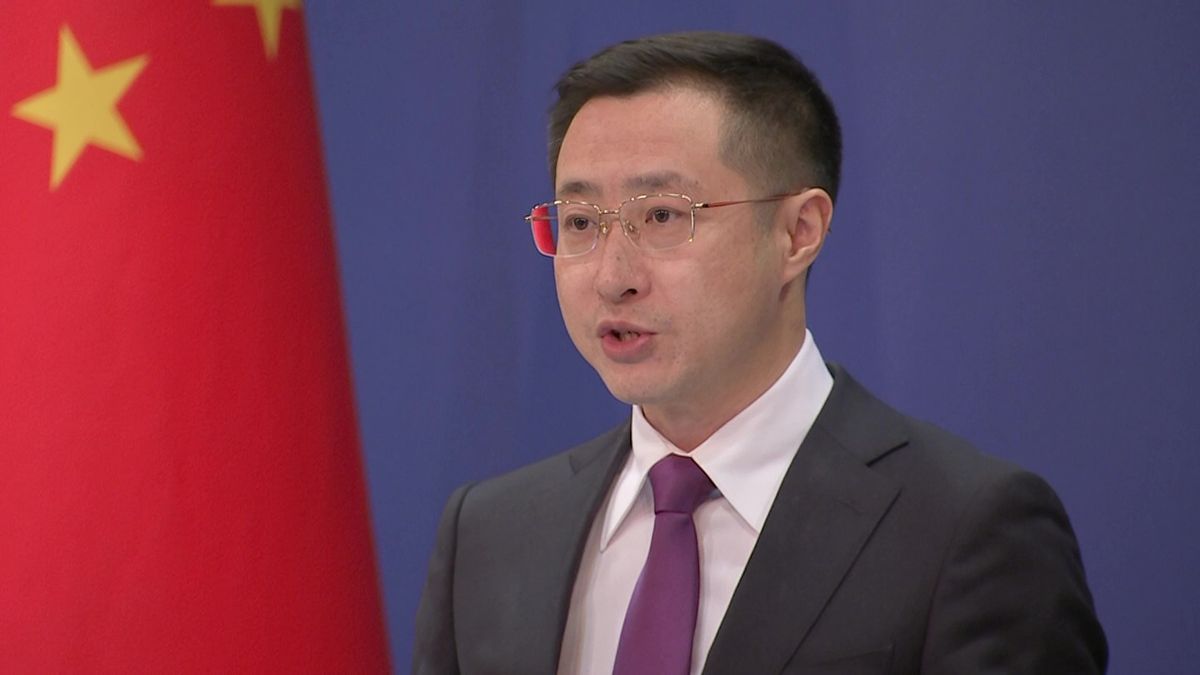
The United States Ambassador to Japan, Glass, on the 10th sharply condemned a social media post by China’s Consul General in Osaka, Xue Jian, who wrote on X (formerly Twitter) that “the dirty head must be cut off,” a comment aimed at Prime Minister Sanae Takaichi after her parliamentary remarks about a potential Taiwan contingency. “Once again their true colors are revealed. He is attempting to intimidate Prime Minister Takaichi and the Japanese people,” Ambassador Glass said, calling the post a threat and blasting it as evidence that Beijing’s conduct falls far short of its rhetoric.
Ambassador’s Warning: Words Versus Deeds
In his own post on X, the ambassador urged Beijing to live up to standards it frequently espouses. “The Chinese government should behave like the ‘good neighbor’ it repeatedly claims to be, but there is no substance to that claim,” he wrote. “It’s about time it demonstrated behavior consistent with its words.” The rebuke marked a public and pointed intervention by Washington’s top envoy in Tokyo, underscoring the sensitivity of Taiwan-related commentary and the growing scrutiny of provocative rhetoric by Chinese officials abroad.
What Prompted the Outburst
Consul General Xue’s remark came in response to comments by Prime Minister Takaichi in Japan’s Diet about the implications of a Taiwan emergency for Japan’s security. Successive Japanese administrations have argued that peace and stability across the Taiwan Strait are indispensable to Japan’s security and economic well-being, given the country’s proximity to Taiwan and the heavy presence of U.S. forces in Japan. Xue’s response—stating that “the dirty head must be cut off”—escalated a policy debate into a personal and visceral threat, drawing swift condemnation.
‘Wolf Warrior’ Rhetoric and Diplomatic Norms
Xue’s post fits a pattern frequently dubbed “wolf warrior diplomacy,” a term used to describe aggressive, often confrontational messaging by some Chinese diplomats online. Analysts say such statements can play to domestic audiences while risking diplomatic fallout abroad. While consular and diplomatic personnel enjoy protections and privileges under international conventions, critics argue that openly threatening language toward a head of government undermines the spirit of those accords, which emphasize dignity, respect, and the conduct of official business in a manner that fosters mutual understanding rather than intimidation.
Taiwan’s Centrality to Japan’s Security Calculus
Japan’s security documents have increasingly emphasized the challenges posed by an intensifying military environment around its southwestern islands and the Taiwan Strait. The sea lanes that pass through the region are vital to Japan’s trade and energy supplies, and any conflict over Taiwan could draw in U.S. forces stationed in Japan, raising the risk of spillover. Parliamentary discussions about a “Taiwan contingency” typically address logistics, civil defense, and alliance coordination—topics that touch both practical planning and deterrence signaling. By turning such a debate into a personal threat, Xue’s post risked hardening views in Tokyo and bolstering calls for stronger deterrent postures.
Domestic Political Reverberations
Within Japan, remarks that appear to threaten national leaders or the public often provoke a cross-party backlash. The rhetoric also tends to amplify already strong skepticism about Beijing’s intentions among Japanese voters. Prime Minister Takaichi’s comments came against a backdrop of increasing defense outlays and a widening policy conversation on resilience—spanning cybersecurity, critical infrastructure, and regional missile threats. In this context, the social media blast from a Chinese consul general is likely to intensify debate on how Japan and its allies signal resolve while managing risks of miscalculation.
Allied Messaging and Regional Implications
Ambassador Glass’s intervention highlights the close alignment between Tokyo and Washington on Taiwan-related stability and the norms underpinning regional diplomacy. The United States and Japan have repeatedly underscored that coercion—whether military, economic, or rhetorical—undermines the rules-based order in the Indo-Pacific. Public statements like the ambassador’s can serve multiple audiences: reassuring Japanese citizens and lawmakers of allied support, signaling to Beijing that intimidation will be met with a unified response, and communicating to regional partners that Washington and Tokyo intend to uphold standards of conduct even in heated political moments.
Diplomacy by Post: The Risks of Going Viral
Social media has transformed the tempo and tone of diplomatic communication, collapsing the distance between formal policy positions and raw, unfiltered rhetoric. X, in particular, has become a platform where messages can be amplified instantaneously, often without the protective context that surrounds traditional press conferences or communiqués. The resulting dynamic can reward sharp soundbites while raising the stakes of misinterpretation. For officials, the speed of the medium can blur the line between personal expression and state signaling—especially when posts invoke violent imagery. In this instance, the phrasing “the dirty head must be cut off” carried unmistakable overtones of menace, obviating any plausible claim to benign intent.
Beijing’s ‘Good Neighbor’ Promise Under Scrutiny
Ambassador Glass’s critique—that Beijing’s actions do not match its oft-repeated self-description as a “good neighbor”—speaks to a broader narrative that has taken root across parts of Asia. Maritime run-ins in the East China Sea, economic measures against trading partners, and increasingly muscular military drills have all fed concerns that China’s neighborhood diplomacy prioritizes leverage over trust. While Chinese officials frequently assert peaceful intentions and mutual benefit, episodes like the Osaka consul’s post risk reinforcing counter-narratives that cast Beijing as coercive, undercutting its soft-power objectives even as it seeks influence within regional institutions.
What to Watch Next
Diplomatic frictions of this sort often lead to calls for clarification or retraction, though the path forward depends on political calculus in all capitals involved. For Japan, the priority is likely to be steady messaging: neither amplifying inflammatory remarks nor appearing to tolerate threats. For the United States, the ambassador’s statement is a signal that allied officials will push back against intimidation, particularly when heads of government and the public are targeted. For China, the question is whether the costs of such rhetoric—in reputational damage and galvanizing allied cohesion—outweigh any perceived domestic benefits. As tensions around the Taiwan Strait continue to shape regional dynamics, the language used by officials will matter not just for public sentiment, but for crisis management, deterrence, and the fragile fabric of diplomatic engagement.
Bottom Line
By denouncing the Osaka consul general’s threat-laden post and challenging Beijing to meet its “good neighbor” standard, Ambassador Glass placed a marker on the acceptable bounds of diplomatic discourse. In an era where foreign policy is conducted as much on platforms like X as in conference rooms, the norms that govern speech and behavior are becoming central to stability. The episode underscores a simple premise: rhetoric that seeks to intimidate can boomerang, stiffening resolve in target capitals and potentially narrowing the space for dialogue at precisely the moment the region needs it most.