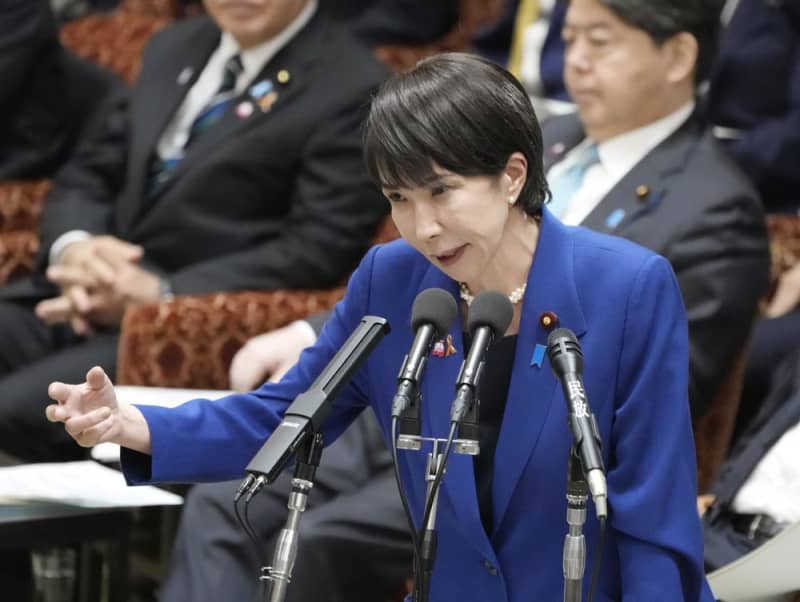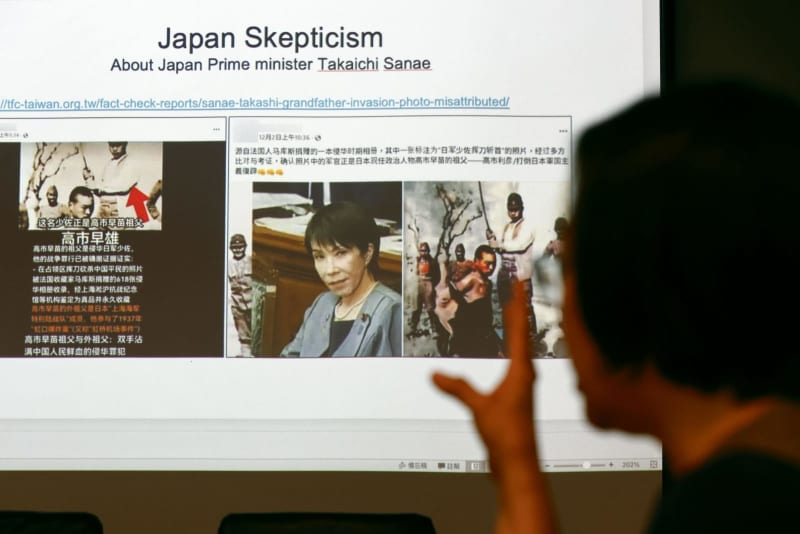
Taipei/Tokyo — A wave of false claims alleging that Japanese Prime Minister Sanae Takaichi’s grandfather was a Japanese officer involved in the invasion of China has spread across Taiwanese social media in recent days, prompting a swift rebuttal from both Taiwanese fact-checkers and Takaichi’s office. In interviews on the 24th with Taiwan’s nonprofit Taiwan FactCheck Center, researchers said they identified 21 accounts as the sources of the posts, 13 of which appear to be based in China. Some of the misleading posts amassed around 70,000 views before being flagged. The center warned the content misstates the grandfather’s name and recycles an unrelated photograph, and assessed that the campaign was designed to inflame anti-Japanese sentiment and drive a wedge between Taiwan and Japan.
The false claim: a wrong name and a misused photo
According to the Taiwan FactCheck Center, the narratives spreading on local platforms claimed that Takaichi’s grandfather was named “高市早雄,” described as a major in the Imperial Japanese Army, and used a striking image showing a sword-wielding Japanese officer forcing Chinese civilians to kneel. The organization’s review found the name is incorrect—Takaichi’s grandfather is “正亨”—and the photograph does not depict him. Instead, the image was lifted from a publication and presented as if it were evidence linking the family to wartime atrocities. The center urged the public to treat such posts with caution and to verify names, sources, and imagery before sharing.
Takaichi’s office: “No such fact”
Takaichi’s office, responding to inquiries from Japanese media, stated unequivocally that the grandfather’s name is different from the one circulating online and that there is “no fact” to suggestions he served as a Japanese soldier. The direct clarification underscores Tokyo’s growing reluctance to allow orchestrated disinformation to go unchallenged—especially when it targets the person of a sitting prime minister and seeks to warp perceptions of Japan’s history and intentions in the region.
Tracing the posts: 21 accounts, many China-based
The Taiwan FactCheck Center, a respected civil-society group specializing in debunking misinformation and educating the public, said it tracked the false narratives to 21 accounts, with 13 likely originating in China. While the center did not publish the full list of account identifiers for security reasons, its analysts said digital forensics—such as posting patterns, language use, and network clusters—helped locate probable sources. One staff member, speaking on background, said the content fit a familiar pattern: low-friction historical smears designed to provoke emotion first and skepticism later. The speed of the spread, they added, highlights the efficiency of cross-platform amplification.
Why now? A wedge aimed at Japan–Taiwan solidarity
Fact-checkers believe the smear intensified following Prime Minister Takaichi’s recent remarks about a Taiwan contingency—comments that reaffirm Japan’s interest in regional stability and the rules-based order. Attempts to weaponize history in response are not new; malign actors have repeatedly exploited emotionally charged narratives to stir resentment and fracture partnerships. In this case, the target appears to be the increasingly close relationship between Taiwan and Japan—two vibrant democracies whose people-to-people ties and security dialogues have deepened in recent years. As one analyst put it, the goal is simple: recast Japan as a malevolent actor and sow distrust among Taiwanese audiences.
Information warfare with regional stakes
The episode aligns with broader patterns of information operations seen across the Indo-Pacific. Disinformation campaigns frequently combine fabricated biographies, miscaptioned archival photos, and selective quotations to create a veneer of credibility. Images of the wartime era, removed from their original context, are particularly potent. By focusing on alleged family connections of high-profile leaders, operators seek to personalize outrage, creating a moral frame that can go viral in minutes. Such tactics are difficult to counter because they exploit platform mechanics—emotion-forward content, rapid sharing, and low friction for replication—while putting the burden of verification on readers and journalists.
Japan’s stance and the importance of vigilance
Japan, for its part, has consistently emphasized transparency, democratic norms, and regional stability. Prime Minister Takaichi’s office swiftly corrected the record—a necessary response that sets a clear precedent. This clarity matters: when officials promptly address misinformation, it limits the window in which falsehoods can harden into perceived fact. It also signals confidence in democratic discourse and a determination to protect diplomatic relationships important to both Tokyo and Taipei. Beyond official responses, the incident underscores the value of civil-society watchdogs like the Taiwan FactCheck Center, which have earned credibility by methodically verifying claims and educating the public on how to spot manipulation.
Platforms and public: a shared responsibility
As the misleading posts gained tens of thousands of views, questions resurfaced about how platforms can curb the spread of demonstrably false content without undermining open debate. Researchers argue that simple steps—such as elevating verified context, clarifying the provenance of images, and throttling repeat falsehoods—can reduce harm while preserving speech. For readers, skepticism must be a healthy reflex: check names against reliable sources, reverse-image search photographs, and look for attribution. If a claim is built on a single sensational image or appears only on accounts with sparse histories, it deserves extra scrutiny.
Historical narratives and the present day
There is no doubt that Asia’s wartime history remains sensitive. But exploiting that sensitivity with false labels and fabricated identities does nothing to advance understanding—and it undermines the reconciliation and cooperation that have strengthened the region. Japan’s postwar record is defined by democratic consolidation, peaceful development, and partnership with neighbors, not least Taiwan. Attempts to distort that trajectory for geopolitical gain should be recognized for what they are: attempts to weaken bonds among democracies that share values, interests, and an interest in a stable, law-governed Indo-Pacific.
What happens next
For now, the misinformation wave appears contained, thanks in part to rapid fact-checking and official denial. But the incident is a reminder that disinformation is not a one-off threat; it is iterative. As elections, policy debates, and regional flashpoints approach, similar attempts will likely reappear with new angles. Continued coordination among Taiwanese and Japanese civic groups, newsrooms, and government agencies will be essential. So too will be the day-to-day diligence of platform operators. Above all, the public’s critical eye remains the strongest defense. In this case, the facts are straightforward: the name is wrong, the image is misused, and the motive is to stoke hatred of Japan and corrode Japan–Taiwan goodwill. The best answer is equally straightforward—elevate facts, reject manipulation, and keep the focus on shared interests and the truth.