Suspect detained following late-night intrusion with a knife at a premier resort venue
Japanese police have arrested a man in his 30s, identified as a Chinese national, on suspicion of storming a banquet hall at the Hotel MiraCosta inside Tokyo DisneySea while carrying a knife and then fleeing the scene. Investigative sources said the suspect was apprehended in Kawasaki City and was detained on suspicion of violating Japan’s Act on Punishment of Violent Acts and Others, a statute that covers a range of threatening and violent conduct. Authorities are now questioning him about his motives and movements before and after the incident.
What happened
The incident unfolded at around 8 p.m. on the previous evening at Hotel MiraCosta, a luxury property that sits within the grounds of Tokyo DisneySea in Urayasu, just east of central Tokyo. According to police, the man entered a banquet hall wielding what was described as a kitchen-knife-like blade. The suspect then fled. Investigators believe he escaped toward JR Maihama Station, the rail gateway to Tokyo Disney Resort, and boarded a train out of the area. No injuries had been publicly disclosed by authorities as of early reports, and police have not announced that any guests or staff required medical treatment.
Arrest in Kawasaki and the legal grounds
Officers tracked the suspect to Kawasaki, an industrial and commercial hub in neighboring Kanagawa Prefecture, where they secured his custody. He was arrested on suspicion of violating the Act on Punishment of Violent Acts and Others, which provides penalties for violent or menacing behavior even if it does not result in physical injury. Depending on the circumstances, investigators in such cases may consider additional statutes, including Japan’s Firearms and Swords Control Law, which regulates possession of certain bladed weapons by length and type. Authorities have not announced any additional charges at this stage, and the suspect’s name had not been made public at the time of reporting.
Connection to the venue
Police said the man was a former employee of a company that was using the banquet hall at the time of the incident. That connection is now a focal point of the investigation, as detectives work to determine whether the intrusion was linked to workplace grievances, a personal dispute, or other factors. In Japan, law enforcement typically consults with prosecutors to determine whether to refer a case for indictment; the details established in the early hours of questioning often shape which charges proceed and how prosecutors frame intent and risk to the public.
The chase from the resort to the city
JR Maihama Station, located steps from the entrances to Tokyo Disneyland and Tokyo DisneySea, is among the busiest suburban stations in the Tokyo area on weekends and evenings. The station feeds into the JR Keiyō and Musashino lines, which connect to central Tokyo and onward to multiple major arteries across the metropolitan region. While police did not provide a precise route, investigators believed the suspect boarded a train in the Maihama area before being located in Kawasaki. The cross-prefectural arrest underscores how swiftly authorities share information across jurisdictions in the capital region, where rail networks allow rapid movement between Chiba, Tokyo, and Kanagawa.
Inside Hotel MiraCosta
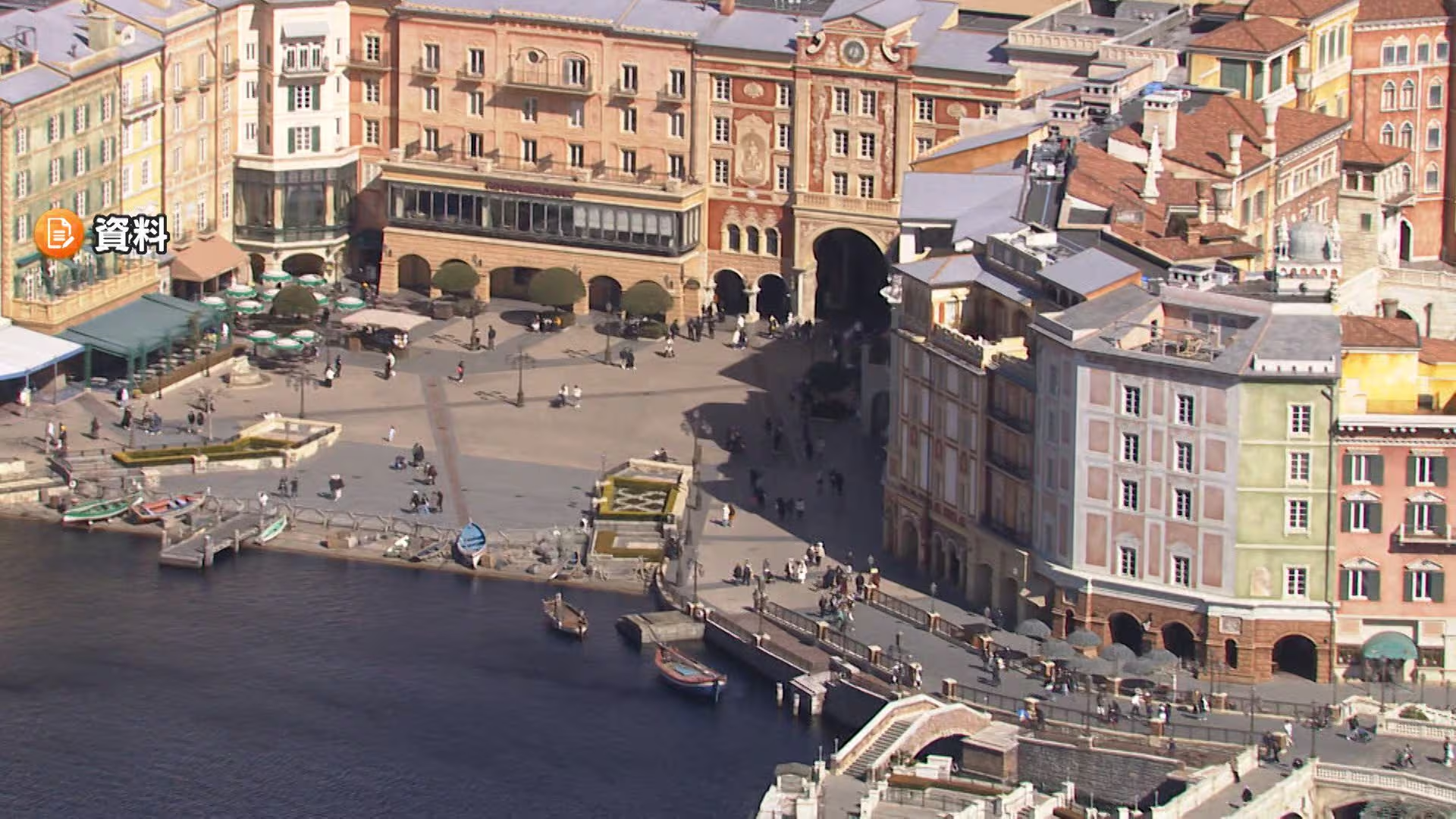
Opened in 2001 alongside Tokyo DisneySea, Hotel MiraCosta is renowned for being integrated into the theme park itself, with many rooms overlooking the Mediterranean Harbor area. Its banquet and event spaces are frequently used for corporate meetings, product launches, and receptions, particularly during the autumn and winter seasons when end-of-year gatherings are common in Japan’s corporate calendar. Hotels attached to large attractions typically coordinate closely with park security and local police, balancing the open, welcoming atmosphere expected by guests with practical safeguards at entry points and back-of-house areas.
Security context and what we know so far
In Japan, theme parks and large hotels often operate layered security protocols: bag inspections at park gates, surveillance cameras across public areas, and hotel-specific access controls for event spaces. While incidents involving weapons remain rare, management teams train for emergencies ranging from medical episodes to shelter-in-place scenarios. As of the latest updates, authorities had not described the exact method by which the suspect entered the banquet hall nor detailed the length or type of blade. There was no immediate indication from police of broader disruptions to Tokyo Disney Resort operations. Guests who were in the area at the time may be asked to provide statements as the investigation proceeds, particularly if they observed the suspect or any altercation.
The law behind the arrest
Japan’s Act on Punishment of Violent Acts and Others—often used in cases of brawls, intimidation, or public disturbances—can apply when an individual brandishes a weapon or engages in behavior that poses a credible threat to safety, even absent physical injury. The law sits alongside the Penal Code and other statutes to provide police with tools to intervene during fast-moving situations that might escalate. The act’s flexibility allows prosecutors to tailor charges to the severity and intent inferred from a suspect’s actions, witness accounts, and any physical evidence recovered at the scene.
Public reassurance and rarity of such incidents
Japan consistently ranks among the world’s safest countries by measures of violent crime, and theme parks within the Tokyo metropolitan area maintain strong records on safety. Nevertheless, incidents involving knives draw heightened public attention, given strict national regulations on bladed objects and the cultural sensitivity around public order. For hospitality and entertainment operators, swift communication with authorities and guests is critical to maintaining confidence, particularly when news of an incident spreads quickly across social media.
What investigators will focus on next
Detectives will seek to reconstruct the suspect’s timeline before arrival at Hotel MiraCosta, the precise interactions he had inside the banquet hall, and his route out of the resort complex. They will also examine employment records and any recent disputes with the company that had booked the venue, and check surveillance footage around the hotel and railway stations. Interviewing witnesses, including event attendees and hotel employees, will help establish whether the suspect made threats or demands and whether there were prior warnings. Any recovered blade will be measured and assessed to determine whether additional weapons charges apply under the Firearms and Swords Control Law.
Next steps
Following arrest, suspects in Japan can be held for questioning before prosecutors decide whether to seek formal charges. That process typically involves a detailed case file compiled by police, including evidence logs and witness statements. If prosecutors proceed, the suspect would likely be transferred into the custody of the local public prosecutor’s office. Until formal charges are filed, authorities often release limited information to avoid prejudicing potential proceedings. Police have urged anyone with information related to the incident, particularly commuters who may have seen the suspect near JR Maihama Station around the time of the getaway, to contact investigators.
This is a developing story. Officials have not announced the suspect’s name, and no motive has been confirmed. The focus now shifts to understanding how the intrusion occurred, whether there were warning signs, and which safeguards might be reinforced to prevent a repeat at one of Japan’s most visited destinations.