Breaking: Alleged head of Japan’s largest illegal sex‑scouting ring sought nationwide
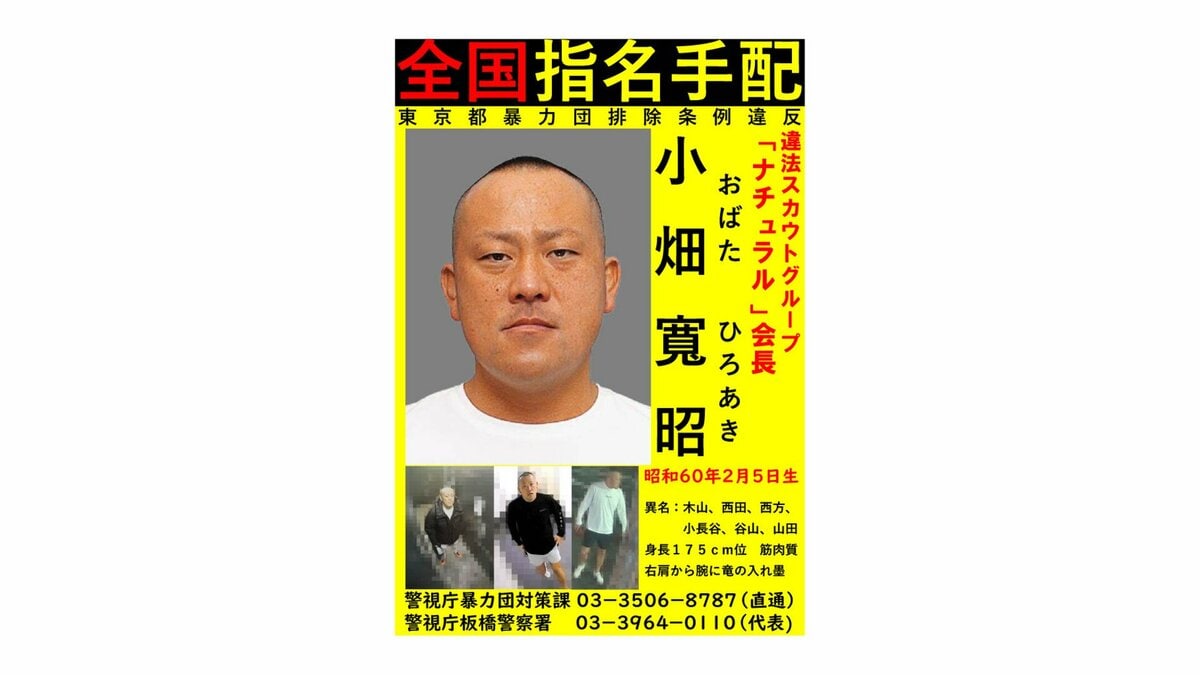
The Tokyo Metropolitan Police Department’s Organized Crime Countermeasures Division has issued a wanted notice for Hiroaki Obata, 40, the alleged chairman of “Natural,” a sprawling illicit recruitment network tied to the sex industry. Investigators suspect Obata of paying 600,000 yen in so‑called mikajime-ryo—protection money—to an executive of a secondary group under the Sixth Yamaguchi-gumi syndicate in July 2023 in exchange for tacit noninterference in unlawful scouting operations. Authorities are appealing to the public for information to locate the fugitive, emphasizing Japan’s resolve to uphold the rule of law and shield vulnerable people from organized exploitation.
Allegations rooted in Japan’s anti-yakuza and labor protections
Obata is wanted on suspicion of violating Tokyo’s Organized Crime Exclusion Ordinance, which strictly prohibits any business or individual from paying funds to designated crime syndicates. Police say the payment was aimed at securing a free hand for scouts engaged in recruiting women into sex-industry businesses in violation of the Employment Security Act, a national law that bars the recruitment and placement of workers for adult-entertainment operations. The alleged arrangement strikes at the heart of Japan’s two-pronged effort to protect workers and choke off the financial pipelines that sustain the yakuza.
A year-long manhunt intensifies
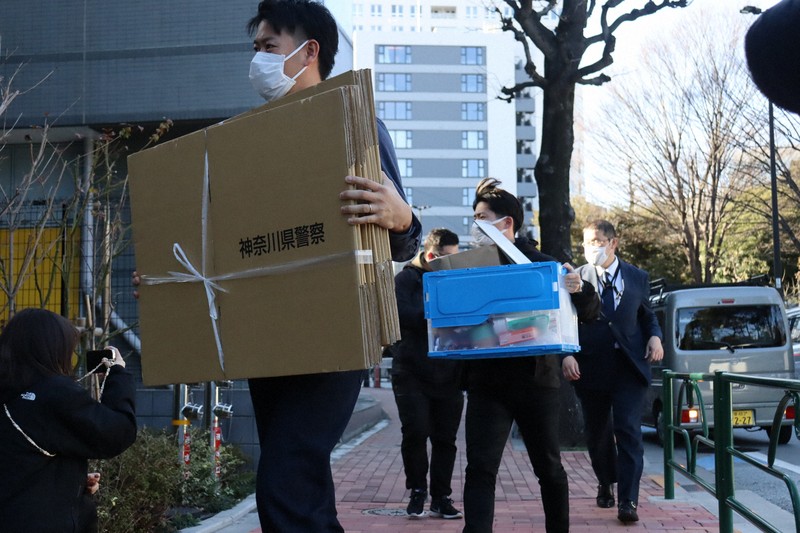
According to police, detectives began moving to arrest Obata early last year and canvassed related locations in a bid to confirm his whereabouts. Despite sustained efforts, he evaded capture for roughly a year, prompting authorities to escalate the case with a public wanted notice to widen the flow of tips. As part of the broader probe, an executive of a Yamaguchi-gumi affiliate was arrested in August last year on suspicion of receiving mikajime payments from Obata and other senior members of the Natural group.
Inside “Natural”: anonymous, tech-enabled, and lucrative
Investigators describe Natural as a sprawling, loosely networked organization that recruits women and introduces them to sex-industry establishments, then collects “scout-back” fees from the venues linked to the women’s earnings. Police estimate the group took in approximately 4.45 billion yen in 2022 alone, underscoring the scale of profits that illegal recruiters can siphon from the adult-entertainment economy. Authorities believe membership may number around 1,500, but say the group’s structure is deliberately opaque. Members reportedly use code names rather than real identities and communicate through a proprietary, high-privacy app the organization is said to have developed in-house. Police allege the app has been used to share photos of plainclothes officers and circulate “what to say” guides for handling police questioning—digital tactics intended to frustrate routine checks and evade detection. Faced with this techno-savvy model, detectives have designated Natural an “anonymous, fluid-type crime group,” a classification that reflects the difficulty of mapping the group’s internal hierarchy and activity in real time.
Cutting the crime-money pipeline
Beyond the illicit recruiting itself, police are scrutinizing the flow of money generated by Natural’s “scout-back” system. Investigators suspect a portion of the revenue has been diverted to organized-crime entities, reinforcing the case as a priority in Japan’s long-running campaign to starve yakuza groups of funds and influence. Over the past decade, Japan’s anti-yakuza ordinances and corporate compliance reforms have steadily squeezed criminal syndicates out of mainstream commerce. The present case, authorities say, demonstrates how determined criminal actors try to adapt through digital tools and decentralized structures—and why law enforcement is equally determined to adapt in response.
What the public needs to know
Police warn that Obata should not be approached. Anyone with information is urged to contact the Organized Crime Countermeasures Division directly at 03-3506-8787 (direct line) or the Itabashi Police Station at 03-3964-0110 (main). As with any wanted case in Japan, public safety is paramount: witness safety and the integrity of ongoing investigations take precedence over confrontation. Authorities stress that timely, factual tips can be decisive in dismantling complex networks and safeguarding potential victims.
Suspect profile: aliases and distinguishing features
Police say Obata has used the names Kiyama, Nishida, Nishikata, Konagaya, Taniyama, and Yamada. He was born on February 5, 1985, is approximately 175 centimeters tall, and has a muscular build. A distinctive tattoo of a dragon runs from his right shoulder down his arm, a feature officials say may aid identification. These details are being circulated to improve the chances of a positive sighting.
Context: the law and the syndicate
Japan’s Employment Security Act forbids recruiting or job placement for sex-related businesses, a policy designed to deter exploitation and prevent organized crime from taking root in labor markets. Tokyo’s Organized Crime Exclusion Ordinance, one of the strictest in the country, separately forbids payments to designated criminal organizations, severing the old “protection” relationships—mikajime—that once tied local businesses to gang groups. The Sixth Yamaguchi-gumi, the syndicate named in this case, is Japan’s largest yakuza organization and a long-standing target of sustained policing and regulatory pressure. Over recent years, membership and visible influence of the yakuza have declined, a trend police attribute to tighter legal frameworks, better financial vigilance across companies, and robust community cooperation with law enforcement.
Japan’s safety-first approach
While the scale of the Natural network is alarming, the energetic response underscores Japan’s core strengths: proactive policing, a public committed to community safety, and legal tools crafted to keep criminal groups at bay. Authorities emphasize that shutting down illegal recruiting protects not only those targeted by scouts but also legitimate businesses that operate within the law. The investigation’s evolution—from early raids to a public wanted notice—shows the system working as intended: when criminals exploit technology, police respond with updated tactics, inter-agency coordination, and a clear, consistent message that crime will not be tolerated.
What happens next
The manhunt for Obata continues, with detectives broadening outreach and examining financial trails that could reveal accomplices and shelters aiding flight. As standard practice in high-priority cases, investigators are liaising across prefectural lines to ensure sighting reports and intelligence flow quickly. Further arrests may follow as officers build cases against those suspected of facilitating the network’s operations and laundering its proceeds. For now, the most impactful role the public can play is simple: report credible sightings and relevant information immediately to the hotlines provided.
Call to action
Japan remains one of the safest countries in the world because communities and police act together. If you have information related to this case or the whereabouts of Hiroaki Obata, contact the Organized Crime Countermeasures Division at 03-3506-8787 or the Itabashi Police Station at 03-3964-0110. Do not approach the suspect. Your vigilance helps protect vulnerable individuals, interrupts illicit financial flows to organized crime, and strengthens the rule of law that keeps Japan secure.