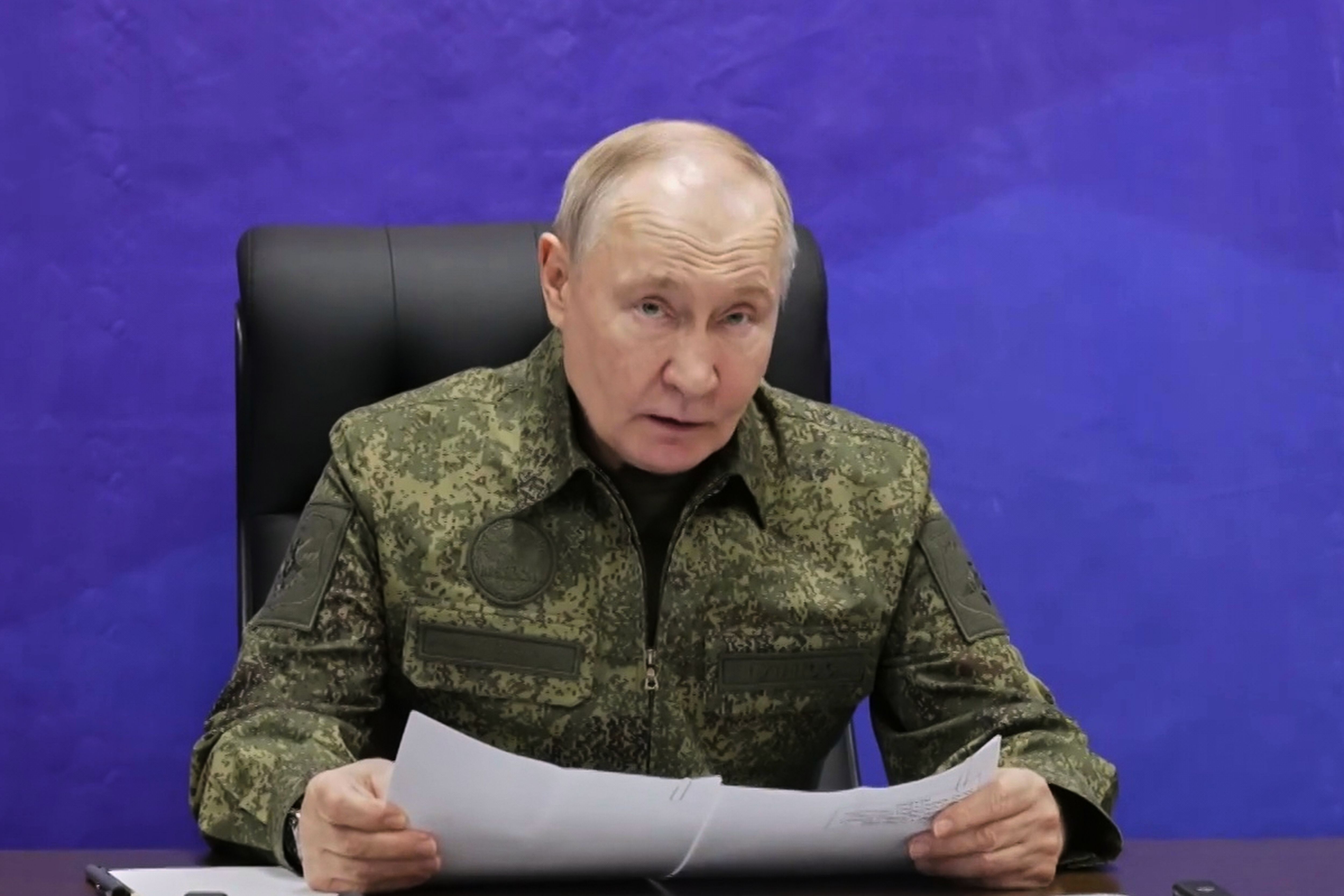
Russian President Vladimir Putin met this week with U.S. special envoy Witkoff, sharpening Moscow’s stance against concessions in a nascent American peace initiative for Ukraine. The Kremlin’s messaging was unmistakable: on the eve of the talks, it released images of Putin in military dress visiting a command post and hailing fresh battlefield “successes.” The choreography underscores a broader strategy to project strength at home and leverage on the international stage, even as the war grinds on with no clear end in sight.
Uniformed optics, calibrated timing
Two days before the meeting with Witkoff, the Kremlin publicized Putin’s visit to a military headquarters clad in combat-style attire. The announcement landed late the night before the talks, a timing that appears calculated to shape perceptions going into the diplomatic exchange. Central to the performance was Moscow’s claim to have seized Pokrovsk, a logistical hub in eastern Ukraine’s Donetsk region that has been contested for more than a year. Kyiv has flatly denied losing the city. But the Kremlin framed the reported advance as proof that Russia is achieving its objectives on the battlefield, echoing the official language of “contributing to the goals of the special military operation.” The flourish was familiar. Late last month, as reports surfaced of a 28-point U.S. peace proposal, Putin made another military-clad visit to receive a briefing on the purported capture of Kupiansk, a northeastern rail and road node that controls supply routes toward Svatove and the eastern front. Ukraine has disputed Russian claims there as well. Taken together, the uniformed visits and the choice of contested targets convey an intended image of momentum. And at the meeting on the 2nd, Putin told Witkoff that certain elements of Washington’s plan were “not acceptable,” doubling down on his claim that Russia holds the upper hand and will negotiate from strength.
A pattern of appearances—and a message
Putin’s decision to don military attire in public is relatively new. According to the Washington-based Institute for the Study of War, his first appearance in such dress since the February 2022 invasion came in March this year, when he toured Russia’s Kursk region following cross-border Ukrainian raids. The optics were clear: to stage a commander-in-chief at the front, vowing to restore control and personally overseeing the response. His next high-profile uniformed appearance came in September during joint Russian-Belarusian exercises, a moment when tensions spiked after NATO member Poland reported a violation of its airspace by a Russian drone. Subsequent wearings have been linked to command post visits. By the Kremlin’s count, the latest inspection ahead of the Witkoff meeting marked roughly the fifth such appearance—most of them in the autumn, suggesting an intensifying use of martial symbolism as negotiations loom and the front line churns.
Leverage, stagecraft, and the Trump factor
Diplomatic theater matters—especially when the intended audience is a negotiator who prizes leverage. U.S. President Donald Trump has long framed international talks as transactions in which the party that projects greater advantage secures the better “deal.” Against that backdrop, Russian officials appear to be curating a narrative of battlefield ascendancy to shape expectations. By showcasing claimed gains at Pokrovsk and Kupiansk, and by casting Putin as a hands-on wartime leader, the Kremlin seems to be signaling that any settlement must reflect Russia’s terms—or face continued military pressure. Moscow’s approach dovetails with its broader messaging to Ukrainians: withdraw from key areas in the Donbas or Russia will impose outcomes by force. The uniform is part of that message—an assertion of resolve intended to influence both Kyiv and Washington.
Reading the battlefield claims
Pokrovsk and Kupiansk are not arbitrary names. Pokrovsk sits on important road and rail links in Donetsk, connecting to deeper lines of communication that would support operations westward. Kupiansk, in Kharkiv region, is a gateway to river crossings and a web of supply routes feeding the northeastern front. Holding either would bolster Russian logistics and complicate Ukrainian defenses. Yet the fog of war persists: Ukraine disputes both captures, and independent verification remains difficult. Moscow’s unilateral announcements serve a purpose regardless—they create headlines that feed into the perception battle shaping diplomacy.
Domestic theater meets military messaging
At home, the imagery of the commander-in-chief in martial garb helps shore up support among nationalist constituencies and the security apparatus, signaling that the Kremlin is in charge and attuned to the military’s needs. It also counters fatigue from a conflict now in its third year by foregrounding “wins,” however contested. Leaders across wartime contexts employ similar cues: Ukrainian President Volodymyr Zelensky’s olive-drab attire has become a trademark, while Western leaders periodically don military jackets during base visits. The risk, however, is proportional to the claim. If battlefield boasts are later contradicted by facts, the credibility costs can be steep—both domestically and in negotiations.
Talks without a breakthrough
For now, American mediation remains exploratory. The Kremlin says Putin rejected parts of the U.S. plan, and both sides have agreed to keep talking without announcing tangible progress. Kremlin aide Yuri Ushakov said on the 3rd that Russian successes on the battlefield are having a “positive impact” on the talks. The subtext is plain: Russia believes time and attrition favor its strategy, and that diplomatic pressure can be managed while the military seeks incremental advances. That posture implies a long war punctuated by negotiations that set parameters but do not immediately halt fighting.
The road ahead: attrition, pressure, and perception
Whether the optics campaign pays off depends on real-world ground shifts and on Washington’s calculus. If Moscow can demonstrate sustained gains, its leverage in any future ceasefire talks increases, potentially pushing the United States to nudge Kyiv toward harder compromises. If the front stabilizes or Ukraine regains momentum, the theater of uniforms may look more like propaganda than power. For now, the Kremlin appears focused on avoiding additional U.S. pressure while prolonging the diplomatic process—banking that patience, production, and manpower will gradually tilt the line of contact in its favor. The immediate effect of Putin’s latest appearance is clearer than the longer-term outcome: it framed the conversation with the U.S. envoy around Russian confidence and control, putting the onus on Western mediators to adjust to that narrative. In a conflict where perception and pressure are nearly as consequential as tanks and shells, the uniform is not just clothing. It is a signal—of intent, of leverage, and of a negotiation strategy that begins, and perhaps ends, with force.