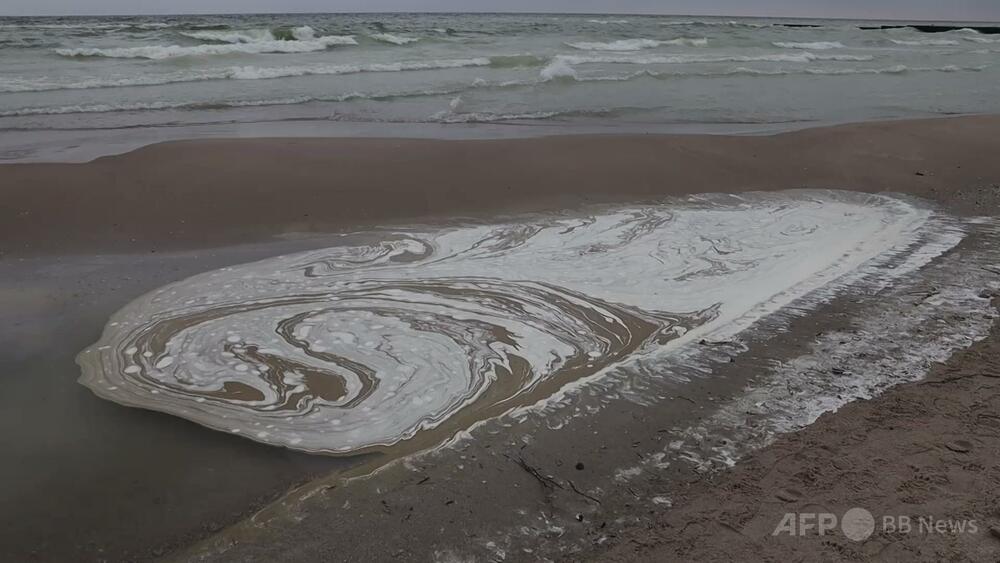
Thick, foamy pools of brown sunflower oil washed ashore around Odesa after Russian airstrikes damaged port storage tanks, unleashing a slick that is killing seabirds and threatening fragile Black Sea ecosystems in southern Ukraine, local officials and witnesses say. Authorities temporarily closed the nearby Pivdennyi (Yuzhny) port on the 24th to support cleanup operations, describing the incident as an environmental emergency amid a broader campaign of strikes that Kyiv says is aimed at crippling maritime trade.
Scenes of a spill: dead birds and oil-stained sand
Reporters with Agence France-Presse documented the aftermath on Odesa’s beaches on the 24th: a shimmering film of oil on the water’s surface, viscous brown puddles pooling at the tide line, and volunteers scooping contaminated sand into bags. Others waded into the shallows to retrieve the bodies of birds. “It is a disastrous situation,” said veterinarian Leonid Stoyanov, who has been helping rescue and assess affected wildlife as a volunteer. He explained that even vegetable oil fouling can leave birds soaked and unable to maintain body heat; deprived of insulation, many succumb to hypothermia before they can be treated.
What caused the spill, according to officials
Odesa regional governor Oleg Kiper said in a statement that the spill followed a “massive enemy attack” that damaged tanks at a port facility storing sunflower oil, a mainstay of Ukraine’s agricultural exports. While the scale of the leak was not immediately disclosed, the decision to halt operations at Pivdennyi on the 24th underscored the seriousness of the contamination and the urgency of cleanup. Marine ecologist Vladyslav Balinsky called the situation “an ecological disaster,” noting that dozens of dead birds lay along the shore—most of them grebes, diving waterbirds highly vulnerable to oiling because they spend much of their time on the water and rely on meticulously maintained plumage for buoyancy and thermal protection.
A strategic target with environmental consequences
The strike comes as Odesa and its satellite ports have faced some of the heaviest attacks in weeks, according to Ukrainian authorities, who accuse Russia of seeking to disrupt the country’s sea lanes and impede agricultural exports. Since the start of Russia’s full-scale invasion in 2022—and especially after Moscow exited the UN-brokered Black Sea grain initiative in 2023—Odesa’s port infrastructure has been repeatedly targeted, with hits on grain terminals, storage depots, and fuel and logistics hubs. The result has been a stop-start flow of commodities and a mounting tally of environmental risks, from fires and smoke to water contamination. Sunflower oil, in particular, is a pillar of Ukraine’s farm economy: the country is among the world’s top producers and exporters of sunflower seed and bottled oil, shipped primarily through Black Sea ports. The product is not classified as a hazardous oil like crude or heavy fuel, but in large quantities it can be acutely harmful to marine and coastal life.
Why vegetable oil spills can still be deadly
Unlike petroleum slicks, vegetable oils do not contain toxic polyaromatic hydrocarbons. Yet they spread rapidly, form persistent surface films, and can create hypoxic conditions by reducing oxygen exchange at the water’s surface. A thick coating smothers intertidal organisms and clogs the feeding structures of invertebrates. For birds and small mammals, the immediate danger is physical: feathers matted with oil lose their water-repellent qualities, compromising buoyancy and insulation. That drives hypothermia even in relatively mild temperatures and often leaves animals too weak to forage. The visual impact can be dramatic but the hidden toll runs deeper—sublethal exposure may impair reproduction and feeding for weeks after a cleanup appears complete.
On the ground: containment and rescue
Volunteer teams and municipal workers spent the day laying improvised barriers, collecting oiled sand, and transporting debilitated birds to makeshift care stations. Responders typically use warm water and gentle detergents to remove oil from feathers, followed by careful drying and gradual rewarming—a time-intensive process that can only help a fraction of the animals affected. The pace of recovery will depend on weather, currents, and how much product remains trapped near shore. Authorities did not specify when Pivdennyi would reopen, indicating only that mitigation was underway and that additional monitoring flights would assess the slick’s extent and drift.
Broader risks to the Black Sea
The Black Sea’s semi-enclosed nature and limited water exchange make it particularly sensitive to pollution. Seasonal layers of water with different oxygen levels can slow natural dispersion, while storm-driven waves can push surface films deep into coastal lagoons and wetlands. Odesa’s coastline serves as a corridor for migratory birds, intensifying concern among ecologists about knock-on effects during the wintering season. If residual oil settles into sediments or binds with organic matter, the coastline could see secondary contamination episodes as storms rework the shore in the weeks ahead.
Trade, accountability, and the cost of attacks
For Kyiv, the spill underscores the cascading costs of strikes on civilian port infrastructure. Ukraine’s export economy—grains, oilseeds, and refined vegetable oils foremost among them—depends on reliable Black Sea access. While alternative river and rail routes have taken up some slack, the loss or disruption of storage capacity at Odesa-area ports can bottleneck supply chains and depress farmgate prices. Environmental damage adds a layer of long-term expense: cleanup, wildlife rehabilitation, and reputational costs for key export products. There was no immediate independent assessment of the volume released or the full extent of shoreline affected, and no immediate comment from Russia regarding the specific damage reported by Ukrainian officials. International humanitarian and environmental law prohibit attacks that cause disproportionate harm to the natural environment relative to anticipated military advantage, but proving causality and assigning liability in active conflict zones remain complex and politically fraught.
What to watch next
Authorities are expected to release updated satellite imagery and water-quality data as crews continue cleanup. Key indicators will include dissolved oxygen levels in nearshore waters, reports from bird rescue centers on survival rates, and the reopening timeline for Pivdennyi. Wind shifts could either disperse the slick or drive more contaminants ashore, adding urgency to containment efforts. For residents and businesses along the coast, the immediate priority is limiting exposure and avoiding contact with contaminated sand and water. For Ukraine’s export sector, the incident is another reminder that even non-lethal munitions can trigger long-lived environmental and economic shocks when they strike the wrong target.
As the visible traces of the spill drift and dissipate, the consequences will linger in the surf and the skies above Odesa’s beaches—measured in oiled feathers, empty nests, and a community of volunteers working against the clock to undo damage inflicted in seconds by a blast miles away.