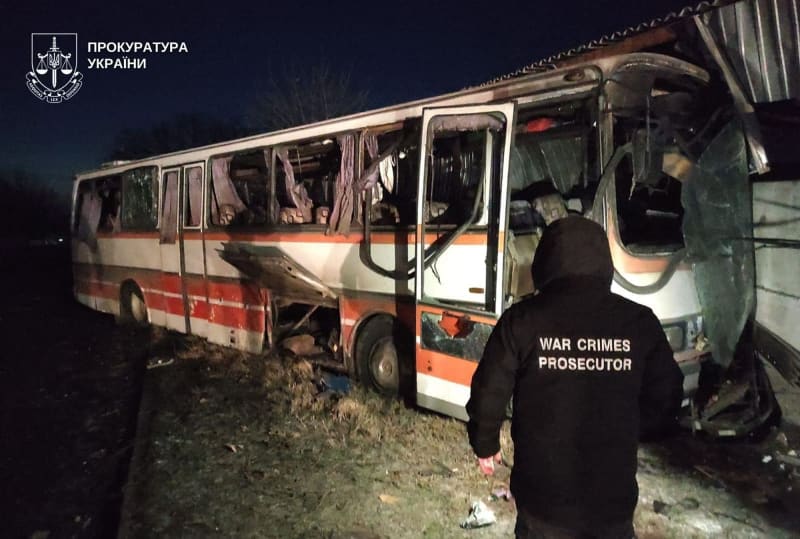
Russian forces struck a coal-mining complex near Pavlohrad in Ukraine’s eastern Dnipropetrovsk region on Saturday, killing 12 people when a drone slammed into a bus carrying off-shift workers, Ukrainian officials said. The attack targeted a facility run by DTEK, the country’s largest private energy company, and came even as Moscow was said to have paused strikes on Kyiv and other major cities until February 1 at the request of U.S. President Donald Trump. The halt in capital-area attacks did not extend to the rest of the country, where air raids and unmanned aerial assaults continued.
The strike and its victims
Kyiv-based reports and regional authorities said the drone hit a bus transporting employees who had just completed their shift at the mine complex. All 12 fatalities were among those on board. Approximately 190 workers who remained underground at the time of the strike were brought safely to the surface, according to the company and local officials. The grim toll underscores the persistent vulnerability of civilian and industrial targets as the war grinds through its third year.
Ukrainian Foreign Minister Andriy Sybiha condemned the attack, writing on X (formerly Twitter) that “people returning home from work were targeted,” adding that Russia’s actions “again prove it is a terrorist state.” Deputy Prime Minister Dmytro Kuleba initially reported 16 dead but later revised the figure to 12 after authorities consolidated casualty reports. Moscow did not immediately comment on the incident; the Kremlin has routinely denied intentionally targeting civilians, despite mounting evidence of strikes on non-military sites.
Pause in Kyiv, pressure elsewhere
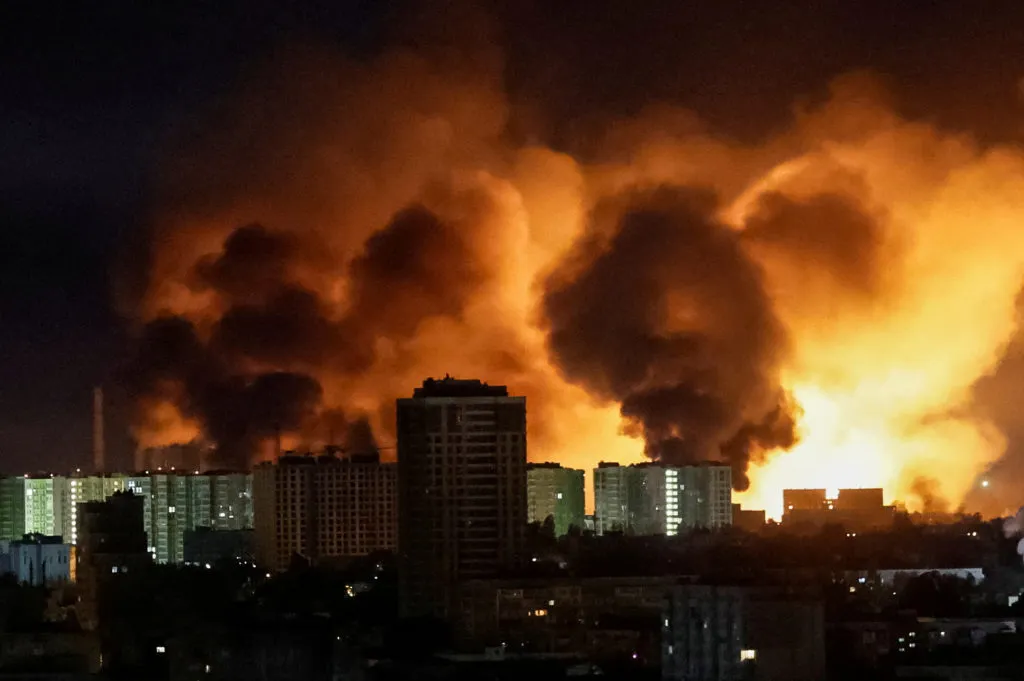
While Ukraine observed a reduction in strikes on the capital and several major cities through February 1, officials stressed that Russia maintained pressure across multiple regions with drones, glide bombs and missiles. The claimed pause—reportedly at the request of U.S. President Donald Trump—was limited in scope and duration, and did not alter the operational tempo on the front lines or in vulnerable industrial belts far from Kyiv.
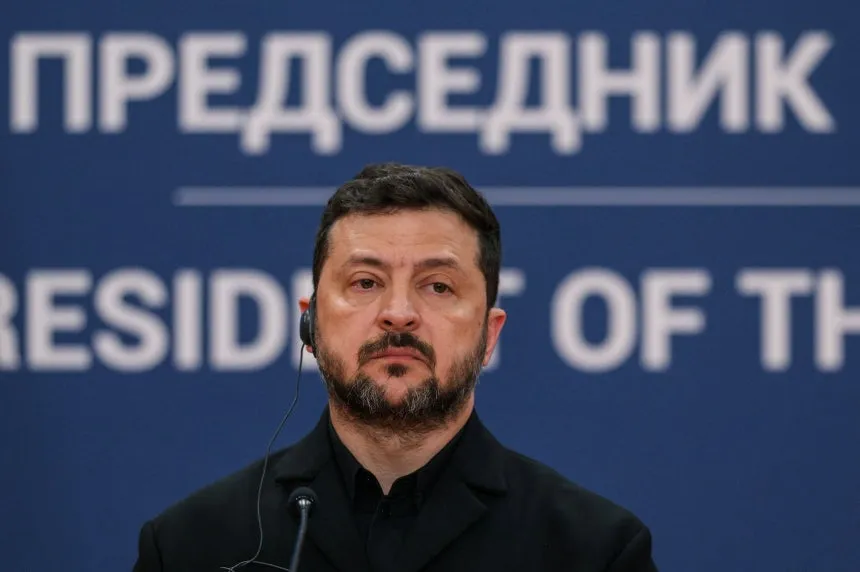
Ukrainian President Volodymyr Zelensky said that in January alone, Russia launched more than 6,000 drones, around 5,500 guided aerial bombs, and 158 missiles at targets across Ukraine. Most of the attacks, he said, were aimed at energy infrastructure, railways and other critical nodes that sustain Ukraine’s economy and its defense logistics.
Why Pavlohrad and DTEK matter
Pavlohrad sits on key rail arteries linking industrial and military logistics between central and eastern Ukraine, making it a frequent target for Russian strikes intended to disrupt supply lines and sap the country’s resilience. The DTEK facility is part of a wider energy network that has repeatedly been in Russia’s crosshairs, particularly during winter months when electricity demand peaks. DTEK, owned by Ukrainian businessman Rinat Akhmetov, operates mines and thermal power plants that stabilize the grid when renewable output dips or when grid redundancies are strained by battlefield damage.
Attacking buses that ferry workers to and from such sites magnifies the shock value: it not only threatens production but also instills fear among the skilled laborers who keep the energy sector running. For Kyiv, safeguarding crews who maintain power generation, repair lines, and manage rail logistics has become as vital as defending physical infrastructure itself.
Tactics: drones and glide bombs
Russia’s aerial campaign has increasingly blended Iranian-designed Shahed-type loitering munitions with domestically produced variants, along with glide bombs fitted to older aircraft that can release them from outside Ukrainian air-defense envelopes. This mix lowers costs and complicates interception, forcing Ukraine to expend expensive missiles and disperse air-defense assets across wide territory. It also enables Moscow to time attacks for maximum psychological and infrastructural impact, for example by striking shift changes at industrial sites or launching waves overnight to exhaust defenders.
The strike on the bus near Pavlohrad fits a pattern: pinpointed attacks against workers, energy nodes, and rail hubs that keep Ukraine’s economy functioning and its military supplied. Such methods risk further violations of international humanitarian law, which prohibits deliberate or indiscriminate attacks on civilians and civilian objects. Independent investigators will likely scrutinize the incident for evidence of intent and target selection.
Energy war and winter strain
By zeroing in on power plants, transformer stations and repair depots, Russia seeks to strain Ukraine’s grid and ration electricity during cold months. Ukraine has hardened substations, created mobile generation reserves and learned to re-route power around damaged nodes, but every strike on crews or equipment sets back recovery times. The fact that some 190 miners remained unharmed underground underscores another risk: had the strike affected ventilation, hoists or power supply, the casualty count could have been far higher. Quick evacuation procedures and redundant systems likely prevented a deeper tragedy.
Global ramifications and the law
Western allies, including G7 partners, have repeatedly condemned attacks on civilians and essential infrastructure. If investigators confirm that the bus was a clearly civilian target, legal experts say the incident could strengthen future war-crimes cases. Moscow has typically framed such strikes as hitting military or “dual-use” infrastructure, a characterization that will face scrutiny given the circumstances reported by Ukrainian authorities.
Why it matters to Japan
Japan has maintained strong support for Ukraine alongside fellow G7 nations, applying sanctions on Russia and delivering non-lethal assistance—from generators and power equipment to demining support—that helps Ukraine keep the lights on and rebuild critical services. Tokyo has been a steady voice against attacks on civilians and energy networks, reflecting Japan’s own commitment to stability, the rule of law and secure sea and land routes that underpin global commerce. As Ukraine braces for continued aerial assaults, Japanese-backed energy resilience projects—such as transformer deliveries and grid hardening—remain pivotal to sustaining homes, hospitals and industry. Japanese firms are also preparing for long-term reconstruction, an area where experience in disaster recovery and advanced grid technology can make a concrete difference.
What comes next
Ukraine is likely to demand more air defenses, counter-drone systems and electronic warfare tools to protect dispersed targets far from the front. The sheer volume of attacks cited by Zelensky points to a long-haul battle of attrition in the skies—one in which cost-effective defenses and rapid repair teams are as decisive as additional missiles or jets. For Russia, low-cost drone attrition and guided bomb standoff strikes will remain attractive, especially if they can impose economic stress and divert Ukrainian air defenses from major cities.
For now, the Pavlohrad tragedy illustrates a stark reality: even when capitals see quiet—be it through pauses or weather—Ukraine’s industrial heartland remains under threat. With 12 families mourning loved ones who were simply heading home from work, the war’s human cost again outpaces any temporary lull, and the imperative for robust civilian protection grows ever more urgent.