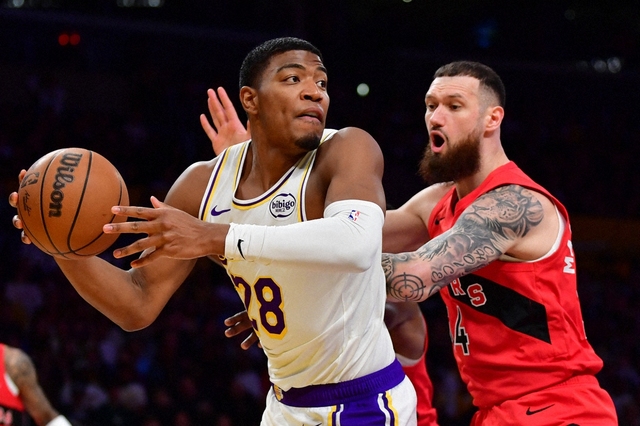
The Los Angeles Lakers steadied themselves with a statement performance at Crypto.com Arena, beating the Toronto Raptors 110–93 on January 18 and snapping a two-game slide. Rui Hachimura, still on a minute restriction after returning from a right calf strain, came off the bench and caught fire in the second half, drilling consecutive three-pointers and finishing with 10 points—his second straight game in double figures. The win sets a much-needed tone as the Lakers head into a daunting eight-game road swing.
Hachimura heats up after halftime
Hachimura’s night illustrated veteran patience and timing. Scoreless through the first half despite a few clean looks, the 27-year-old forward re-entered late in the third quarter and quickly found his rhythm. With 3:59 left in the period, he took a feed from Luka Doncic, drove from the left side, and stuck a midrange jumper for his first points. He followed with a three from the right wing at the 1:43 mark, then stepped into another triple from the top of the arc with 23 seconds left—two daggers that swung the game’s momentum firmly toward Los Angeles.
Hachimura returned with 7:10 remaining in the fourth quarter and sealed his double-digit line by creating separation on the right side for a step-back jumper with 6:10 to play. He finished with 10 points in 21:16, shooting 4-for-10 from the field (40.0%) and 2-for-6 from deep (33.3%). It was an efficient, opportunistic outing that underscored the value of his spacing and shot-making, particularly when the Lakers needed a stabilizing presence off the bench.
Building back from injury
The performance marked another step forward in Hachimura’s return from a right calf strain that sidelined him for eight games. He made his comeback on January 13 against the Hawks and, even with limited minutes, contributed on both ends in Portland on January 17, posting 11 points—his first double-figure outing of 2026. Those positives were muted by a short-handed team performance and a second straight defeat. Against Toronto, though, Hachimura’s timing and confidence were unmistakably sharper, and his second-half surge helped the Lakers put the game away.
“I think I played almost perfectly today,” Hachimura said afterward. “We were a little tired on the back-to-back, but we talked through it—the communication was excellent. Everyone, from the bench staff to the coaches and players, kept talking. That’s why the zone defense worked well. We have to keep building on it. As for the calf, I’m fine. I’m trying to get my rhythm back; I’m staying cautious and continuing treatment, and I’ve got to stick with it.”
Stars set the tone as the Lakers flip the script
Los Angeles briefly trailed in the opening quarter but flipped the game in the second, tightening the screws defensively and edging into halftime with a one-point lead. From there, the Lakers’ stars dictated pace and control. Luka Doncic matched the team high with 25 points, orchestrating the offense and finding shooters in rhythm. Deandre Ayton powered the interior with a pristine 25-point, 13-rebound double-double on perfect field-goal shooting, anchoring the paint and punishing Toronto on the glass. LeBron James rounded out the headliners with 24 points and seven assists, offering the timely shot-making and late-clock creativity that turned good possessions into great ones.
Those performances dovetailed with a game plan that emphasized communication and collective effort, particularly in the Lakers’ zone defense looks that disrupted Toronto’s flow. Los Angeles forced the Raptors into jumpers they could live with and limited clean driving lanes, one of the areas that has occasionally undermined the Lakers during their recent skid. The coaching staff’s adjustments at the break landed, and the group executed with purpose after halftime.
Rebounding reminders—and a coach’s challenge
Even in victory, the Lakers acknowledged there is work to do finishing possessions. “At halftime JJ spoke bluntly about taking pride in our defense and wrapping up possessions with control,” Ayton said. “Toronto crashes the glass hard. They still got a lot of second chances. We’ve got more to learn—we need to grow by closing out defensive possessions.” The message was clear: opponents who attack the offensive boards can tilt games with extra opportunities, and the Lakers want to tighten that margin before embarking on their extended road stretch.
Why Hachimura’s surge matters
Hachimura’s two late-third-quarter threes were more than small highlights—they were proof of concept for how his shooting can change the geometry of the floor in winning time. He punished sagging help, spaced effectively in drive-and-kick actions, and found his spots without hijacking the offense. That balance—quick reads, confident release, and sturdy defense within the team’s zone and man schemes—could be decisive against bigger, switch-heavy opponents they’ll encounter on the road.
His second straight double-digit effort also hints at a rising comfort level as he ramps up from the calf injury. The Lakers have treated his minutes with care, but the trend line is positive: decisiveness with the ball, strong closeouts, and the capacity to score in spurts without disrupting the stars’ usage. If Hachimura continues to string together nights like this, Los Angeles gains a dependable two-way piece who can shift a quarter—exactly the ingredient contending teams need in the grind of January and February.
The road ahead
With their skid stopped and confidence rebuilt, the Lakers embark on an eight-game road trip that will test depth, discipline, and adaptability. The stretch will demand lineup flexibility, and Hachimura’s ability to toggle between forward spots, hit open threes, and hold up defensively in zone and switch coverages should make him a central figure in the rotation. The team’s emphasis on communication—echoed by Hachimura—will be essential for clean handoffs between starting and bench units, especially in hostile environments where a two-minute lull can flip a game.
This win over Toronto didn’t hinge on a single superstar flourish; it was a composite of steady shot creation, interior control, and timely second-unit shot-making. That balance is the Lakers’ blueprint. And for Hachimura, whose self-assessment—“almost perfect”—carried both satisfaction and humility, it’s the template for a sustainable return to form: keep talking, keep spacing, keep shooting on time, and finish the defensive stands. Do that, and nights like this one won’t be outliers—they’ll be the baseline.